A Parent’s Complete Guide to Newborn Hearing Testing and OAE
A newborn hearing test using otoacoustic emissions (OAE) checks how the inner ear responds to sound. The test is quick, painless and usually done while a baby sleeps. A pass means the cochlea gave a measurable response during screening. A refer result does not confirm hearing loss. It means repeat screening or a diagnostic test may be needed. Ear canal fluid, movement, crying and background noise can affect results. Parents should follow the advised pathway, which may include repeat OAE testing, an audiologist review or BERA testing.
Newborn Hearing Testing helps identify possible hearing concerns early. Early support can help a child’s communication and development. At Audium Hearing Aid Clinic, we explain the result, preparation steps and follow-up plan in plain language.
Parents may hear this service called an OAE hearing test, otoacoustic emissions screening or newborn ear screening. One quick test does not label a baby. It shows whether more assessment may be useful. A pediatric audiologist reviews the result with the baby’s history and clinical findings.
Families may search for Newborn Hearing Testing in Bhubaneswar. The testing process still depends on each baby’s needs. We explain what the result means and how parents can follow the next steps.
Educational content reviewed by Dr. Sakti Prasad Mohanty.
Quick Answers About the Newborn Hearing Test OAE
Otoacoustic emissions testing is a newborn hearing screening method that measures sound responses from the cochlea. It is quick, non-invasive and often done while the baby sleeps. A pass means the screening found an expected response at that time. A refer means repeat screening or further testing is needed. It does not confirm hearing loss.
| Question | Short answer |
|---|---|
| What is an OAE test? | It records faint responses made by the cochlea after gentle sounds enter the ear. |
| What is newborn hearing screening? | It is an early check for signs that a baby may need a fuller hearing assessment. |
| What does a pass result mean? | A measurable response was detected in the tested ear at that screening. |
| What does a refer result mean? | The response was unclear, so repeat screening or further assessment is needed. |
| What is follow-up testing? | It may include another OAE, diagnostic audiology or a BERA test, depending on the case. |
The screening usually takes place in a quiet room. The baby does not need to respond or answer. The clinic or hospital will share the result after testing. Parents also receive instructions about the next appointment, if needed.
What Is an OAE Hearing Test for a Newborn?
An OAE hearing test measures faint sounds made by the cochlea. These sounds happen after a soft sound enters the baby’s ear. A small probe sits in the ear canal. It has a speaker and a microphone. The test shows cochlear function, but it does not check every part of hearing.
The cochlea is the hearing organ in the inner ear. Tiny outer hair cells move when sound reaches them. They can create very quiet sounds that travel back towards the ear canal. The equipment records these sounds as otoacoustic emissions.
An OAE probe has a speaker and a microphone. The speaker sends a sound into the ear. The microphone records the returning response. Common methods include transient evoked otoacoustic emissions and distortion-product otoacoustic emissions.
OAE testing mainly reflects activity from the cochlea’s outer hair cells. It is a screening test, not a complete hearing diagnosis. It does not fully check the hearing nerve or brainstem. A baby may still need more testing when an OAE response is present.
This can happen when risk factors or clinical concerns exist. Otoacoustic Emissions Testingis gentle, objective and suitable for very young babies. It helps guide decisions about.pediatric hearing assessment without requiring spoken answers.
How Is Newborn Hearing Screening Performed?
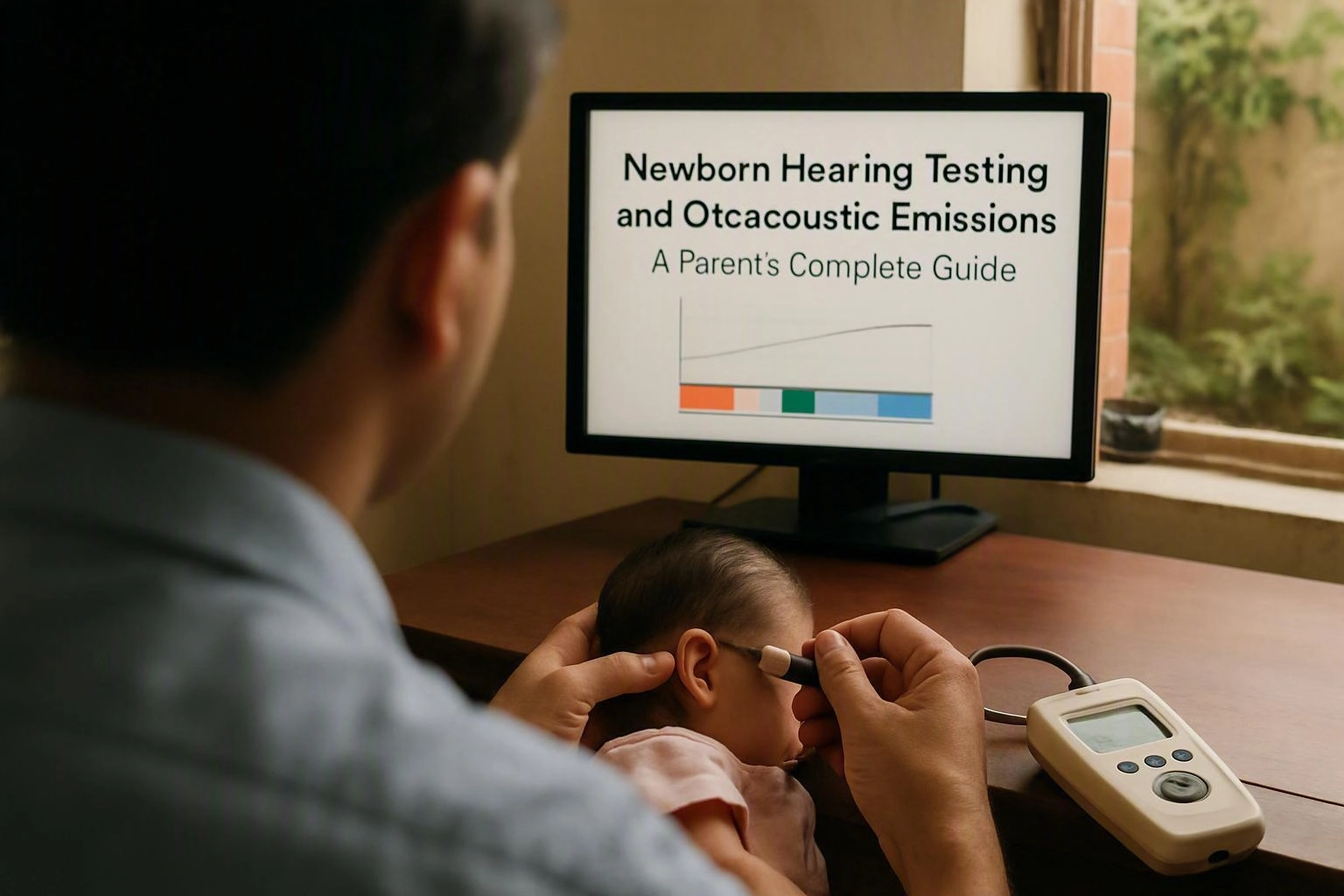
Newborn hearing screening starts by settling the baby in a quiet, comfortable position. The screener places a soft probe in the ear canal. The probe sends gentle sounds and records cochlear responses. The equipment then checks the result automatically.
Movement, crying, poor probe placement, vernix and middle-ear fluid can affect the result.
The process commonly follows these steps:
A typical appointment takes about 15–30 minutes. The recording itself may take less or more time. Feeding breaks and repositioning are normal. We can pause while a newborn settles, feeds or needs comfort.
Background noise, crying and movement can affect the recording. Vernix or temporary middle-ear fluid can also weaken the measured response. A repeat test may give a clearer result. It does not automatically suggest a permanent problem.
What Do Pass and Refer Results Mean?
A pass result means the OAE screening found a measurable cochlear response in the tested ear. A refer result means the screening did not find a clear response. Follow-up is needed. Ear blockage, fluid and test noise can cause this result. A refer result alone does not diagnose hearing loss.
A pass is reassuring for the conditions checked that day. It does not guarantee typical hearing throughout childhood. It also does not check every part of the auditory pathway. Parents should discuss later concerns about sound awareness, speech or development with a health professional.
A refer result means another step is needed. It is not a final diagnosis. The clinic may suggest repeat OAE testing after ear canal debris or fluid has cleared. Diagnostic audiology may follow if the result remains unclear.
False-positive results can happen when a baby is unsettled. A poor probe seal can also affect the recording. Middle-ear fluid after birth is another temporary cause. Follow-up may include an audiologist review, a paediatric hearing assessment or a BERA test.
Our team records the outcome and explains the next steps. We also share useful preparation advice and follow-up dates. Our services support informed decisions, but they do not replace a complete clinical assessment.
Newborn Hearing Test OAE: Parents’ Deep FAQ
Parents often ask about preparation, comfort, accuracy, cost and timing. They also want to understand a refer result. OAE testing is usually painless and needs little preparation. Movement, noise and temporary ear conditions can affect screening. Timely follow-up is the safest next step after a refer result.
Newborn hearing test cost varies between providers. Hospital screening may have different charges from clinic testing. Repeat or diagnostic tests may also cost more. Ask what the fee includes before booking. Do not delay advised follow-up because of cost questions.
Parents usually need no special preparation. Feeding supplies and a familiar blanket may help the baby settle. Bring relevant birth or medical records if available. Tell the pediatric audiologist about intensive neonatal care, infections, family history or medicines.
OAE screening is useful, but it does not measure every hearing ability. Results are more reliable when the baby is settled and the room is quiet. Correct probe placement also matters. A BERA test or another diagnostic assessment may be needed for a detailed hearing estimate.
Newborn hearing screening may be available at a hospital, paediatric service or Hearing Aid Clinic. Audiology support should be available where further review is needed. We explain the result clearly and provide follow-up instructions for each baby.
Preparing for the Test and Supporting Your Baby
Bring the baby when feeding and settling are practical. A quiet setting can help the equipment record a clear response. Share relevant birth and medical history with the screener. Ask how the result will be recorded and when follow-up is due.
The baby usually stays in a parent’s arms or nearby. The probe records responses during this time.
Parents can hold or comfort the baby when the clinic permits. The screener should explain the procedure before starting. They should also answer questions about comfort, records and follow-up. These steps can make the visit calmer for everyone.
When Does a Baby Need Repeat OAE, BERA or a Hearing Assessment?
A baby may need repeat OAE screening after a refer result. The first recording may also have been affected by movement, noise or fluid. Diagnostic testing, such as BERA or auditory brainstem response, may be advised when screening stays unclear. Follow-up timing should come from the clinical team.
Repeat OAE is often the next step after an unclear screen. This is especially true when vernix or middle-ear fluid may have affected the recording. Not every baby with a refer result needs immediate diagnostic testing. The decision depends on the screening pathway and medical history.
A BERA test, also called auditory brainstem response testing, measures electrical activity along the hearing nerve and brainstem. It may be advised when repeat screening remains unclear. Risk factors or the need for a detailed estimate can also support this test.
The pediatric audiologist reviews the results and plans follow-up. A paediatric hearing assessment may include other objective tests. It may also include behavioural observations when the child is old enough. If hearing loss is confirmed, early support can help families access communication care.
Ask who will contact you and when follow-up should happen. Check how the results will be recorded. Contact the clinical team if the instructions are unclear or concerns develop before the next visit.
Questions About Hearing Aid Clinic
What Is an OAE Hearing Test for a Newborn?
It is a quick, non-invasive screen that records faint sounds made by the cochlea. Gentle sounds enter the ear through a small probe. The probe has a speaker and microphone. It checks cochlear responses but not every part of hearing.
How Is a Newborn Hearing Test Performed?
The baby is settled in a quiet, comfortable position. A soft probe is placed in each ear. The equipment sends gentle sounds and records responses automatically. The screener can pause for feeding or repositioning.
Is the OAE Test Painful for a Baby?
No. The test is generally painless. The probe rests at the ear canal entrance. It needs no needles or invasive procedures. Babies may cry because they are hungry, tired or being handled.
How Long Does a Newborn Hearing Screening Take?
The recording may be brief, but the whole visit usually takes about 15–30 minutes. Timing depends on the baby’s sleep, movement and feeding needs. Both ears may also need another check.
What Does It Mean if My Baby Fails the OAE Test?
“Fail” usually means the result is recorded as refer. It does not confirm hearing loss. The baby may need repeat screening or diagnostic audiology.
Can Fluid in the Ear Cause a Refer Result?
Yes. Temporary middle-ear fluid or material in the ear canal can weaken the recorded response. This is one reason repeat screening may be advised before diagnosis.
How Accurate Is the Newborn OAE Hearing Test?
It is a useful screening tool, but several factors can affect accuracy. These include noise, movement, probe position, blockage and fluid. A pass is not a clear workmanship standards of typical hearing. A refer result needs follow-up, not an immediate diagnosis.
Does a Baby Need to Sleep During an OAE Test?
Sleep helps because movement and crying can affect the recording. The baby does not need to sleep for a fixed period. The screener can pause, settle, feed or reposition the baby when needed.
What Should Parents Do After a Refer Hearing Screening Result?
Read the result instructions and confirm the follow-up date. Attend the advised repeat OAE or audiology appointment. Ask the clinical team to explain anything unclear. A refer result alone does not prove hearing loss.
When Is a BERA Test Needed After OAE Screening?
A BERA test may be advised when repeat OAE remains unclear. It may also help when risk factors exist. The team may use it for a detailed check of the auditory nerve and brainstem pathway. It is not needed after every refer result.
Can OAE Testing Detect All Types of Hearing Loss?
No. OAE testing mainly reflects cochlear outer hair-cell responses. It may not identify every problem involving the hearing nerve or brainstem. It may also miss hearing loss that develops later. Further tests are chosen when symptoms or history require them.
How Much Does a Newborn Hearing Test Cost?
Costs vary between hospitals, clinics and screening pathways. Repeat screening and diagnostic assessment may have different fees. Some newborn programmes include the first screening. Ask the provider about current fees and inclusions before the appointment.
If a result or next appointment is unclear, contact the clinical team. We can explain the general pathway and help you prepare questions for the pediatric audiologist.
Related Resources
Pediatric Hearing Clinic for Children
Who It's ForNewborn Hearing Testing for Infants
newborn hearing testing clinic for infants
Who It's ForHearing Aid Clinic for Children with Speech Delay
hearing aid clinic for child with speech delay
Why It MattersBenefits of Early Hearing Loss Diagnosis and Hearing Testing
why is early diagnosis of hearing loss important