Understanding Hearing Tests for Babies and Children
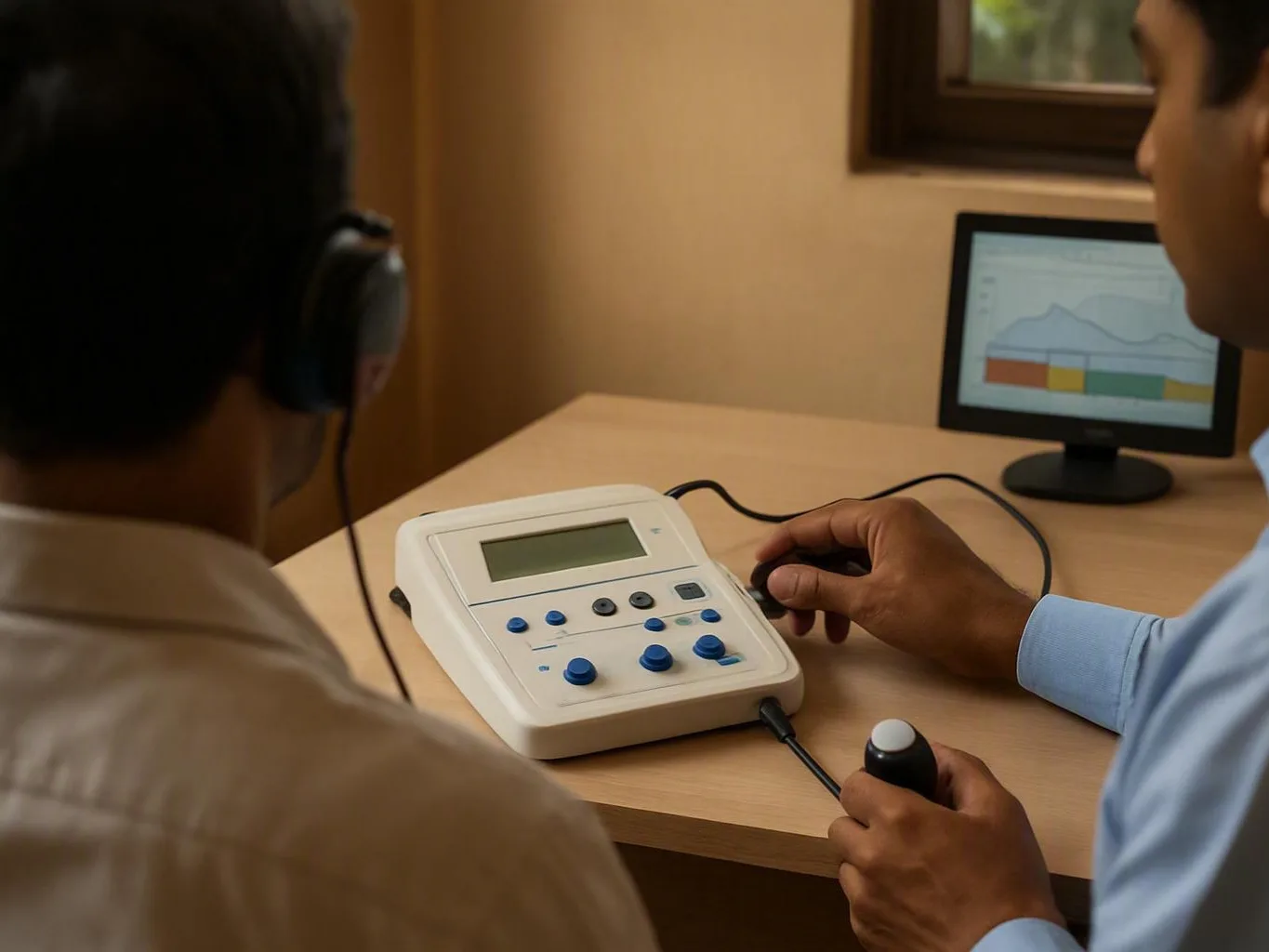
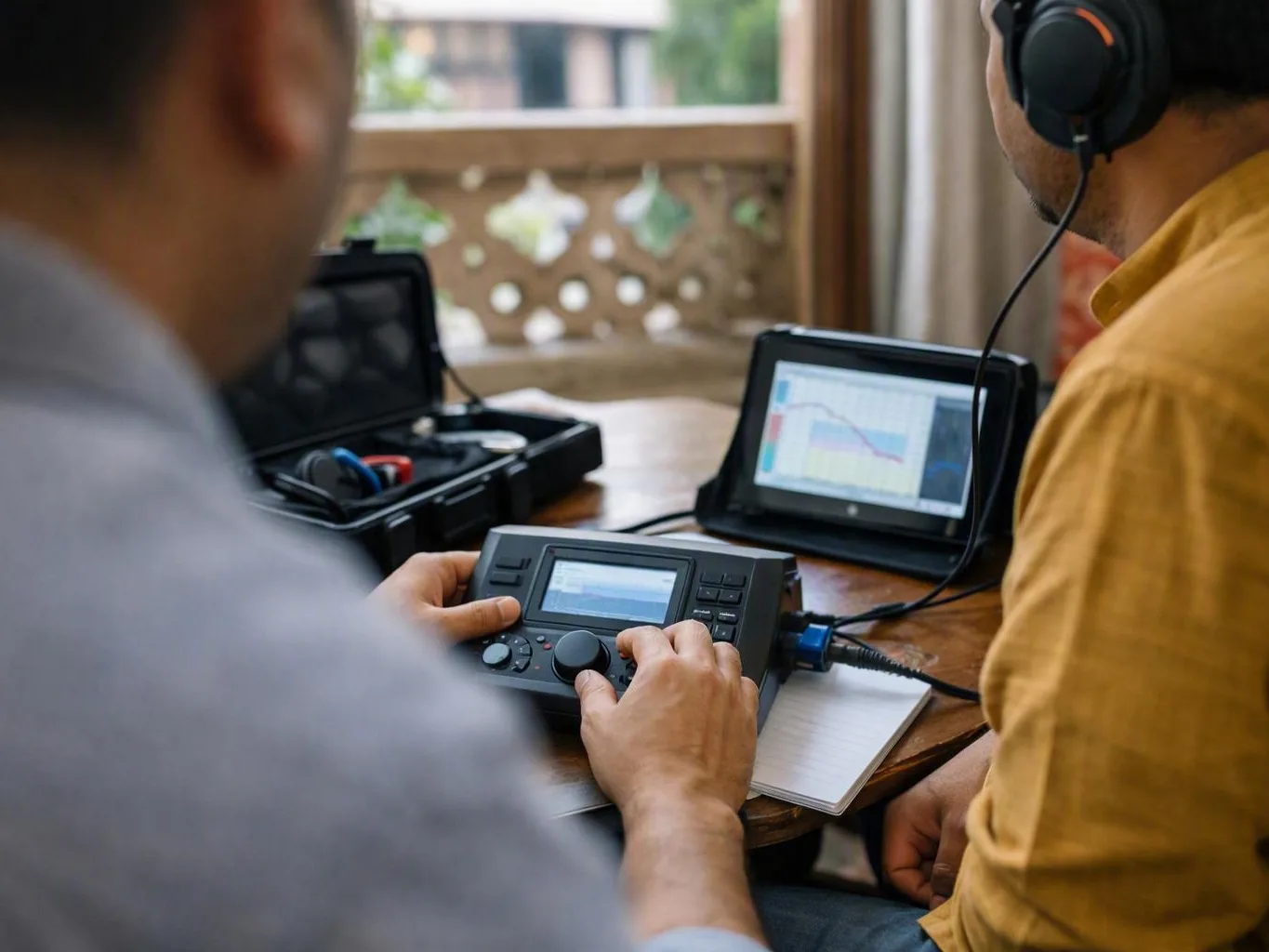
Hearing tests for babies and children include OAE, BERA and behavioural assessments. OAE checks cochlear responses. BERA checks hearing signals through the brainstem, while behavioural testing watches responses to sound. Audiologists choose tests based on the child’s age, development, symptoms and possible hearing difficulty. At Audium Hearing Aid Clinic, we explain each recommendation clearly, so families can make informed choices.
These paediatric hearing tests form part of a full audiological assessment. There isn’t one test that suits every child. The best method depends on whether the child is a newborn, toddler or school-aged child. Developmental or communication differences can also affect the choice.
Content reviewed by Dr. Sakti Prasad Mohanty.
What Are the Main Hearing Test Types for Babies and Children?
Hearing tests for babies and children include OAE, BERA and behavioural hearing assessment. OAE and BERA are objective tests. They can assess hearing without a child giving a planned response. Behavioural testing measures how a child responds to sounds. Audiologists choose the method based on age, development, medical history and referral reason.
Newborn hearing screening often starts with a quick body-based check. A paediatric audiologist may use an OAE test, a BERA Test or both. This choice may apply when a baby has risk factors for hearing loss. Newborns don’t need to understand instructions or press a button.
As children grow, testing can include responses to tones, speech and other sounds. A toddler may turn towards a sound. An older child may take part in a simple listening game. These results help the clinician check the type and level of hearing loss, if present.
Testing can also be adapted for speech delay, developmental differences or limited communication. Sound-field testing may help when a child won’t wear headphones. However, it may not show hearing in each ear separately. Newborn Hearing Testing in Bhubaneswar should follow the child’s needs, rather than one fixed plan.
Compare OAE, BERA and Behavioural Hearing Assessments
OAE, BERA and behavioural assessment differ in what they measure and how much the child must take part. OAE checks cochlear emissions. BERA measures electrical responses along the auditory pathway. Behavioural assessment watches responses to sound. Costs vary by provider, test complexity, equipment, age and extra assessments.
| Type | Key Features | Typical Cost | Best For |
|---|---|---|---|
| OAE Test | Measures sounds produced by the cochlea with a small probe. Little active participation is needed. | Usually lower than a multi-part assessment. Costs vary by clinic and repeat testing. | Newborn hearing screening and an initial inner-ear check. |
| BERA Test | Records electrical brainstem responses through surface electrodes and estimates an auditory threshold. | Often higher when preparation, longer recording or extra clinical review is needed. | Babies or children who cannot complete reliable behavioural testing. |
| Behavioural audiometry | Observes responses to tones or speech. Cooperation and development affect reliability. | Varies with appointment length, equipment and separate testing for each ear. | Toddlers, preschool children and school-aged children able to respond. |
These are typical cost patterns, not fixed fees. Most appointments take about 20–90 minutes. The time depends on the child’s age, sleep, movement and required tests. The clinic should explain what the fee includes before testing.
OAE Test: A Quick Check of Inner-Ear Function
Otoacoustic Emissions Testing measures very soft sounds made by healthy activity in the cochlea. The clinician places a small probe at the ear canal opening. The probe sends gentle sounds into the ear and records the outer hair cell response.
The test is quick and painless. A baby doesn’t need to give a planned answer. OAE is often used for newborn hearing screening. It may be repeated when the first result is unclear. A settled or sleeping baby usually helps the equipment collect clearer recordings.
A pass or refer result is a screening result, not a complete diagnosis. Movement, crying, noise, blockage, earwax or middle-ear fluid can cause a refer result. OAE may miss some hearing pathway problems because it mainly checks cochlear function. Follow-up with a paediatric audiologist is important when results stay abnormal or uncertain.
BERA Test: Measuring the Auditory Pathway
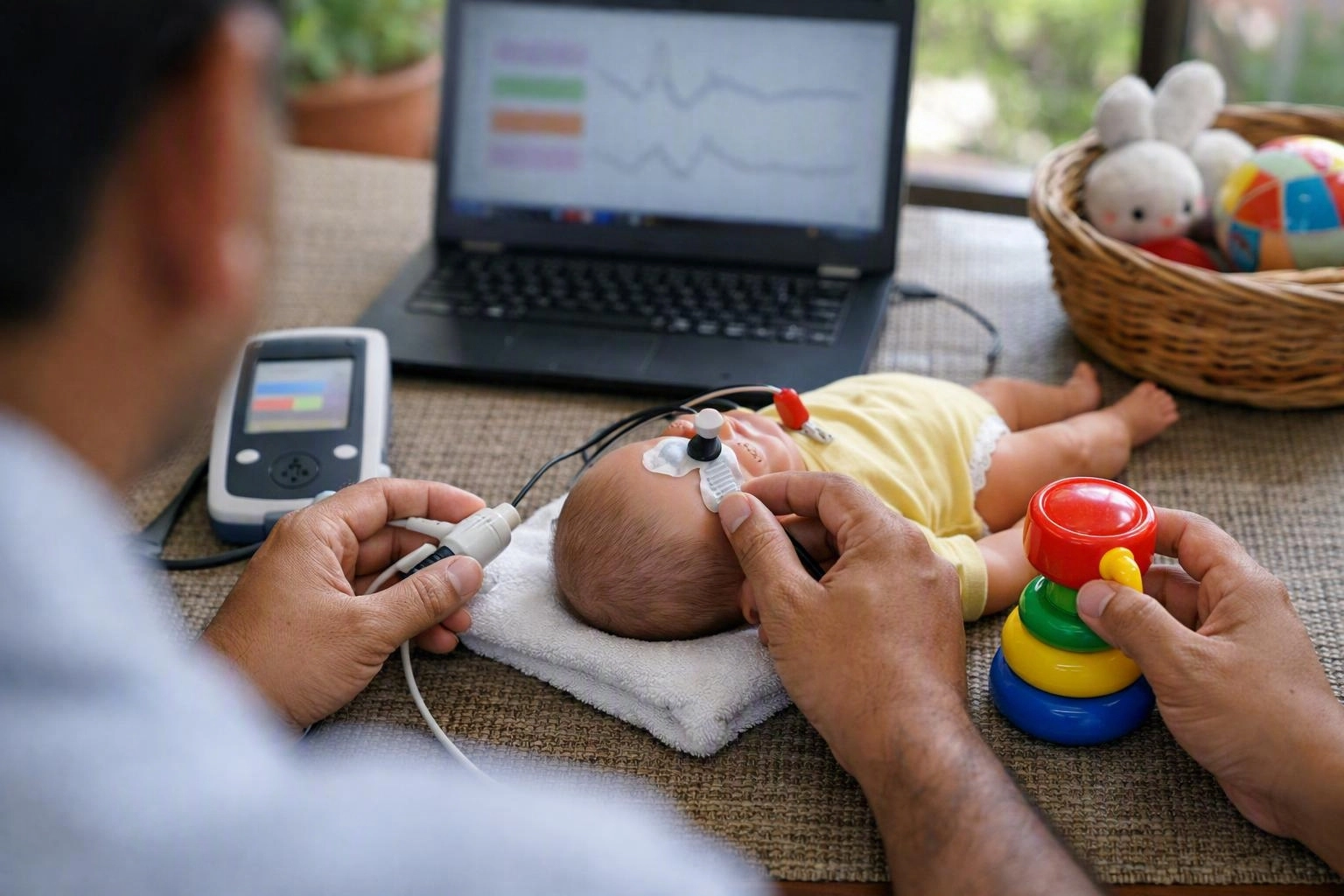
BERA Test, also called Brainstem Evoked Response Audiometry, records the brainstem response to sound. Small electrodes are placed on the child’s head. Earphones or inserts then deliver controlled tones or clicks. The equipment measures activity travelling through the auditory nerve and brainstem.
The response is measured automatically. So, the child doesn’t need to raise a hand or describe what they heard. BERA is useful for newborns, young babies and children who cannot complete behavioural audiometry reliably. It can estimate an auditory threshold and check the hearing pathway.
Accurate recording needs little movement and electrical interference. A sleeping infant may suit a routine recording. Some children need careful preparation or another clinical plan. Noise, muscle activity, unsettled sleep and middle-ear problems can affect the result. BERA is useful, but it may be combined with OAE, tympanometry or later behavioural testing.
Behavioural Hearing Assessment: Observing Responses to Sound
Behavioural audiometry measures how a child responds when sounds are played. The child may turn towards a sound or look for a visual reward. They may also place a toy in a container or press a button. The method depends on age, development, attention and communication skills.
Visual Reinforcement Audiometry is often used for infants and toddlers. The child learns to turn towards a sound. A correct response earns an interesting visual reward. Conditioned Play Audiometry often suits preschool children. The child follows a simple game, such as putting a block in a bucket after hearing a tone.
Sound field testing plays sounds through speakers, rather than earphones. It can help when a child refuses inserts or headphones. However, it usually reflects the better-hearing ear. It cannot provide separate results for both ears. Tiredness, attention, cooperation and background noise can affect the findings.
Which Hearing Test Does Your Child Need?
The appropriate hearing test depends on the child’s age, development, medical history and referral reason. Newborns commonly receive OAE or BERA screening. Older children may complete behavioural audiometry. A paediatric audiologist may combine tests when one result is unclear.
A sleeping infant may first have OAE or BERA. An alert toddler may complete Visual Reinforcement Audiometry. A child who dislikes earphones may start with sound field testing. Ear-specific tests can follow when the child is ready.
How to Prepare for a Baby or Child Hearing Test?
Preparation depends on the test method. Infants may need to be calm or asleep for OAE and BERA. Behavioural tests need an alert child who can take part. Parents should share medical and developmental history. Bring earlier reports and follow the clinic’s advice about feeding and rest.
Don’t worry if the first appointment takes longer than expected. Movement, crying, tiredness and trouble wearing headphones are common. The team can adjust the plan.
What Happens After the Hearing Test?
After a hearing test, the audiologist explains the findings and recommends follow-up when necessary. A refer or unclear result doesn’t always confirm permanent hearing loss. Earwax, middle-ear fluid, movement or background noise can affect testing. Further audiology, medical review, hearing aid evaluation or speech and language assessment may follow.
Ask for a clear copy of the audiology report. Check whether it describes each ear, test conditions and limits on interpretation. If screening needs confirmation, arrange follow-up within the advised timeframe. Don’t delay without a clear reason.
When hearing difficulty is confirmed, the next step depends on its type, level and effect on communication. Options may include medical treatment, monitoring, assistive technology or hearing aid evaluation. A Hearing Aid Clinic can discuss suitable devices when amplification is advised. Fitting decisions should follow reliable diagnostic information.
Speech and language assessment may help when a child has delayed communication, unclear speech or trouble following spoken instructions. Early support can strengthen communication and learning. Our team can explain the next appointment and what families should expect.
Families can make an enquiry through our contact page if they need help understanding a report or preparing for an assessment.
Questions About Hearing Aid Clinic
What Are the Different Types of Hearing Tests for Babies?
Common baby hearing tests include OAE and BERA. These objective tests need little deliberate cooperation. Some infants may later have Visual Reinforcement Audiometry. This test is used when they can respond consistently to sound.
Is OAE or BERA Better for a Newborn?
Neither test is always better. OAE quickly checks cochlear function. BERA measures electrical activity along the auditory pathway. The clinician may choose one or both based on screening rules, risk factors, medical history and the first result.
What Is the Difference Between an OAE and BERA Test?
OAE records sounds made by the cochlea after sound enters the ear. BERA records electrical responses through the auditory nerve and brainstem. OAE is usually quicker. BERA can provide more information about the hearing pathway and estimated auditory threshold.
How Is a Hearing Test Done for a Toddler or Young Child?
A toddler may have play-based behavioural audiometry. The child might turn towards a sound or look at a visual reward. They may complete a simple game after hearing a tone. If headphones aren’t tolerated, sound field testing may be used first.
What Happens if My Baby Fails the Newborn Hearing Screening?
A failed or refer screening result doesn’t automatically mean permanent hearing loss. Movement, noise, earwax or middle-ear fluid can affect the recording. Arrange the recommended follow-up promptly. The audiologist can repeat screening or complete diagnostic testing.
Related Resources
Pediatric Hearing Clinic for Children
Who It's ForNewborn Hearing Testing for Infants
newborn hearing testing clinic for infants
Who It's ForHearing Aid Clinic for Children with Speech Delay
hearing aid clinic for child with speech delay
Everything About ItBERA vs ASSR Test: Differences, Accuracy, Preparation, Cost Factors and Who Needs Each
BERA vs ASSR test