BERA and ASSR Test Differences in Bhubaneswar, Odisha
BERA and ASSR tests help diagnose hearing loss, but they measure different responses. BERA records how the auditory nerve and brainstem respond to sound. It helps assess neural timing, hearing levels and the auditory pathway. ASSR estimates hearing levels at separate frequencies, including severe and profound hearing loss. The audiologist may choose one test or both, based on age, symptoms, test responses and clinical findings. The test may require sleep or quiet stillness. Costs vary with the test plan, sedation needs and clinic review. At Audium Hearing Aid Clinic, we’ll explain the suitable option in Bhubaneswar, Odisha.
Quick Answers: BERA or ASSR Test?
BERA and ASSR are objective hearing tests, but they answer different clinical questions. BERA checks auditory pathway responses and neural timing. ASSR estimates hearing levels at separate frequencies. An audiologist may suggest either test or both after reviewing age, symptoms, test reliability and the suspected hearing loss.
| Question | Short answer |
|---|---|
| What does BERA measure? | Timed electrical activity along the auditory nerve and brainstem pathway. |
| What does ASSR estimate? | Hearing thresholds at separate frequencies using sustained modulated tones. |
| Which is better? | Neither test is always better; the choice depends on the clinical question. |
| Can both be performed? | Yes, a combined protocol may give a clearer clinical picture when needed. |
| Where can patients enquire? | Patients can ask an audiologist in Bhubaneswar, Odisha about suitability, preparation and reporting. |
These tests are part of objective audiological testing. They’re useful when someone can’t respond reliably during standard listening tests. The final report should include the ear examination, medical history and pure-tone audiometry when possible.
How Do BERA and ASSR Tests Differ?
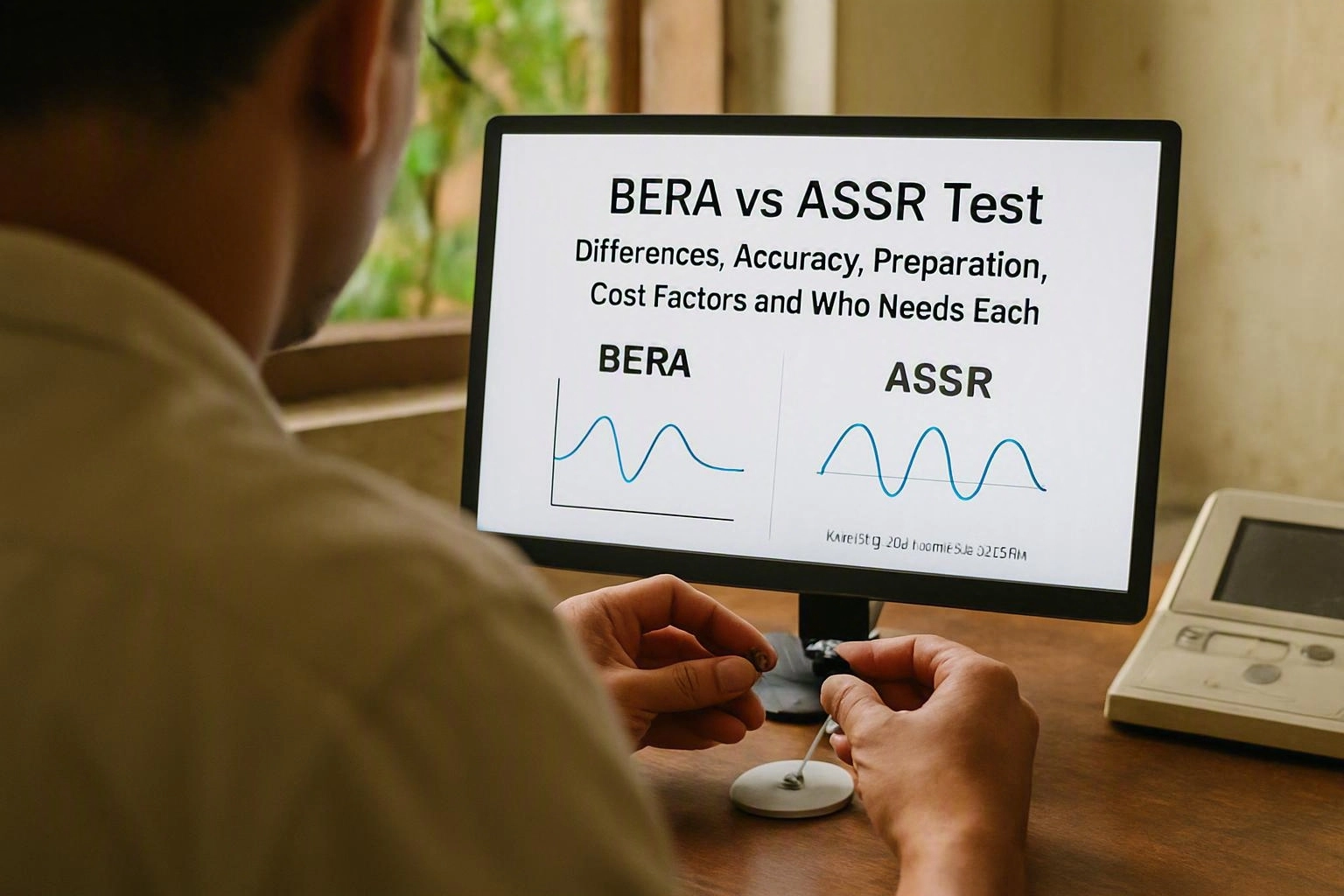
BERA testing, also called auditory brainstem response testing, measures timed electrical responses from the auditory nerve and brainstem. ASSR, or auditory steady-state response testing, uses ongoing modulated tones. It estimates hearing levels at separate frequencies. BERA focuses more on the pathway, while ASSR supports detailed threshold estimates.
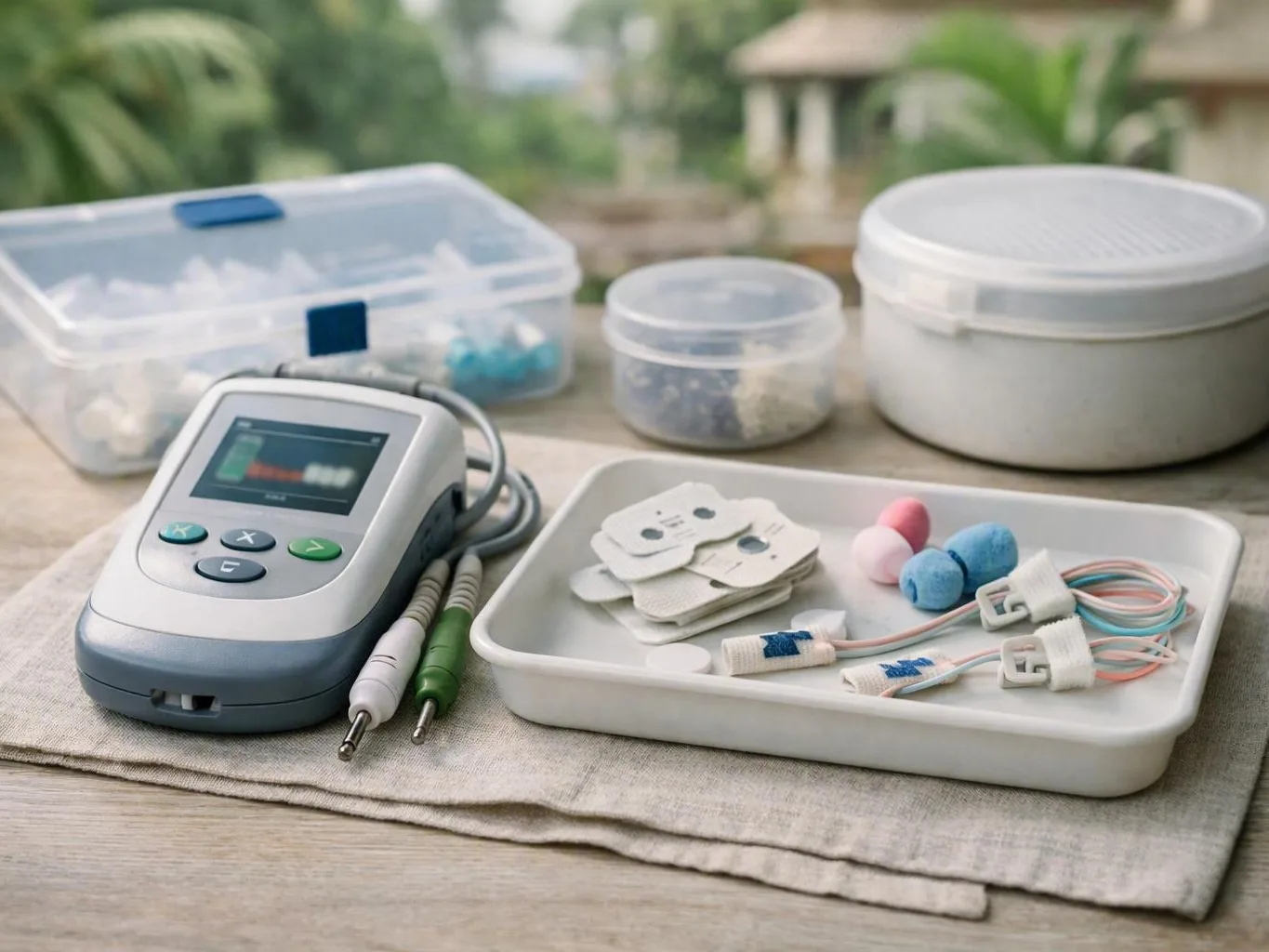
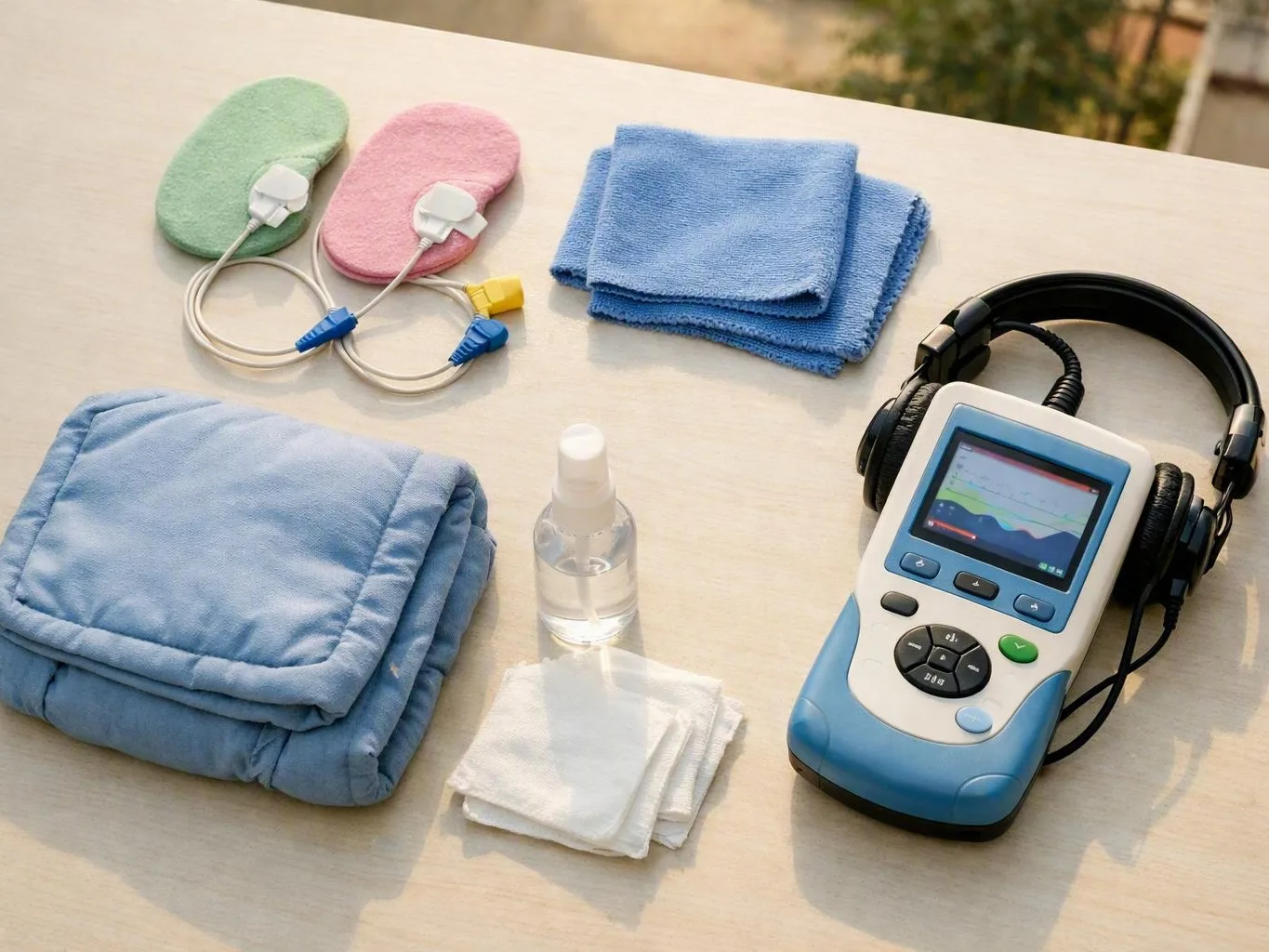
Both tests use small surface electrodes to record electrical signals. These signals appear after sound reaches the hearing system. BERA shows the timing and shape of the response. This can help assess nerve signals through the lower auditory pathway. The result still needs comparison with other findings.
ASSR studies the continuing response to tones at selected frequencies. It can provide frequency-specific estimates when behavioural responses aren’t reliable. Several frequencies may be tested during one session. ASSR can also help assess severe or profound hearing loss. The audiologist must still compare the result with the full clinical picture.
Neither test replaces every other hearing assessment. Ear blockage, middle-ear fluid, muscle tension and electrical noise can affect the recording. Sleep and movement can also change the result. The audiologist checks the room, equipment, electrode contact and waveforms before writing the report.
In simple terms, BERA asks how the auditory pathway responds and how quickly. ASSR asks what hearing level is estimated at each tested frequency. Some patients need both answers before hearing-aid candidacy or fitting is discussed.
Which Test Is More Accurate for Hearing Thresholds?
Neither test is always more accurate. ASSR can give useful hearing estimates for separate frequencies. BERA can provide stronger information about neural timing and pathway function. Accuracy depends on the equipment, test method, patient’s state, ear condition and professional interpretation.
Pure-tone audiometry remains important when a patient can respond consistently. Audiologists use the cross-check principle. This means they compare one result with other findings. Matching results from objective tests, ear checks and behavioural testing provide more confidence.
For example, ASSR can estimate hearing levels across several frequencies. However, it doesn’t explain every possible cause of hearing loss. BERA can show unusual timing or absent responses, but it may not create the same detailed threshold map. The audiologist should choose the test based on the patient’s needs.
What Happens Before, During and After Testing?
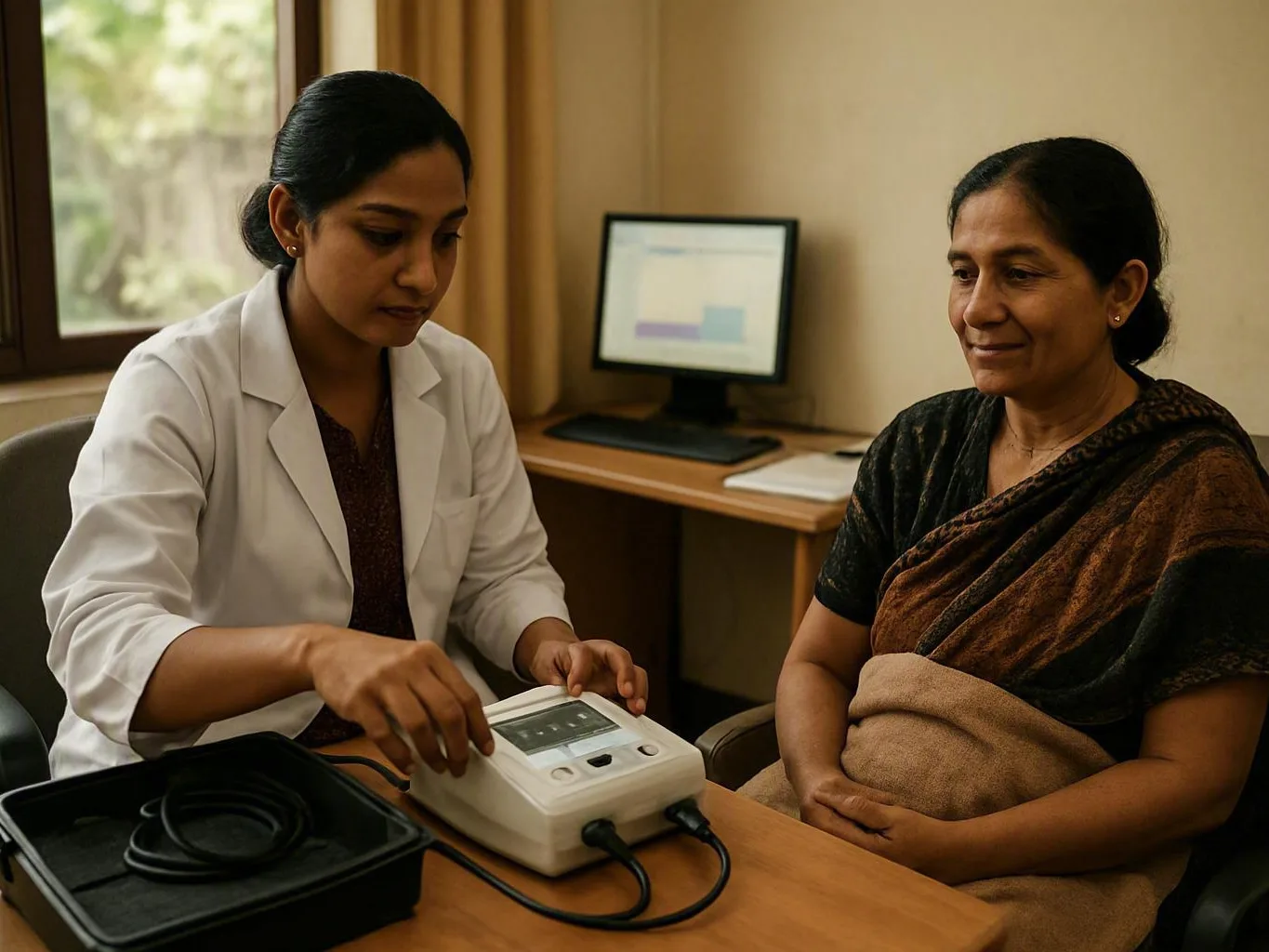
Preparation usually helps create a quiet, steady recording. The audiologist reviews the patient’s history and checks the ears. Surface electrodes are placed on the skin, and sounds are delivered through earphones or inserts. Sleep or calm stillness reduces movement and electrical noise. Any sedation needs a proper medical assessment.
Many uncomplicated recordings take about 45–120 minutes. Timing depends on the ears, frequencies, repeat recordings and the patient’s sleep. In Bhubaneswar, Odisha, families may prefer an early appointment during hot weather. Light clothing, drinking water and a calm travel plan can also help. These steps improve comfort, but they don’t directly change test accuracy.
What Affects the Cost of BERA or ASSR Testing?
BERA and ASSR test costs vary between patients and clinics. A clinic may perform one test, both tests or other hearing checks. Cost factors include test length, tested frequencies, repeat recordings, sedation needs and specialist reporting. Counselling and follow-up may also affect the quotation. Ask for a written estimate before booking.
| Cost factor | Why it may change the quotation |
|---|---|
| Test combination | A BERA–ASSR protocol may need more recording and reporting than one test. |
| Test duration | Longer sessions may be needed for movement, sleep or repeated responses. |
| Number of frequencies | More frequency-specific measurements can increase recording time. |
| Both ears | Testing both ears may require separate measurements and reporting. |
| Sedation | Medical checks, monitoring and facility support may be required. |
| Reporting and review | Audiologist review, a written report and counselling may be included separately. |
| Clinic equipment | Specialised equipment and trained staff affect availability and cost. |
Local prices can change with combined tests, both-ear testing and repeat recordings. Report review and sedation-related care may also add to the cost. When comparing prices, ask what the quotation includes. A low headline figure may not cover every service.
Our team can explain the requested protocol and what the service includes. We’ll also tell you when a referral may be needed. Ask about test length, preparation, report format and follow-up before confirming the appointment.
Who Needs BERA, ASSR or Both Tests?
Infants, young children and patients with unreliable behavioural responses may need BERA, ASSR or both tests. BERA helps assess auditory nerve and brainstem responses. ASSR can estimate hearing levels at separate frequencies, including severe-to-profound loss. The referring clinician or audiologist should choose the test plan.
Hearing concerns may follow newborn screening, repeated ear infections or delayed speech. Some children may respond poorly to everyday sounds or have developmental conditions. A baby who can’t complete pure-tone audiometry may need objective testing. The result can show whether further ENT review is needed.
BERA may be chosen when neural conduction or the brainstem pathway needs closer review. ASSR may be added when the team needs a wider frequency profile. Neither test explains every cause of hearing difficulty. Otoscopy, tympanometry, imaging or medical review may also be needed.
Results can support hearing-aid decisions, but they aren’t a hearing-aid prescription. The audiologist also considers communication needs, ear health, family priorities and development. Behavioural findings may guide the final hearing-aid recommendation.
Conductive hearing loss or middle-ear disease may require ENT or paediatric review. Families should ask if the facility can help arrange this referral. This matters when results are abnormal, incomplete or different from daily observations.
Deep FAQs: Cost, Access and Local Planning
Local access depends on the requested protocol and clinic resources. Patients in Bhubaneswar, Odisha should confirm what the service includes before booking. Ask about audiologist interpretation, both ears, frequency-specific results, preparation guidance and the final report.
No single fee suits every patient. A clear enquiry should cover test time, frequencies, both-ear recording and repeat work. It should also cover interpretation and follow-up counselling. This makes local service prices easier to compare.
Deep FAQs: Preparation, Results and Test Quality
Results require clinical correlation. Movement, muscle activity, electrical noise and poor sleep can affect recordings. A clear report should state the measured responses or estimated thresholds. It should also explain limits, follow-up needs and any need for behavioural testing or medical review.
Waveform interpretation is more than a simple pass-or-fail decision. The audiologist checks signal quality, electrode placement, response timing and threshold estimates. Ear findings and medical history also matter. An abnormal result may need repeat testing or ENT review.
Families should keep the report and share it with the child’s doctor, paediatrician, ENT specialist or hearing professional. If the result doesn’t match daily listening behaviour, further assessment is sensible. One test shouldn’t settle the diagnosis by itself.
Questions About Hearing Aid Clinic
Cost and Local Access
What Is the Difference Between BERA and ASSR Tests?
BERA measures timed responses along the auditory nerve and brainstem after sound stimulation. ASSR uses modulated tones to estimate hearing thresholds at separate frequencies. BERA focuses more on neural pathway responses, while ASSR supports detailed threshold estimates.
Which Is Better, BERA or ASSR?
Neither test is always better. The audiologist selects BERA, ASSR or both based on age, symptoms, ear findings and test reliability. The clinical question also guides the choice.
Is ASSR More Accurate Than BERA?
ASSR can provide useful frequency-specific estimates, while BERA provides important neural timing information. Accuracy depends on test design, stillness, ear condition, equipment and interpretation. The cross-check principle remains important.
Can BERA and ASSR Be Done Together?
Yes. A combined session may be advised when both pathway information and frequency-specific estimates are needed. The protocol depends on the patient’s needs and the facility.
What Is the Cost of a BERA Test in Bhubaneswar, Odisha?
There is no single fixed cost. Ask if the quotation covers one or both ears, preparation, repeat recordings, audiologist interpretation, the report and follow-up. Sedation-related clinical needs may increase the quotation.
What Is the Cost of an ASSR Test in Bhubaneswar, Odisha?
The cost depends on tested frequencies, ears, recording time, repeat measurements and reporting. A combined assessment may cost more. Request an itemised estimate before booking.
How Should a Child Prepare for a BERA or ASSR Test?
Follow the clinic’s feeding and sleep guidance, bring previous reports and dress the child comfortably. Plan a calm journey. Don’t give sedating medicine unless the responsible clinician has assessed and prescribed it.
Does a Child Need to Sleep During BERA Testing?
Natural sleep often helps because movement and muscle activity can affect recordings. Some older children can remain calmly still. Sedation is considered only after a proper medical assessment.
How Long Does a BERA or ASSR Test Take?
Many uncomplicated sessions take about 45–120 minutes. Timing varies with sleep, movement, both-ear testing, tested frequencies and repeat recordings.
Can BERA Detect Auditory Neuropathy?
BERA may show response patterns linked with auditory neuropathy or unusual neural conduction. Diagnosis needs clinical correlation and may include other hearing and medical tests.
Can ASSR Measure Severe or Profound Hearing Loss?
ASSR can help estimate thresholds for severe hearing loss across separate frequencies. The audiologist must consider test limits, recording quality and other findings before confirming the degree of loss.
What Should Patients Do After an Abnormal BERA or ASSR Result?
Discuss the report with the audiologist or referring clinician. Next steps may include repeat testing, pure-tone audiometry, middle-ear testing, ENT or paediatric review. Hearing support may also be discussed.
Preparation and Result Interpretation
How Are BERA and ASSR Results Interpreted?
The audiologist reviews waveform quality, electrical noise, response timing and estimated hearing levels. Ear findings and medical history are also considered. Results aren’t treated as an isolated pass-or-fail label.
Is BERA Painful or Harmful?
BERA is generally non-invasive. Surface electrodes record responses, while earphones or inserts deliver sound. The test shouldn’t hurt, although a child may dislike preparation or need help staying still.
What Happens if the BERA or ASSR Result Is Inconclusive?
The audiologist may explain the recording problem and suggest a repeat session. Better sleep preparation, another hearing test or medical review may help. Movement, poor electrode contact, middle-ear problems and electrical noise can reduce clarity.
How Long Does It Take to Receive the BERA or ASSR Report?
Report timing depends on recording complexity, specialist interpretation and any extra review. Confirm the expected time and delivery method when booking the audiology appointment.
For an appointment enquiry, bring previous reports and ask which test suits the patient’s age, symptoms and referral question. Contact details are available at the enquiry page.
Author: Dr. Sakti Prasad Mohanty