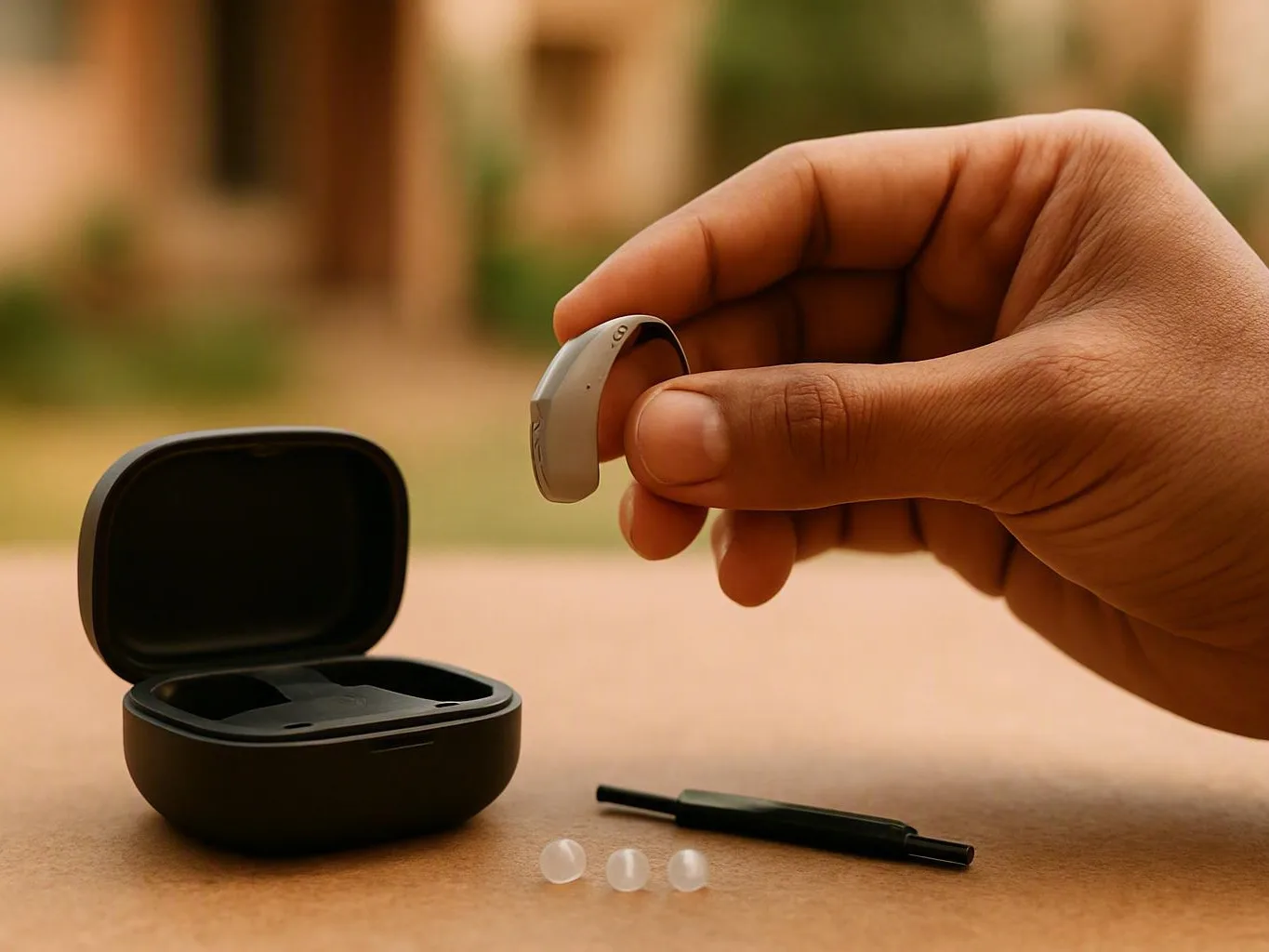
How Long Does a Hearing Test Usually Take?
A hearing test usually takes 20 to 60 minutes, depending on the tests needed and the patient’s age, symptoms and responses. Pure tone audiometry often takes 15 to 30 minutes. Tympanometry and otoacoustic emissions testing may take 5 to 15 minutes each. A BERA test can take 30 to 90 minutes because it records auditory nerve responses. The patient may also need to stay still or sleep. The audiologist may need extra time for medical history, an ear check, results and counselling. So, the full appointment can last longer than the tests.
How Long Does a Hearing Test Take?
Hearing tests usually take 20 to 60 minutes, including the case history, ear examination, hearing measurements and results discussion. A basic screening may take only 10 to 20 minutes. A diagnostic appointment with several tests can take an hour or longer. The audiologist confirms the expected time before testing starts.
At Audium Hearing Aid Clinic, we first understand the concern. We don't rely on one measurement alone. The audiologist may ask about communication problems, tinnitus, ear infections, noise exposure, medicines and past treatment. This history helps us choose between a screening and a full hearing evaluation.
An otoscopy often follows. The clinician uses a lighted instrument to check the ear canal and eardrum. They look for wax, blockage, irritation or other visible concerns. The measurements then take place in suitable conditions, often with calibrated equipment and a quiet or sound-treated room.
Simple assessments finish quickly when responses are clear and the ears look healthy. Older adults, young children and people with communication or attention difficulties may need more explanation. They may also need breaks or another testing method. Time is needed to review the audiogram, explain the findings and discuss useful next steps.
Most straightforward appointments take 20 to 45 minutes. A detailed diagnostic assessment may last more than an hour. The test type and its complexity decide the time, not a fixed stopwatch.
Typical Hearing Test Times at a Glance
Hearing test time depends on the appointment type. A simple assessment often takes 10 to 30 minutes. An average diagnostic assessment takes about 30 to 60 minutes. A complex evaluation may take 60 to 120 minutes. These ranges include testing, patient responses and results discussion.
| Project scope | Typical duration | What it may include |
|---|---|---|
| Simple | 10–30 minutes | Screening or one basic hearing measurement |
| Average | 30–60 minutes | Case history, ear check, audiometry and explanation |
| Complex | 60–120 minutes | Several tests, repeat measurements or complex symptoms |
These are useful planning ranges, not promises. A simple assessment may take longer if responses are unclear. The clinician may also find a concern that needs more testing. An appointment can be shorter when the history is clear, responses are reliable and no extra assessment is needed.
How Long Does an Audiometry Test Take?
Pure tone audiometry commonly takes 15 to 30 minutes. The full appointment may take longer. This behavioural hearing test asks the patient to respond whenever they hear a tone. The audiologist plays sounds at different pitches and loudness levels to find hearing thresholds.
Testing may start with air conduction. Headphones or ear inserts send tones through the ear canal. This lets the clinician check the full hearing pathway. Bone conduction may follow, using a small vibrator behind the ear. It helps compare the outer and middle ear with the inner-ear pathway.
The findings appear on an audiogram. This chart shows hearing thresholds at different frequencies. Adults often complete the test quickly, but children may need games, demonstrations or short pauses. People with communication difficulties may also need extra time and clearer instructions.
People often ask how long an audiometry test takes when they mean the measurement itself. The answer is usually 15 to 30 minutes. However, planning should include the history, otoscopy, equipment set-up and counselling. Services such as Hearing Tests and Pure Tone Audiometry depend on the clinical question.
How Long Do BERA, Tympanometry and OAE Tests Take?
A BERA test commonly takes 30 to 90 minutes. Tympanometry takes about 5 to 15 minutes. Otoacoustic emissions testing usually takes 5 to 15 minutes. The exact time depends on age, movement, symptoms, preparation and other tests.
A BERA test, also called an auditory brainstem response test, measures electrical responses along the auditory nerve and brainstem. Small sensors sit on the skin while sounds play through earphones or inserts. The patient must stay relaxed and still. Babies and young children may need to sleep naturally. Some cases need extra planning for a reliable recording.
Tympanometry checks middle ear function. It gently changes air pressure in the ear canal and measures eardrum movement. This can show fluid, pressure problems, reduced movement or other middle-ear concerns. The test is brief, but it may need repeating if the seal is poor or the patient moves.
Otoacoustic emissions testing checks cochlear function. It records sounds made by the inner ear after gentle tones are played. The test can help assess babies, young children and patients who cannot give consistent responses. Background noise, movement, earwax and an unsettled child can affect the recording.
Reliable results need calibrated equipment, a quiet room, correct probe placement and patient stillness. A BERA assessment may take longer than a routine behavioural test. Its recording must capture responses accurately. Our team explains each assessment before it starts. Patients and parents can then understand why it is recommended.
Sometimes, these tests are used together. Tympanometry may explain a middle-ear finding, while OAE testing gives information about the cochlea. The audiologist reviews the whole pattern instead of relying on one result.
What Can Make a Hearing Test Take Longer or Shorter?
Hearing test time changes with age, attention, symptoms, ear health and the number of tests needed. Appointments may be shorter when responses are consistent and no extra assessment is required. They may take longer when wax, noise, unclear responses or movement affects the results.
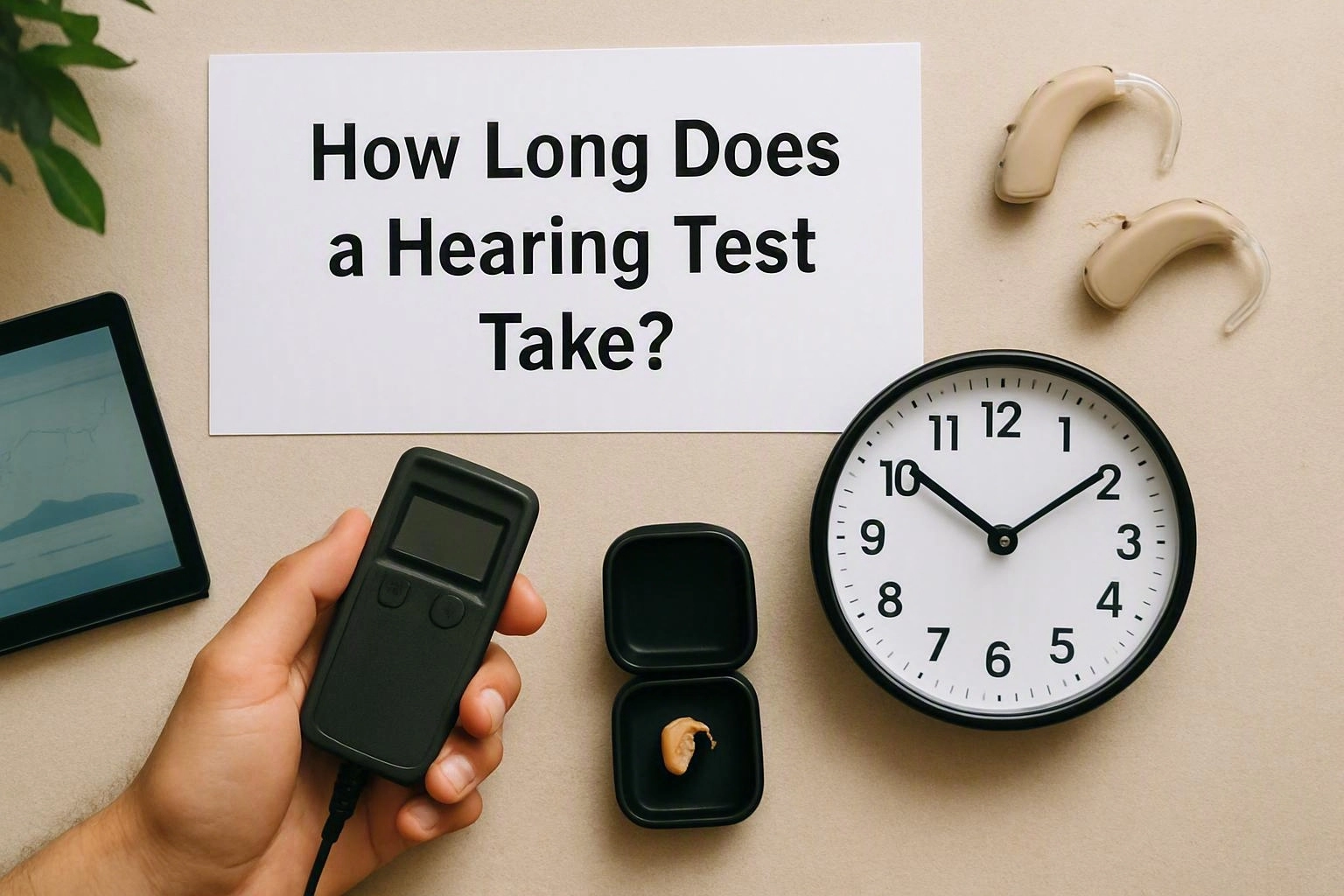
Technical conditions matter too. A sound-treated room reduces unwanted noise. Calibrated equipment supports dependable measurements. If the patient cannot stay still or hear instructions clearly, repeating parts is safer than rushing.
What Happens During a Hearing Test Appointment?
A hearing test appointment usually starts with questions about hearing and health history. An ear examination follows, along with one or more hearing measurements. Depending on the findings, the audiologist may test hearing thresholds, middle ear movement or inner-ear responses. The results and next steps are then explained.
The case history covers when symptoms began and whether they affect one or both ears. It also covers difficult communication situations and relevant medical or medicine history. Parents may be asked about pregnancy, birth, infections and speech development. These details help the audiologist choose the right hearing assessment.
During otoscopy, the clinician views the ear canal and eardrum. If the ear is suitable for testing, the patient usually sits in a sound-treated room. Headphones or ear inserts may test air conduction. Other equipment may measure bone conduction, middle ear movement or cochlear responses.
The appointment doesn't finish when the tones stop. The audiologist reviews the audiogram and other results. They explain what the findings may mean and discuss monitoring, medical referral, hearing support or more testing. This explanation is part of good audiological counselling.
Children, older adults and patients with communication or attention difficulties shouldn't feel rushed. Instructions can be simplified, and demonstrations or breaks can be added. At Hearing Tests in Bhubaneswar, families can ask how much time to allow.
For a general appointment, allow at least an hour if the test type isn't known. This allows time for discussion, set-up and repeat measurements.
How Should You Prepare for a Hearing Test?
Hearing test preparation is usually simple. Bring relevant medical information and explain when symptoms began. Mention noise exposure or ear infections, and arrive rested. Avoiding loud noise before testing may help keep responses accurate. Parents should bring their child's hearing and development history when relevant.
Don't stop prescribed medicines unless a qualified clinician tells you to do so. If you have an active infection, severe pain or discharge, ask if medical review should come first.
When Should You Book a Hearing Test?
A hearing test is suitable when hearing difficulty, tinnitus, ear fullness or speech concerns continue. Repeated trouble understanding conversation also needs attention. Sudden hearing loss, severe dizziness, ear discharge or major pain needs prompt medical care. An audiologist can choose the right assessment and advise about referral.
Book an assessment if people sound unclear, you often ask for repetition or the television volume keeps rising. Conversations in background noise may also become difficult. Tinnitus, a blocked feeling or a clear difference between the ears deserves attention.
Children should be assessed when speech development seems delayed or responses to sound are inconsistent. Teachers or family members may also notice listening problems. Early testing can separate hearing loss from attention, language or middle-ear concerns.
Sudden hearing loss, especially in one ear, is urgent. It shouldn't be managed through routine testing alone. Severe dizziness, strong ear pain, discharge or infection signs may also need prompt medical assessment. A referral can be arranged if symptoms suggest a medical cause.
If you're unsure, an audiologist can discuss the symptoms and suggest the right diagnostic assessment. The goal isn't simply to complete a test. It is to get dependable information and connect the patient with suitable care.
Questions About Hearing Aid Clinic
How Long Does a Hearing Test Take for Adults?
For an adult, the appointment commonly takes 20 to 60 minutes. A simple screening may be shorter. A diagnostic assessment with otoscopy, pure tone audiometry, tympanometry and counselling may take an hour or more.
How Long Does a Hearing Test Take for a Child?
A child’s appointment may take 30 to 60 minutes, but it can be shorter or longer. Age, attention, speech development, sleep, movement and play-based testing affect the time needed.
Can I Drive After a Hearing Test?
Most people can drive after a routine hearing assessment. It is non-invasive and doesn't usually affect alertness. If you feel dizzy or unwell, ask the clinician before driving.
Do I Need to Prepare for a Hearing Test?
Preparation is usually minimal. Bring medical information and previous results, describe symptoms and noise exposure, and mention ear infections. Avoid loud noise beforehand. Arrive rested and allow extra time for a child or older adult.
How Long Does It Take to Get Hearing Test Results?
Many routine results can be discussed immediately after testing. Complex cases may need earlier records, extra tests or medical review before a complete explanation.
Content reviewed and medically authored by Dr. Sakti Prasad Mohanty.
For questions about the appropriate assessment, contact our team and share the main symptoms, their duration and any previous ear or hearing history.
Related Resources
Pediatric Hearing Clinic for Children
Who It's ForNewborn Hearing Testing for Infants
newborn hearing testing clinic for infants
Who It's ForHearing Aid Clinic for People with Tinnitus
hearing aid clinic for tinnitus
Everything About ItBERA vs ASSR Test: Differences, Accuracy, Preparation, Cost Factors and Who Needs Each
BERA vs ASSR test