the Right Hearing Aid Clinic for Tinnitus
A hearing aid clinic for tinnitus checks your hearing and discusses suitable support. Hearing tests can show hearing loss, sound sensitivity or other ear symptoms. Digital hearing aids may make speech easier to hear and reduce tinnitus awareness for some people. A hearing professional should explain device features, likely results and follow-up care. They should also explain when medical referral is needed. Audium Hearing Aid Clinic offers tinnitus assessment, hearing tests, hearing aid consultation and personalised tinnitus management in Bhubaneswar, Odisha.

Tinnitus-focused hearing care brings together symptom checks, hearing tests and practical support. It can help people with tinnitus and hearing loss, or tinnitus alone.
Our audiology service starts by listening to your concerns. We don't assume that one device or treatment will suit everyone. A consultation can help you understand your symptoms and choose between monitoring, sound therapy, hearing technology or medical review.
Dr. Sakti Prasad Mohanty provides the clinical authorship for this educational guidance.
How Can a Hearing Aid Clinic Help with Tinnitus?
A hearing aid clinic can check tinnitus alongside your hearing. An audiologist can explain possible causes and suggest suitable support. Hearing tests can show whether hearing aids, monitoring, sound therapy or medical referral may help.
Tinnitus is the feeling of hearing a sound without an outside source. It may sound like ringing, buzzing, humming or hissing. Its effect can change from one day to another. Some people have tinnitus with normal hearing, while others have hearing loss too.
A structured tinnitus assessment looks at the sound’s type, timing, triggers and effect on daily life. The audiologist may ask about noise exposure, medicines, ear symptoms and past treatment. They may also ask about communication problems. This gives useful context for the hearing test.
Audiometry shows whether amplification could improve access to speech and everyday sounds. For someone with hearing loss, more sound may make tinnitus less noticeable. This can reduce the difference between tinnitus and a quiet room. It isn't a guaranteed cure, and results differ between people.
Our team may discuss tinnitus management, listening tips and sound therapy. Sound therapy can use selected background sounds or guided clinical options. If the results suggest a medical cause, we'll explain the need for referral.
Most first assessments take about 45–90 minutes. The time depends on your history, tests and questions. The goal is a clear plan, not pressure to buy a device.
Why People with Tinnitus Seek Specialist Hearing Care?
People seek specialist hearing care when tinnitus affects communication, focus, sleep or emotional wellbeing. A hearing clinic provides testing, advice and practical support. It helps each person choose care based on hearing needs, lifestyle and symptoms.
A tinnitus hearing clinic should leave time for questions and choices. Our services support informed decisions about hearing tests, counselling, device trials, sound support or referral.
What Happens During a Tinnitus and Hearing Assessment?
A tinnitus and hearing assessment usually starts with your symptoms and medical history. The clinician may check your ears and perform audiometry or speech testing. The results help guide safe, personalised tinnitus management.
The case history covers when tinnitus began and whether it is constant or occasional. You may be asked if it changes with movement, jaw activity, stress or noise. Tell the clinician about dizziness, ear infections, head injury, medicines and family history.
During otoscopy, the clinician looks at the ear canal and eardrum. They check for wax, inflammation and other visible changes. This isn't a full medical diagnosis. It can show problems that need attention before hearing technology is considered.
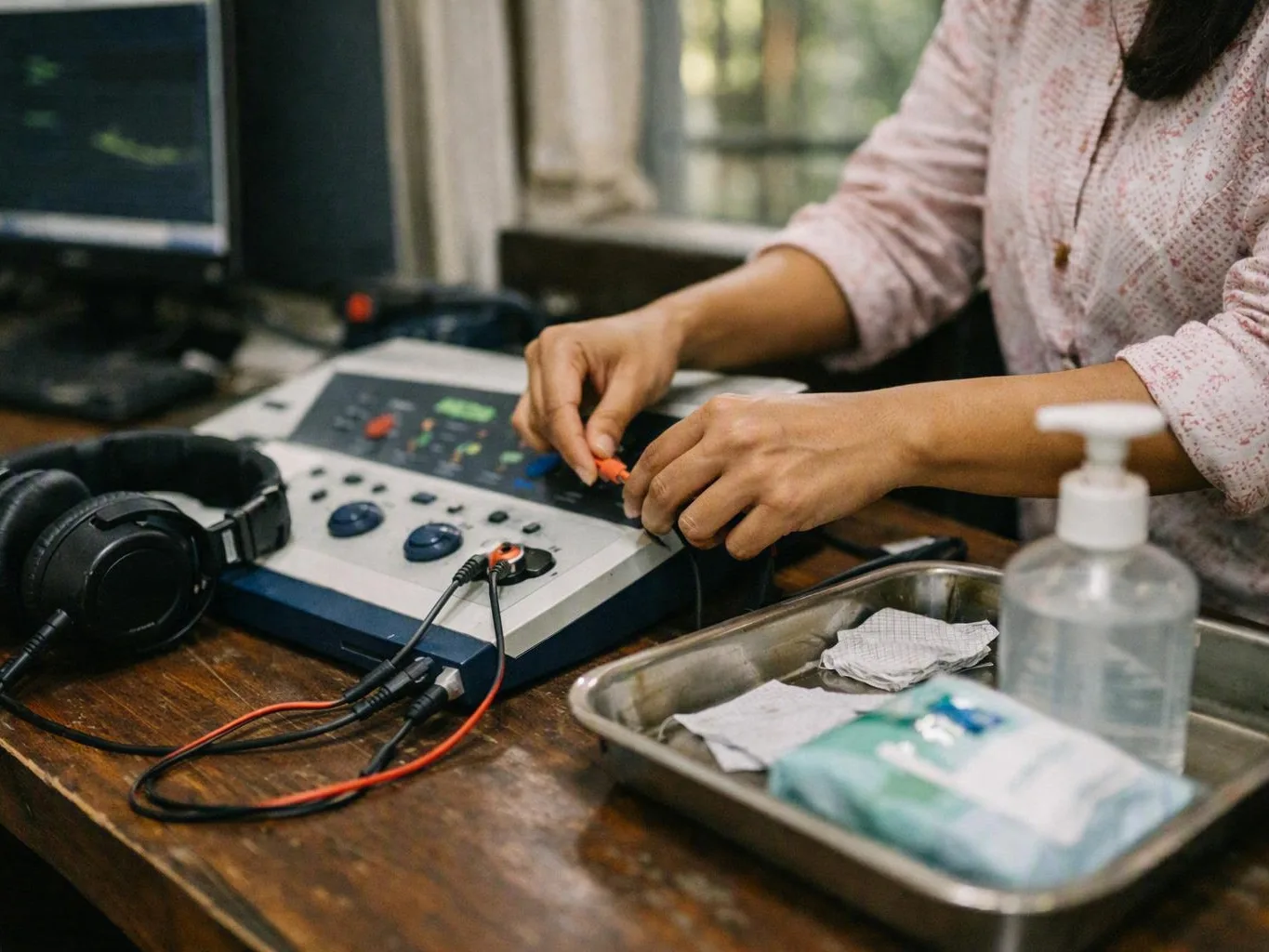
Pure-tone audiometry measures the quietest sounds you can hear at different pitches. The results show hearing thresholds for each ear. Speech audiometry may check how well you hear or understand speech at comfortable levels.
Extra tests may be discussed if you have sound sensitivity, unequal hearing or unusual listening difficulty. The clinician explains the results in plain language. They then discuss amplification, sound therapy, monitoring or specialist advice.
Referral may be needed when hearing patterns seem unusual or the ears show concerning changes. Marked differences between the ears may also need medical review. A safe assessment recognises the limits of an audiology service.
Which Symptoms Should Be Discussed Promptly?
Some symptoms need prompt medical advice, even if you also want hearing support. Sudden hearing loss needs urgent medical attention. Early assessment may be important.
Unilateral tinnitus means tinnitus mainly in one ear. It should be checked if it continues or comes with unequal hearing. Pulsatile tinnitus follows the heartbeat. It may have a blood vessel or other medical cause.
Dizziness, new balance problems, ear pain, discharge or severe pressure also need medical advice. New neurological symptoms need prompt care too. Don't delay referral while waiting for a hearing aid consultation.
Features and Challenges That Matter When Choosing Hearing Support
Good hearing support combines suitable device features with tinnitus care and follow-up. People often compare sound quality, speech clarity, comfort, connectivity and tinnitus sound options. They may also need time to adjust to new settings.
Features should follow the hearing assessment. They shouldn't replace it. Someone with mild hearing loss and strong sound sensitivity may need a different plan from someone with more hearing difficulty. The aim is comfortable listening in real situations.
Tinnitus can change, and amplified sound may feel uncomfortable at first. Some people aren't sure which programme to use. Device changes can be made slowly when needed. Rechargeable power, app controls and connectivity may help. Comfort and easy daily use matter more than extra features.
Ask how many review visits are included and how programming changes work. Ask what to do if sound sensitivity increases. A device is only one part of tinnitus-focused hearing care.
How Are Digital Hearing Aids Used in Tinnitus Management?
Digital hearing aids may help tinnitus management by improving access to speech and everyday sounds. They may also make tinnitus less noticeable for some users. A hearing professional should programme them around hearing levels, comfort, sound tolerance and daily needs.
Amplification doesn't remove tinnitus for everyone. It may reduce tinnitus contrast by adding useful sound. A tinnitus sound generator may provide another option. Some people use both approaches. Others benefit more from counselling, background sound or medical investigation.
Programming flexibility matters because tinnitus and sound tolerance can change. Our team can explain each control and help you choose suitable settings. Follow-up is part of responsible hearing aid fitting.
What Should You Expect from a Tinnitus Hearing Aid Consultation?
A tinnitus hearing aid consultation links test results with your goals, device choices and aftercare plan. The clinician should explain benefits, limits, features and wearing routines. They should also arrange follow-up. Our team provides consultation, hearing tests and tinnitus management.
The discussion should begin with your goals. You may want clearer speech, less awareness of internal sound or easier listening in quiet rooms. Tell the clinician about your routine. This helps link the device to your daily life.
During selection, you should receive clear information about style, receiver or earmould options, controls and connectivity. Tinnitus sound features may also be discussed. The recommendation should reflect your hearing results, ear health, hand movement, comfort and sound sensitivity.
Informed consent means knowing what the device can and cannot do. Hearing aids can improve access to sound for people with hearing loss. They may reduce tinnitus awareness for some users. They aren't a guaranteed cure. Adjustment may take time and several programming changes.
Aftercare may cover cleaning, charging, insertion, safe volume and troubleshooting. A follow-up visit lets you discuss comfort, feedback, blocked-ear feelings or tinnitus changes. Adjustments should follow your real-world experience.
If symptoms suggest medical referral, we'll explain this clearly. A hearing device must not delay care for sudden hearing loss, persistent unilateral tinnitus, pulsatile tinnitus, serious dizziness or ear pain.
For people searching for Tinnitus Assessment in Bhubaneswar, a consultation offers a practical starting point. It can include hearing measurements and personalised advice. We can also discuss tinnitus-focused hearing care when hearing loss and sound sensitivity overlap.
Choosing a Hearing Aid Clinic should be a shared decision. Bring previous reports, a medicine list and your questions. Our aim is to give you clear information for a realistic choice.
Questions About Hearing Aid Clinic
Can Hearing Aids Help with Tinnitus?
Hearing aids may help some people, especially when tinnitus comes with hearing loss. Amplification improves access to speech and everyday sounds. This may reduce the contrast that makes tinnitus noticeable. Hearing aids aren't a guaranteed cure, so an assessment is needed.
What Type of Hearing Aid Is Best for Tinnitus?
single type is best for everyone. The right device depends on hearing results, speech needs, comfort, sound sensitivity and handling ability. Connectivity and tinnitus sound options may also matter. Flexible programming and follow-up support are often more useful than appearance alone.
Should I Get a Hearing Test if I Have Tinnitus?
Yes. A hearing test can find hearing loss, differences between ears and other findings. The results help guide hearing technology, monitoring, sound therapy or medical referral.
Can Tinnitus Be Treated by an Audiologist?
An audiologist can assess hearing, offer counselling and advise on sound therapy. They can also fit or programme hearing devices when suitable. An audiologist may recommend medical referral when symptoms need care beyond hearing-device support.
When Should Tinnitus Be Referred to a Doctor?
Seek prompt medical advice for sudden hearing loss, persistent unilateral tinnitus or pulsatile tinnitus. Significant dizziness, ear pain, discharge and new neurological symptoms also need review. These symptoms may need medical investigation and shouldn't be managed only with sound masking.
To discuss your symptoms, hearing test options and next steps, contact our team for a personalised consultation. Bring previous hearing reports and note when tinnitus is most noticeable.
Make an enquiryRelated Resources
Digital vs Rechargeable Hearing Aids: Complete Guide to Features, Benefits and Fit
digital vs rechargeable hearing aids
Everything About ItHearing Aid Fitting and Programming Explained: What to Expect Before, During and After a Trial
what happens during a hearing aid fitting
Why It MattersBenefits of Hearing Aids for Communication and Quality of Life
what are the benefits of hearing aids
Why It MattersWhy Professional Hearing Aid Fitting Matters: Benefits Over Self-Fitting
benefits of professional hearing aid fitting