What Happens During a Hearing Aid Fitting?
A hearing aid fitting matches the device to your hearing loss, daily needs and comfort. A hearing care professional reviews your audiogram and selects suitable technology. They place the hearing aids, check their output and programme the settings. You’ll learn how to insert, remove, clean and charge the devices. You’ll also learn how to control the volume and discuss the trial period. At first, sounds may seem sharp or loud while your brain adjusts. Report discomfort, whistling, blocked feelings or unclear speech promptly. The clinician can then refine the programming.
Hearing aid fitting in Bhubaneswar can suit your hearing profile, communication habits and comfort. At Audium Hearing Aid Clinic, we explain each stage clearly. We also welcome questions from users and family members.
Hearing Aid Fitting is a clinical hearing-care service, not simply a device sale. It includes hearing assessment, device selection, programming, fit checks, verification, training and ongoing support.
Author: Dr. Sakti Prasad Mohanty
Quick Answers: Hearing Aid Fitting at a Glance
A hearing aid fitting reviews your hearing profile, prepares the devices and programmes them to prescribed targets. The clinician checks comfort and teaches daily use. They may use real-ear measurement to check the output. A trial and follow-up visits then help review speech clarity, sound quality and comfort.
| Question | Short answer |
|---|---|
| What is reviewed? | Your audiogram, symptoms, listening needs and physical fit. |
| How are settings checked? | Hearing aid programming is compared with prescribed targets, often using real-ear measurement. |
| What is the trial for? | A hearing aid trial tests comfort, speech understanding and sound quality in daily life. |
| What should you report? | Pain, whistling, blocked sensation, excessive loudness or unclear speech. |
| What happens next? | You receive care instructions and a follow-up appointment for targeted changes. |
Most first appointments take about 60–120 minutes. The time depends on the number of devices, testing and support needed. Some people need more than one visit before the hearing device feels comfortable.
What Happens Before and During the Fitting?
The hearing aid fitting starts with a review of your audiogram, symptoms, communication needs and chosen device. The clinician checks your ear and the physical fit. They connect each hearing aid to programming software and apply a suitable prescription. They then check the sound output. You’ll listen and explain what feels natural or uncomfortable.
Bring your current hearing devices, glasses, medication list and a family member if useful. Your daily needs matter. Speech in background noise, telephone use and conversations with familiar speakers may shape the final setup.
What Will the Clinician Check Before Programming?
Before programming, the clinician checks your hearing history, ear findings, hand control, vision and usual listening settings. This helps ensure the device will work well in daily life.
The discussion may cover communication at home, work or social events. It may include mobile and landline telephone use. The professional may also ask how you manage small objects, charging contacts and battery doors.
An ear examination can find tenderness, skin problems, drainage or earwax. Sudden hearing changes, one-sided symptoms, severe dizziness or new discharge need medical review. They should not be treated as routine adjustments. A family member can describe communication problems and learn the care routine.
How Are Hearing Aids Programmed and Verified?
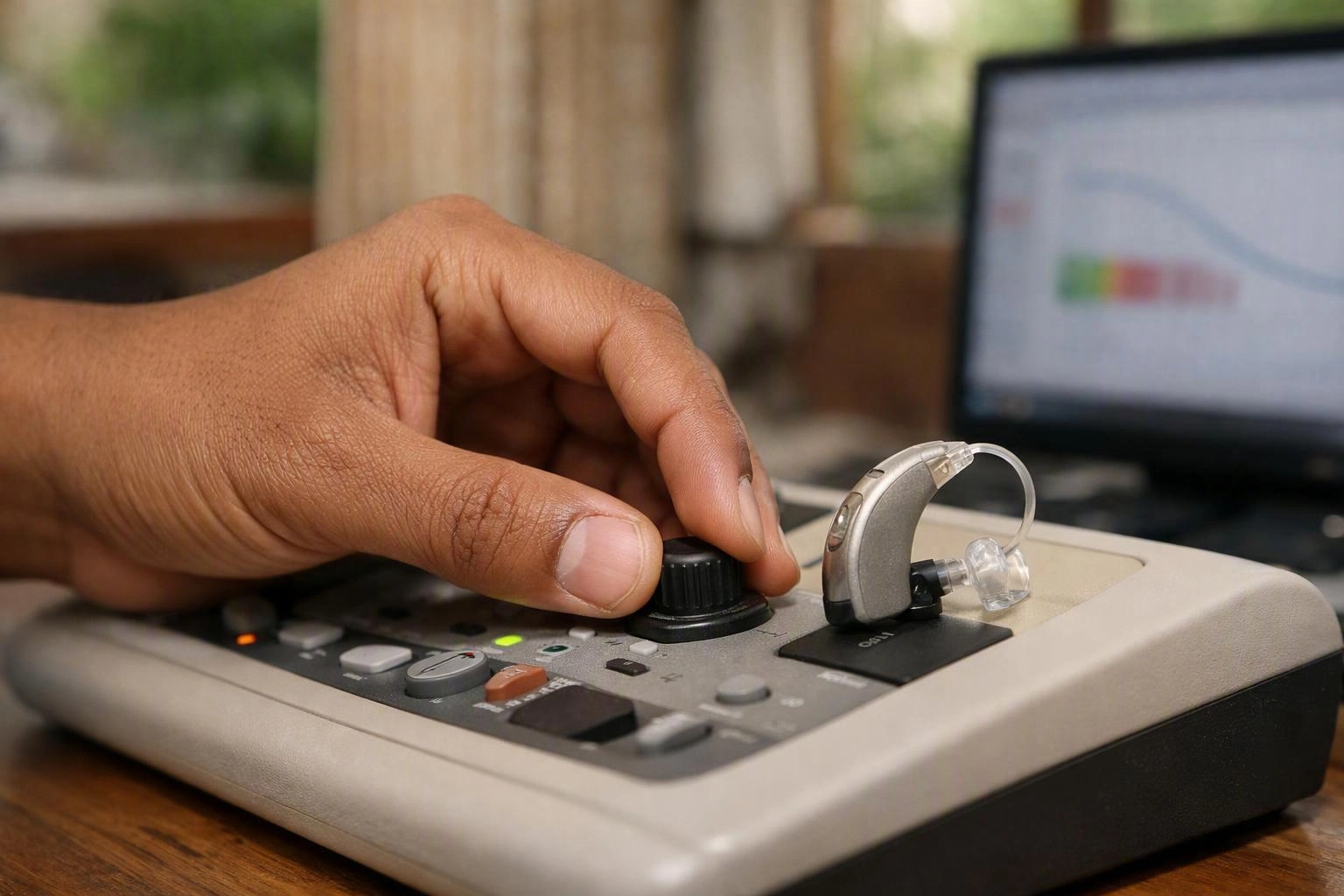
Hearing aid programming adjusts amplification across frequencies to match your hearing loss and listening goals. The clinician may use real-ear measurement to check the settings. They also check for feedback and excessive loudness. Programming can change after you share results from daily listening.
Programming controls gain, frequency response and features such as directional microphones, noise reduction, telephone compatibility and automatic environment changes. The goal is clear access to speech without making ordinary sounds too loud.
Real-ear measurement uses a small probe near the eardrum to compare device output with prescribed targets. You wear the hearing aid during the test. This method is different from simply asking whether the device sounds loud. It checks soft, average and louder sounds across frequencies.
Checks may also cover maximum power, acoustic feedback, receiver placement and the ear canal or earmould. Feedback control can reduce whistling. Persistent feedback may point to movement, wax, a poor seal or a technical fault.
Verification guides the fitting, but it isn’t the whole process. Your comments about speech clarity, background noise, sound quality and listening tiredness help refine the setup. Don’t increase settings yourself after sudden changes or pain. Seek professional advice instead.
What Should You Expect During the Hearing Aid Trial?
A hearing aid trial lets you assess comfort, speech understanding and sound quality in daily situations. You can do this before making your final choice. New sounds may seem sharp, loud or unusual at first. Keep notes about conversations, background noise, comfort and handling. These notes help guide follow-up changes.
Getting used to hearing aids takes time. Start with short periods in quiet places, then use them for longer as comfort improves. Soft sounds may become noticeable again. Your own voice may also sound different. Still, you shouldn’t ignore ongoing problems.
Record where listening was difficult, who was speaking and the noise level. Note what you changed, too. Include telephone calls, television, family conversations, outdoor sounds and group meetings. These details can show whether programming needs changing.
A follow-up appointment lets the clinician review your notes and inspect your ears and devices. They may repeat checks and make a hearing aid adjustment. Report soreness, pressure, ongoing feedback, blocked feelings, sudden hearing changes or worsening tinnitus. A trial should support a clear decision, not pressure you to keep an unsuitable device.
How Do You Care for Hearing Aids After Fitting?
After fitting, hearing aid care includes daily cleaning, safe charging or battery replacement, moisture protection and correct storage. Learn how to insert and remove the devices. Check the receiver or tubing, and notice blocked sound. Contact the clinic when problems continue. Follow-up care supports comfort, function and suitable amplification.
Care supports hearing rehabilitation. Regular use, communication strategies and family support can make speech easier to understand while your brain adjusts.
Deep FAQ: Your Questions About Fitting, Trials and Programming
Hearing aid fitting questions often cover the appointment, comfort, programming, trial choices and ongoing support. A qualified hearing care professional should explain what the device can and cannot do. They should also explain how settings are checked and follow-up adjustments work. Some symptoms need clinical review instead of self-adjustment.
During a hearing aid consultation, ask about the technology, warranty, trial terms, maintenance, accessories and likely hearing aid cost factors. Good care includes realistic expectations and a clear plan for hearing rehabilitation.
Fitting Process and Preparation Questions
Comfort, Quality and Safety Questions
Trial, Follow-Up and Support Questions
Questions About Hearing Aid Clinic
What Happens During a Hearing Aid Fitting?
The clinician reviews your audiogram and needs, checks the ear and physical fit, programmes the devices, verifies output, teaches daily care and arranges a trial with follow-up support.
How Long Does a Hearing Aid Fitting Take?
Many first appointments commonly take about 60–120 minutes. The time varies with the number of devices, testing, physical adjustments and the amount of instruction required.
What Should I Bring to a Hearing Aid Fitting?
Bring your audiogram or hearing test, current devices, glasses, relevant medical information and a family member or carer if you would like practical support.
Does a Hearing Aid Fitting Hurt?
The process should not hurt. Report pressure, rubbing, pain, skin damage or continuing ear discomfort promptly so the fit can be checked.
How Are Hearing Aids Programmed?
Software adjusts gain, frequency response and listening features according to the audiogram and prescriptive targets. The clinician then listens to your feedback and may verify the result using real-ear measurement.
What Is Real-Ear Measurement in Hearing Aid Fitting?
It is a verification method that measures sound near the eardrum and compares device output with prescribed targets. This helps confirm that amplification is appropriate for your hearing profile.
Why Do Voices Sound Strange with New Hearing Aids?
Amplification can make your own voice and soft environmental sounds more noticeable. This usually improves with acclimatisation, but persistent hollow, sharp or unclear sound should be discussed at follow-up.
How Long Does It Take to Get Used to Hearing Aids?
Adaptation differs between people. Gradual daily use, quiet practice and regular follow-up can help, while pain, severe loudness or worsening symptoms require prompt professional advice.
Why Are My Hearing Aids Whistling or Feeding Back?
Whistling can be linked to movement, earwax, a poor seal, damaged tubing or a setting that needs refinement. Persistent feedback should be checked rather than ignored.
Can Hearing Aids Be Adjusted During the Trial Period?
Yes. Your listening notes allow the clinician to make targeted changes to loudness, speech settings, background-noise management and physical fit during the trial.
How Often Do Hearing Aids Need Follow-Up Appointments?
A review is commonly arranged after initial daily use, with later appointments based on comfort, hearing changes, device performance and your rehabilitation needs.
What Should I Do if My Hearing Aid Feels Uncomfortable?
Remove it if there is pain or skin injury, note when and where it feels uncomfortable, and contact the hearing care professional. Do not force, cut or modify the device yourself.
A careful fitting links clinical measurements with everyday communication. If you’re ready to discuss your hearing needs, our team can explain suitable options, trial arrangements and follow-up care in clear language.
Ask about your hearing careRelated Resources
Hearing Aid Clinic for Seniors
Who It's ForHearing Aid Clinic for People with Tinnitus
hearing aid clinic for tinnitus
Who It's ForHearing Aid Clinic for Cochlear Implant Candidates
hearing aid clinic for cochlear implant evaluation
Why It MattersBenefits of Hearing Aids for Communication and Quality of Life
what are the benefits of hearing aids