Hearing Aid Not Working? A Safe Troubleshooting and Repair Checklist
A hearing aid repair checklist starts with the battery, power switch, charging case, volume, wax filter, microphone openings and receiver. Replace or recharge the power source, clean approved parts only, and check for moisture or blockages. Don’t insert sharp objects, use household liquids or open the device. A hearing clinic should check ongoing silence, weak sound, feedback, damage, charging failure or possible internal faults. Hearing Aid Repair, Hearing Aid Cleaning, Hearing Aid Battery Replacement, Hearing Aid Accessories and Hearing Aid Programming can restore safe and suitable function when home checks don’t solve the problem.
What Should I Check When My Hearing Aid Stops Working?
Hearing aid troubleshooting should start with the power source, controls and sound pathway. Check the battery or charging level first. Then inspect the volume, programme, receiver and wax filter. Restart the device and test it safely before arranging professional hearing aid repair.
Older adults, new users and family carers can follow this sequence without opening the device. Make one change at a time. That way, you’ll know what helped and can explain the fault clearly to a clinician.
Most simple checks take about 5–10 minutes. A depleted rechargeable model may need several hours to charge, depending on its manufacturer. Ongoing faults, sudden hearing changes or ear symptoms need clinical advice, not repeated home tests.
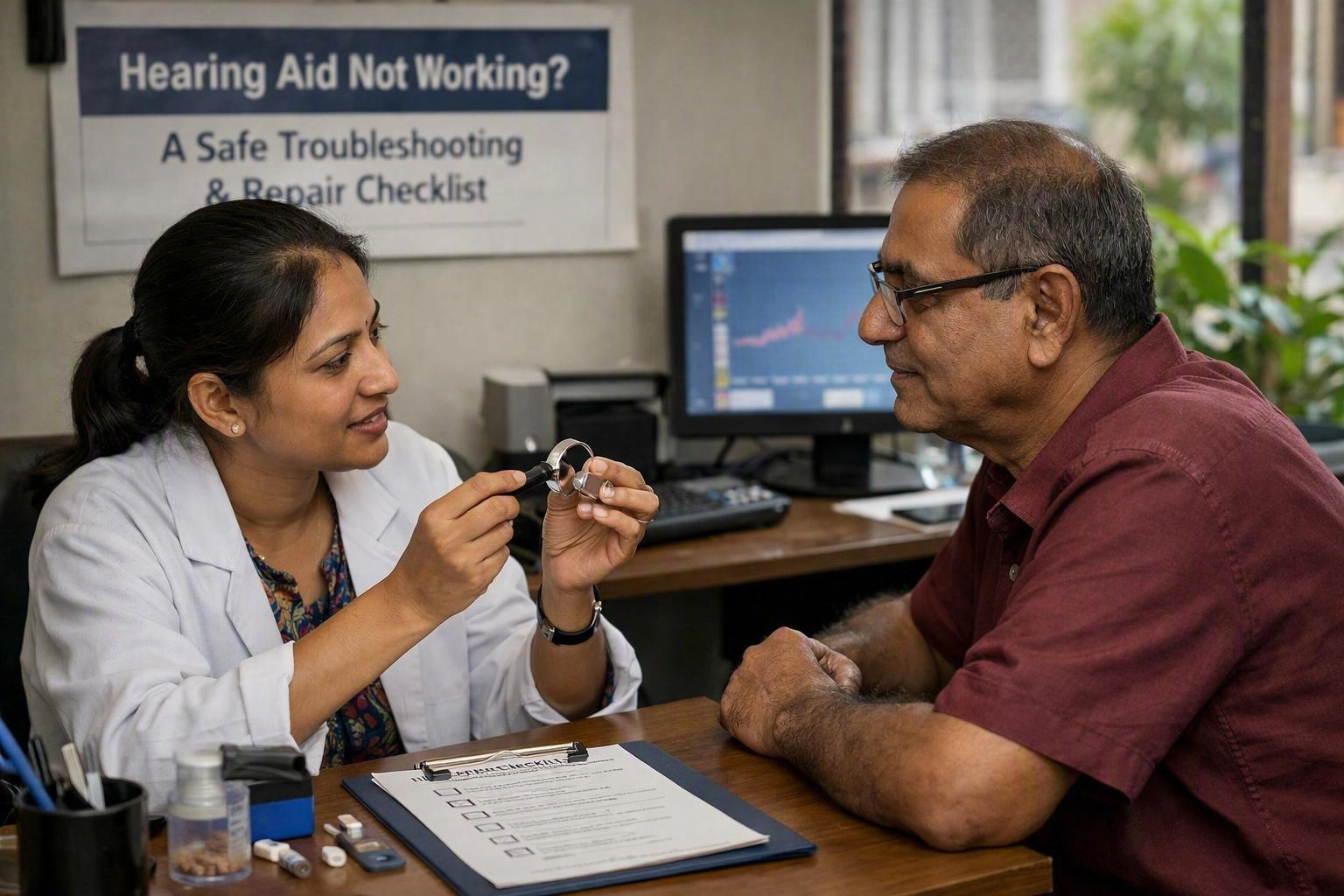
Can a Blocked Wax Filter Make a Hearing Aid Sound Dead?
A blocked wax filter can make a hearing aid very quiet or completely silent. Earwax can stop amplified sound from leaving the receiver. Replace the filter only if it’s made for user replacement. Follow the device instructions. If sound doesn’t return, a clinic should check the receiver and internal parts.
Earwax, also called cerumen, can collect at the sound outlet or inside the filter. This often happens with daily use. Dry, flaky wax and hair or skin products can also add to the problem.
Use the small tool supplied with the device as directed. Some models have a removable guard, while others need a trained professional. Don’t wash the hearing aid or soak the filter. During hearing aid cleaning, keep the receiver and sound outlet dry. Replace a disposable guard instead of scraping it.
If a new filter doesn’t restore sound, the receiver may be blocked or damaged. Moisture may also be involved. Muffled hearing can have an ear-health cause, so arrange an examination if it continues after removing the aid.
Why Does My Hearing Aid Microphone Sound Weak?
A weak microphone port can reduce speech clarity. Dust, moisture or a damaged cover may limit the sound entering the device. Check that hair, clothing, a case or debris isn’t covering the openings. Use an approved dry cleaning method. Ongoing weakness needs professional testing.
The microphone picks up speech and other sounds. The receiver sends processed sound towards the ear. A blocked microphone opening can make voices seem distant. It can also make background noise uneven or reduce sound quality.
Don’t brush forcefully into the port or use compressed air. Rain, perspiration, bathrooms and condensation can affect the microphone. Use an approved drying system if recommended. Remove a disposable battery only as instructed. Never use a hairdryer or direct heat.
Wind noise can make outdoor listening seem weak or uncomfortable. Move indoors briefly and compare speech in a quiet room. If the sound stays low, uneven or distorted, the microphone cover or internal circuit may need replacement.
When Does a Hearing Aid Need Professional Repair?
Hearing Aid Repair is needed when safe battery, cleaning and restart checks don’t restore sound. It’s also needed after physical damage, moisture exposure, charging failure, ongoing feedback or distorted output. A hearing clinic can test the device, replace faulty parts and complete Hearing Aid Programming safely.
At Audium Hearing Aid Clinic, we assess Hearing Aid Repair in Bhubaneswar when a home checklist doesn’t explain the fault. Our team can tell the difference between a blockage, a weak battery and an internal fault. We can also check the fitting and the wearer’s hearing.
Seek help quickly if the casing is cracked or the battery compartment is loose. Contact a clinic after a drop or water exposure. Don’t open the casing or glue a broken part. Stop charging equipment that shows swelling, corrosion or unusual heat.
Feedback may come from a poor fit, earwax, a damaged tube or high volume. Programming may help when the aid works but speech sounds uncomfortable, too loud or unclear. Hearing Aid Programming adjusts volume, sound processing and comfort for the fitting. It can’t fix every hardware fault.
Sudden hearing loss, ear pain, discharge, dizziness or a major hearing change needs medical assessment. This applies even when the device also has a fault. After testing, a hearing clinic may suggest an ear examination, repair, replacement or new fitting.
Can a Hearing Clinic Replace Batteries and Accessories?
Hearing Aid Battery Replacement is usually available at a hearing clinic. Clinics can also supply compatible Hearing Aid Accessories, including domes, ear tips, wax guards, receivers and chargers. The correct item depends on the model and fitting. Clinic guidance helps prevent incorrect replacements.
Disposable batteries must match the stated size. Store them as directed. Keep them away from children and pets, and don’t mix old and new cells. Rechargeable systems use an integrated battery and need the correct charger and contacts. Don’t replace one with a disposable cell.
Domes and ear tips affect comfort, grip and sound. A receiver is model-specific, so a similar-looking part may not fit. It may also change the output. Wax guards and chargers can differ between brands and models.
We can check the fitting before supplying a part and show you how to use it. If a replacement keeps failing, the issue may involve the device, charger, battery compartment or programming.
Hearing Aid Maintenance Timeline After Cleaning or Repair
A hearing aid maintenance timeline helps you check that a cleaned or repaired device remains reliable. Test it straight away and monitor comfort during the first week. Review its performance during the first month. Continue routine cleaning, battery care and professional follow-up. Stop using it if new symptoms or damage appear.
Note changes in volume, speech clarity, feedback and battery life. These simple notes can help older users, new wearers and family carers spot returning problems.
| Time period | Required actions |
|---|---|
| Immediate | Check sound output, fit, programme, battery or charging connection, and external surfaces. Use an approved dry cleaning method. |
| First Week | Watch the volume, speech clarity, feedback, battery life, skin comfort and any cut-outs during normal use. |
| First Month | Review repeated blockages, moisture exposure, accessory fit and listening problems. Contact the clinic if performance remains uneven. |
| Ongoing | Keep the device dry and inspect the wax filter and microphone openings. Follow battery or charger guidance and attend recommended hearing aid servicing. |
Routine hearing healthcare aftercare doesn’t mean forcing a part into place. Follow the manufacturer’s maintenance schedule. Ask the clinic when instructions differ between models.
Warning Signs That Your Hearing Aid Problem Needs Attention
Warning signs after hearing aid cleaning or repair include repeated silence, uneven sound, new distortion, uncontrolled feedback, fast battery drain, charging failure or ear discomfort. These problems may point to damage, moisture, a poor fit or a separate ear-health concern. Stop unsafe troubleshooting and seek clinical advice.
Remove the device if it causes pain or skin irritation. Seek prompt care for discharge, dizziness or sudden hearing changes. Safety comes before restoring sound at home.
Questions About Hearing Aid Clinic
What Should I Check When My Hearing Aid Stops Working?
Check the battery or charging case, power switch, programme, volume, receiver, sound outlet, wax filter and microphone openings. Restart the device and clean approved external parts only. Arrange a professional check if it remains silent or shows damage, moisture or a sudden hearing change.
Can a Blocked Wax Filter Make a Hearing Aid Sound Dead?
Yes. Earwax can block the filter, receiver or sound outlet and make amplified sound very quiet or absent. Replace a user-replaceable filter only according to the model instructions. If the device remains dead, a clinic should inspect it.
Why Does My Hearing Aid Microphone Sound Weak?
Dust, moisture, wind noise or a blocked microphone cover can weaken sound input. Check the opening without inserting tools. Use an approved dry method and test the aid indoors. Ongoing weakness or distortion needs professional testing.
When Does a Hearing Aid Need Repair?
It needs repair when safe power, cleaning and restart checks fail. Repair may also be needed after physical or moisture damage, charging failure, feedback, distortion or repeated cut-outs. A professional can test the parts and check if programming or replacement is suitable.
Can a Hearing Clinic Replace Hearing Aid Batteries and Accessories?
Usually, yes. A clinic can supply compatible disposable batteries, rechargeable support, domes, ear tips, wax guards, receivers and chargers. The model and fitting decide compatibility. Professional guidance is safer than using a similar-looking part.
For help with a device fault, cleaning concern or compatible replacement, contact our team through the clinic enquiry page. This information supports safe aftercare but doesn’t replace an ear examination or personal clinical advice.
Reviewed for general educational use by Dr. Sakti Prasad Mohanty.
Related Resources
Hearing Aid Fitting and Programming Explained: What to Expect Before, During and After a Trial
what happens during a hearing aid fitting
Why It MattersWhy Professional Hearing Aid Fitting Matters: Benefits Over Self-Fitting
benefits of professional hearing aid fitting
Why It MattersRechargeable Hearing Aid Benefits: Convenience, Cost, and Daily Use
what are the benefits of rechargeable hearing aids
Types & CategoriesDigital vs Rechargeable Hearing Aids in Bhubaneswar, Odisha
digital vs rechargeable hearing aids