
How Rechargeable Hearing Aids Benefit Daily Life in Bhubaneswar, Odisha
Rechargeable hearing aids make daily care simpler by reducing battery changes and waste. They also support regular use through easy charging. These devices suit many adults with hearing loss, but the right choice depends on charging access, dexterity, lifestyle and hearing needs. Local fitting and maintenance can help the devices work reliably.
Rechargeable hearing aids in Bhubaneswar, Odisha can make daily hearing care easier and more predictable. Users follow a regular charging routine instead of handling disposable batteries often. At Audium Hearing Aid Clinic, we help people compare devices and understand their hearing needs. We also help plan practical aftercare.
These devices aren't right for everyone. A hearing aid consultation should review hearing loss, daily wear time and hand movement. It should also cover listening settings, Bluetooth streaming and charging access. Our team can explain rechargeable behind-the-ear hearing aids and rechargeable receiver-in-canal hearing aids. We can also compare other designs before fitting.
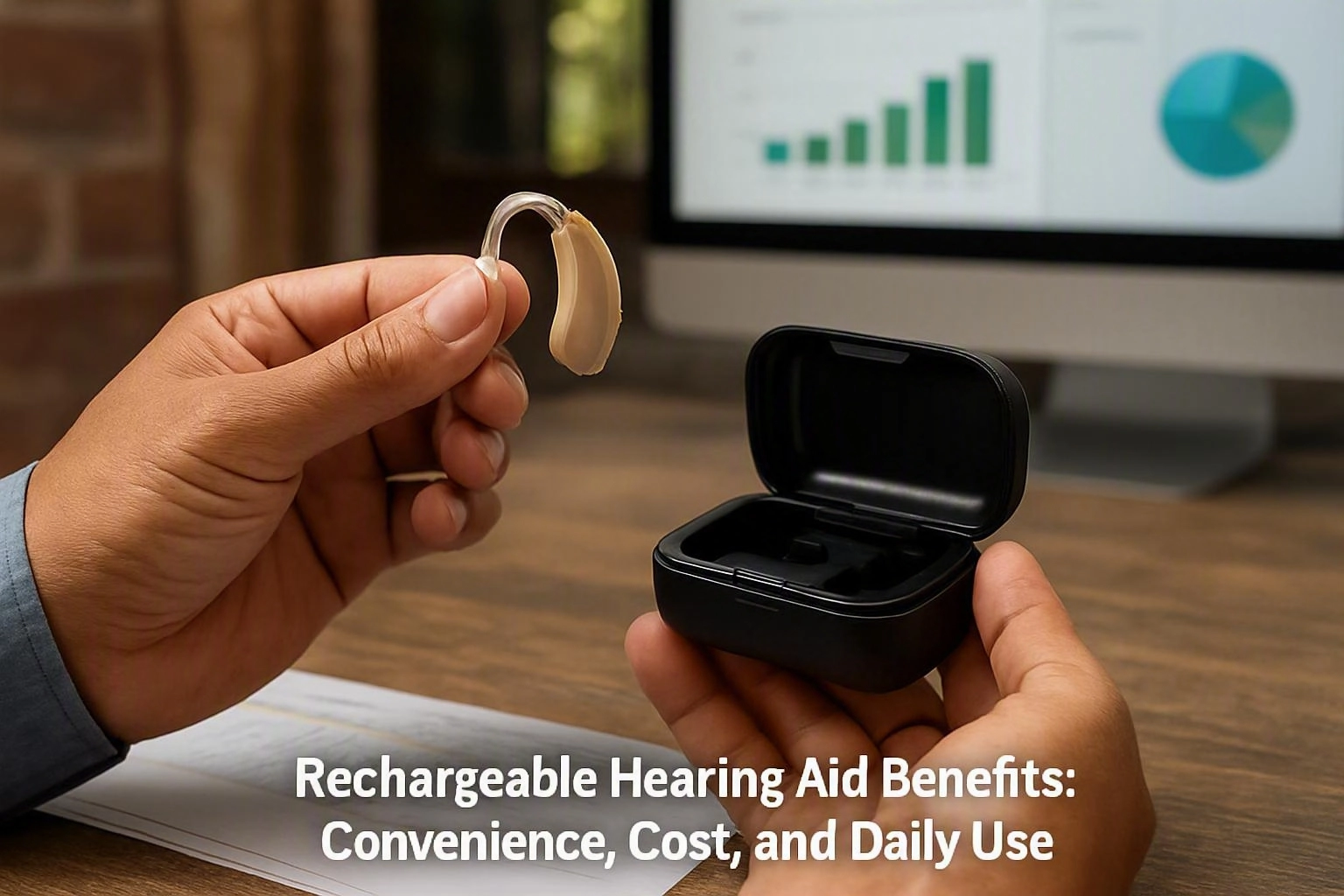
Regular drying matters in hot, humid weather. Bhubaneswar's moisture and monsoon conditions can affect care, travel and access to charging support. A charging station, drying kit and protective case may help protect the devices. They can also make daily ownership easier.
Author: Dr. Sakti Prasad Mohanty
What Are the Main Benefits of Rechargeable Hearing Aids?
Rechargeable hearing aids offer simpler handling, steady power and fewer battery changes. Their built-in batteries charge in a dock or compatible case. This can help many users maintain regular hearing support. The right choice still depends on hearing needs, charging access, hand movement, device design and professional fitting.
Most modern rechargeable hearing devices use a sealed lithium-ion battery. Users place the aids in a charging station or case instead of opening a battery compartment. Charging contacts connect with the dock. Indicator lights usually show when charging has started.
This routine can help adults who dislike small batteries or find them hard to handle. It may also lower the risk of leaving home with weak power. Battery life varies by model, hearing settings, background noise, streaming and battery condition.
Professional hearing aid fitting remains essential. The device should suit the person's hearing loss, ear shape and communication needs. A clinician can explain charging time, cleaning and moisture protection. They can also explain what to do when power runs low.
In Bhubaneswar, Odisha, local support can make ownership easier. Users can discuss moisture, monsoon travel and charger access with a nearby team. The choice should focus on dependable daily use, not rechargeability alone.
Six Practical Benefits for Everyday Hearing
Rechargeable devices can make hearing care easier when they're chosen and maintained correctly. The six benefits below show how they may help in everyday situations. Results can differ between users and devices.
Fewer Battery Changes Make Hearing Care Easier
Fewer disposable batteries mean fewer small items to open, store and replace. Users usually place both aids in the charging dock at night. This can help people with poor hand movement, tremors or limited vision. Overnight charging often takes several hours, but timing varies by model. Families may also find one charging station easier to manage. Keep the contacts clean and seat each aid correctly, so charging starts.
Predictable Power Supports Consistent Daily Use
Consistent power can support all-day hearing when users charge the devices regularly. Many products provide a full day's use after charging. Actual battery life changes with volume, wireless use, background sound and battery age. Check the battery level before leaving home. A charging case can help during long days or travel. Users should carry a compatible charger when needed.
Lower Ongoing Battery Spending Can Improve Value
Running costs may be easier to manage because replacement batteries are used less often. Rechargeable devices may cost more at first than similar disposable-battery models. Compare the device, charger, accessories and maintenance costs. Also consider the likely cost of disposable batteries over several years. This doesn't guarantee savings. Repairs, battery service and changing hearing needs can affect the total value.
Simple Charging Helps Users with Dexterity Challenges
A charging dock reduces the need to handle tiny batteries. Users place each aid in its marked position and check the indicator. This may help people with arthritis, poor coordination or difficulty opening battery doors. Overnight charging is often convenient. Keep the dock on a stable, dry surface away from splashes. A clinician can show the correct placement and safe contact cleaning.
Modern Features Can Support Clearer Conversations
Speech clarity depends on fitting, hearing needs and the listening environment. Rechargeability alone doesn't make speech clearer. Many modern models use directional microphones, noise reduction and Bluetooth connectivity. These features may help with conversations, television and phone calls. Background noise, distance and echo can still affect results. Fitting should match the user's communication goals and daily settings.
Less Battery Waste Supports More Convenient Ownership
Less disposable battery waste means fewer used cells at home. Recharge cycles aren't unlimited, and battery capacity slowly falls over time. Follow the maker's instructions and use approved chargers. Recycle disposable batteries instead of placing them in household waste. In humid Bhubaneswar, a drying kit and protective case can help during monsoon weather. Regular hearing aid maintenance still matters.
These benefits are strongest when the device fits well and is used regularly. Before purchase, local consultation should cover hearing needs, fit and charging access. It should also cover streaming habits, chargers and accessories in Bhubaneswar, Odisha.
Typical Daily-Use Outcomes: Disposable Versus Rechargeable
Rechargeable hearing aids replace frequent battery handling with a regular charging routine. Users may charge both devices overnight and check the indicator before leaving. They can arrange maintenance when performance changes. These are typical patterns, not guarantees. Runtime depends on the model, settings, streaming and battery condition.
| Daily-use point | Disposable-battery hearing aids | Rechargeable hearing aids |
|---|---|---|
| Daily wear time | Depends on cell capacity, settings and use | Depends on the built-in battery, settings and streaming |
| Charging frequency | No charging dock required | Commonly charged after daily use, often overnight |
| Battery replacement | Regular replacement and safe storage are needed | Fewer routine replacements, with eventual device battery servicing |
| Maintenance reminders | Check battery supply and compartment condition | Check charging contacts, dock, moisture and battery level |
| Typical user experience | Flexible if spare cells are available | Convenient when charging access is dependable |
As an example, daily wear may last around 8–16 hours. Users may then charge the aids once after use. This isn't a promise of runtime. During monsoon travel, charge before leaving and carry the correct cable or case. Also know where local support is available. Moisture protection matters in hot, humid weather.
Compare the device price, accessories, charger replacement and servicing costs. Also consider the lower need for disposable batteries. We can review these points during a hearing aid consultation. A fixed saving or guaranteed result isn't appropriate.
Questions About Hearing Aid Clinic
What Are the Benefits of Rechargeable Hearing Aids?
They can reduce battery changes, simplify handling, support regular charging and reduce battery waste. They may also support features such as Bluetooth streaming. Suitability depends on hearing loss, fit, dexterity, listening needs and charging access.
Are Rechargeable Hearing Aids Better Than Battery Hearing Aids?
Neither option is always better. Rechargeable models may suit people who prefer simple charging. Disposable-battery hearing aids may suit users with limited charging access.
How Long Do Rechargeable Hearing Aids Last on One Charge?
Runtime varies by model and use. Many are designed to cover much of a normal day. Heavy Bluetooth streaming, strong amplification, background noise and battery age can reduce runtime. Check the maker's stated range and the clinician's advice before purchase.
How Much Do Rechargeable Hearing Aids Cost?
Cost depends on technology, design, fitting, accessories and aftercare. Include the device price, charging equipment, replacement accessories and maintenance. Also consider lower spending on disposable batteries. We recommend a local consultation for a clear comparison.
Do Rechargeable Hearing Aids Need to Be Charged Every Night?
Many users charge them after daily wear, often overnight, so they're ready the next morning. The best routine depends on battery life, wear time and streaming.
What Happens if Rechargeable Hearing Aids Run Out of Power?
Place the devices in their approved charger as soon as possible. Follow the model's instructions. Before travel or during monsoon weather, carry a charged case and suitable cable. Repeated power loss may point to charging, contact or battery problems.
Choosing a rechargeable device should start with a hearing assessment and practical planning. Our team can discuss fitting, charging habits, moisture protection and suitable accessories for daily use.
Make a hearing aid enquiryRelated Resources
Hearing Aid Clinic for Seniors
Who It's ForHearing Aid Clinic for People with Tinnitus
hearing aid clinic for tinnitus
Everything About ItDigital vs Rechargeable Hearing Aids: Complete Guide to Features, Benefits and Fit
digital vs rechargeable hearing aids
Everything About ItHearing Aid Fitting and Programming Explained: What to Expect Before, During and After a Trial
what happens during a hearing aid fitting