Speech Delay and Hearing Assessment in Children
A hearing test checks whether hearing loss may affect a child’s speech delay. An audiologist uses tests suited to the child’s age and needs. These may include otoscopy, tympanometry, otoacoustic emissions, auditory brainstem response or behavioural audiometry. Parents should arrange an assessment if speech is unclear or responses to sound seem inconsistent. Delayed milestones and repeated ear infections also need attention. A normal hearing result cannot explain every language difficulty. A speech and language assessment may still be needed. Results help guide referrals, follow-up, hearing treatment or speech therapy. Early testing can find hearing barriers and support the right plan without assuming a diagnosis.
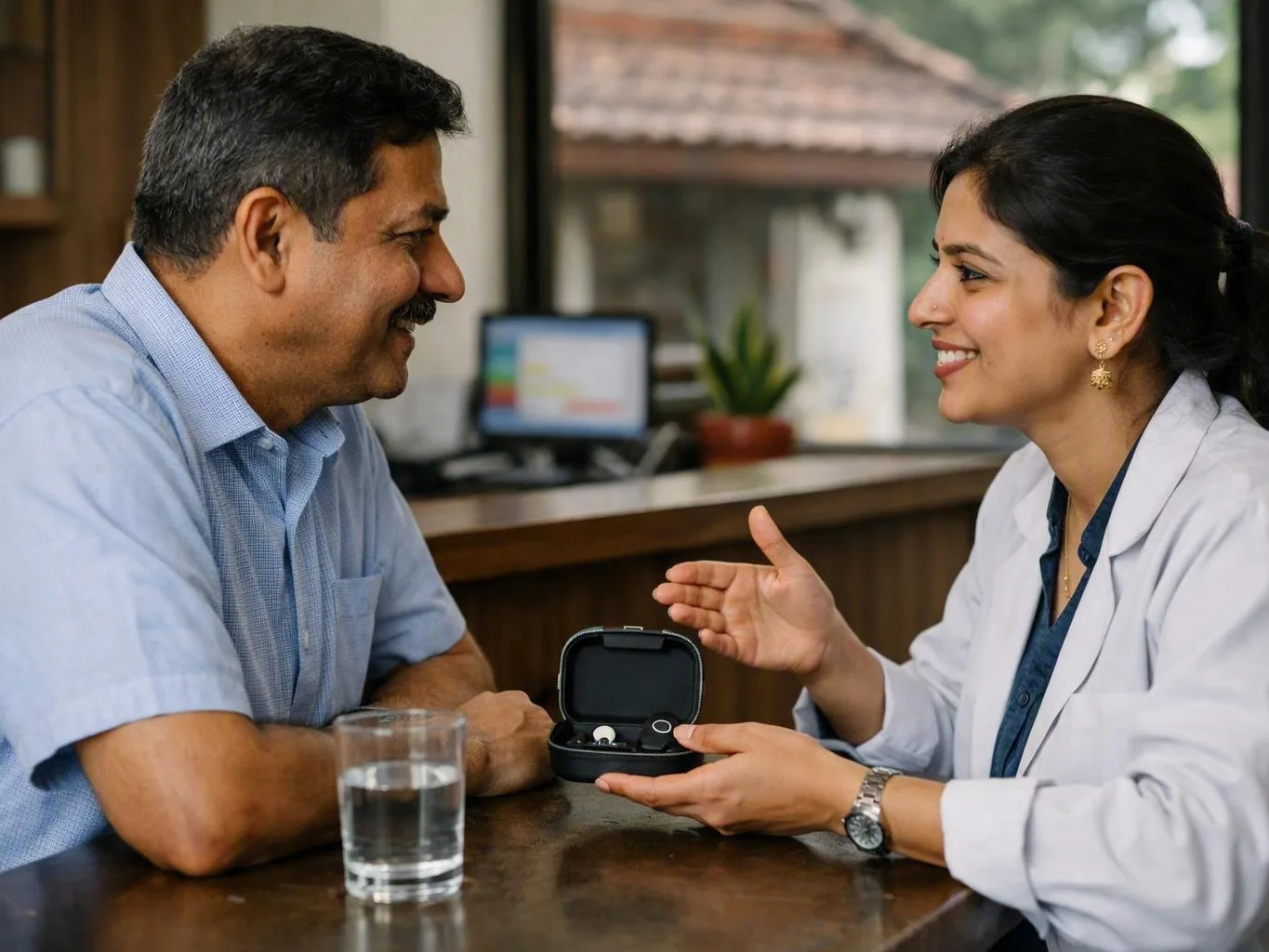
Speech delay does not prove hearing loss, but a hearing assessment is an important early step. At Audium Hearing Aid Clinic, we explain results in plain language and discuss suitable next steps.
Families seeking a Pediatric Hearing Assessment in Bhubaneswar can choose testing suited to young children. The approach can also support children who find it hard to cooperate or communicate. The aim is not simply to give a pass or fail result. It is to understand hearing and its possible effect on speech and language development.
Author: Dr. Sakti Prasad Mohanty
Quick Answers About Hearing Tests and Speech Delay
A paediatric hearing test can find hearing loss that affects speech and language development. Audiologists choose tests based on age, development and the child’s ability to respond.speech and language assessment. Testing alone cannot find every cause of speech delay.
| Question | Short answer |
|---|---|
| Can hearing loss affect speech? | Yes. Reduced access to speech sounds can affect pronunciation, vocabulary and understanding. |
| Who performs the assessment? | An audiologist or paediatric audiologist conducts and interprets the tests. |
| What tests may be used? | The visit may include an ear examination, middle-ear testing, objective testing and age-appropriate behavioural audiometry. |
| Does a normal result end the enquiry? | No. Speech delay may still need a Speech And Language Assessment or developmental review. |
| What should parents do next? | Arrange a professional assessment, share developmental history and ask how reliable the findings are. |
Testing is one part of a child development assessment. It can find a hearing barrier, but it cannot explain autism or every developmental difference. It also cannot diagnose language disorder or other causes of delayed communication.
Signs Your Child May Need a Hearing Assessment
Speech delay, unclear speech and uneven responses to sound may point to a hearing concern. Trouble following spoken instructions can also be a sign. Repeated ear infections, fluid behind the eardrum or family history add to the concern. Seek advice rather than waiting for speech to catch up.
Watch how your child communicates in different places. A child may hear loud sounds but miss quiet speech. They may seem to hear at home but struggle in a noisy nursery. These patterns are easy to miss.
Speech sound development offers one useful clue. Ongoing trouble hearing or saying certain sounds may reflect limited sound access. However, pronunciation differences can also happen with normal hearing. Delayed language milestones need discussion with a clinician. This includes using fewer words than expected or finding word combinations difficult.
Notice how your child responds to their name. A child who often fails to turn may need an assessment. The same applies if they need repeated instructions or watch faces closely. These behaviours do not confirm hearing loss. They still give the audiologist useful information.
Repeated ear infections and otitis media with effusion can cause temporary conductive hearing loss. This condition is often called glue ear. Middle-ear fluid may make sounds less clear for weeks or months. A child may hear some sounds but miss softer speech.
Other reasons for advice include family history of hearing loss and missed newborn screening follow-up. Meningitis, head injury, very loud sound and developmental regression also matter. Children with communication differences should not be excluded because ordinary instructions are difficult. Clinicians can use play, observation, visual cues and objective tests.
Early assessment supports early help. It can also prevent adults from calling a child inattentive or unwilling to communicate. Reduced hearing access may be the real problem.
Which Hearing Tests Are Used for Children with Speech Delay?
Children with speech delay may have otoscopy, tympanometry, otoacoustic emissions, auditory brainstem response or behavioural audiometry. The audiologist combines tests to check the ear, middle ear, cochlea and hearing level. The choice depends on age, cooperation and development. It also depends on whether the child can give reliable responses.
Otoscopy uses a lighted tool to view the ear canal and eardrum. It may show earwax, inflammation or infection. It can also show signs that need medical review. This test does not measure hearing by itself.
Tympanometry checks how the eardrum and middle ear respond to air pressure. It may suggest middle-ear fluid, blockage or poor movement. This helps identify a possible conductive hearing problem.
Otoacoustic emissions are soft sounds measured inside the ear canal. The response gives information about cochlear outer hair-cell function. This test is objective, but movement and noise can affect results. Earwax and middle-ear fluid may also change the result.
Auditory brainstem response records electrical activity along the hearing pathway. Sounds are played while the responses are measured. This test helps when a child cannot give dependable behavioural responses. Some children need to sleep naturally during the test. Others may need a carefully planned clinical approach.
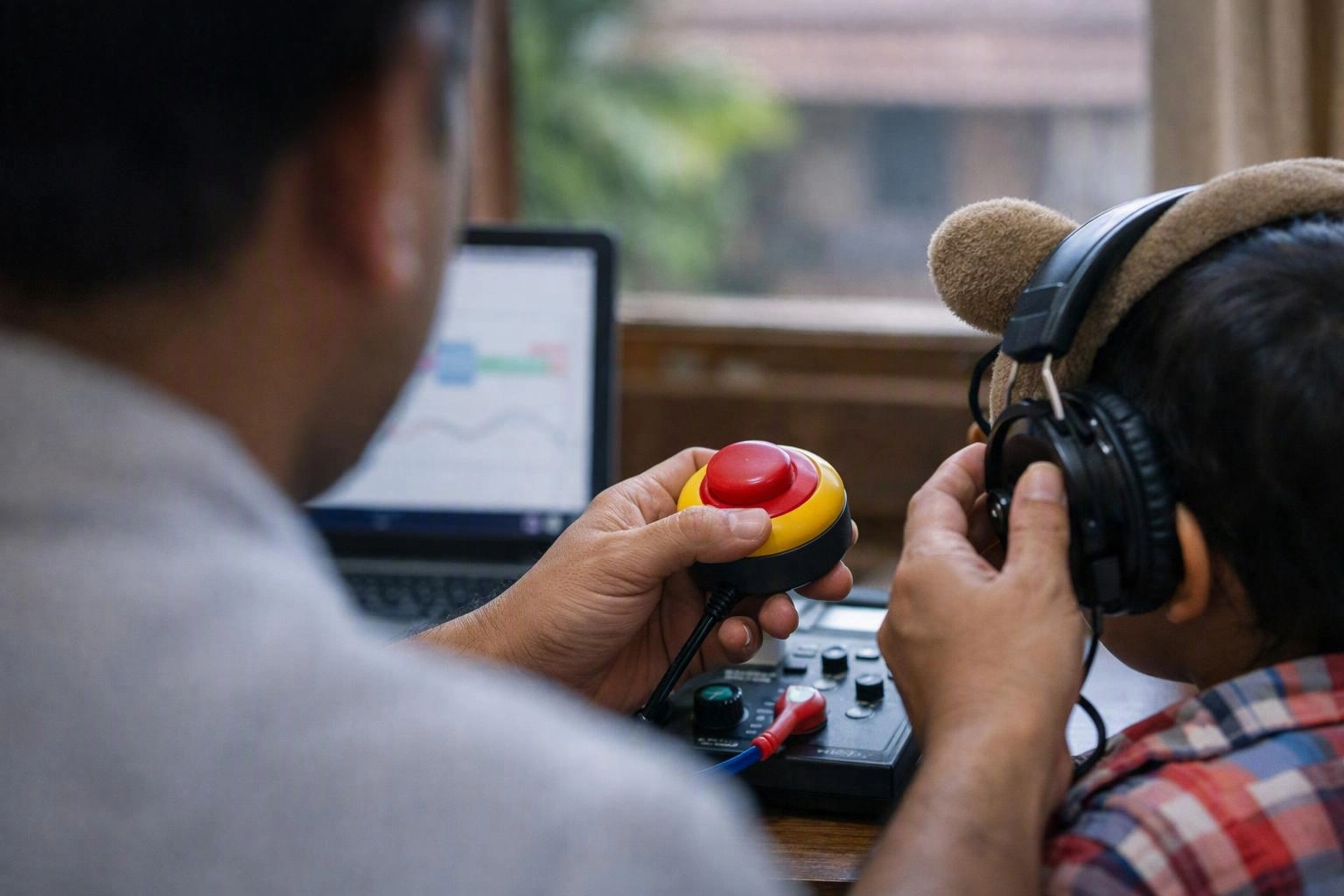
Behavioural audiometry measures how a child responds to sound. A child may turn towards a sound, play a simple game or give another trained response. The audiologist checks for steady responses across different pitches. One reaction alone is not enough.
A full diagnostic hearing test may use several methods. Each test answers a different question. Results are read with the child’s history, ear examination and communication concerns. A screening result is not the same as a full diagnostic hearing assessment.
It is important to tell temporary conductive hearing loss from permanent sensorineural hearing loss. Middle-ear fluid may improve with time or treatment. Sensorineural loss may need long-term monitoring, hearing aids or other support. This difference affects hearing treatment and speech planning.
How Age and Cooperation Change the Test Approach?
Age and cooperation shape how sounds are presented and responses are recorded. Infants may need objective tests. Toddlers often take part in visual reinforcement audiometry. They turn towards a sound and receive an interesting visual reward.
Older preschool children may manage play audiometry. They might place a piece in a box whenever they hear a tone. The clinician teaches the task first. They then check if the responses stay consistent.
These responses are read with the child’s development, attention and communication style. Motor skills also matter. A child who cannot speak can still have a hearing assessment. Looking, turning, reaching and changes in activity may provide useful information.
Breaks, familiar adults and a quiet room can improve participation. A visit may take about 30 to 90 minutes. The time depends on the tests and the child’s tolerance. Some children need more than one appointment.
What Happens After the Hearing Test?
After the test, the audiologist explains the findings and suggests the next step. A normal result may lead to a speech and language assessment. Hearing loss, middle-ear problems or an incomplete test may need follow-up. This may include medical review, repeat testing, hearing technology or speech therapy.
The result is more than a label. Ask what was measured and whether both ears were tested. Also ask how reliable the responses were. A clear explanation should link the findings to everyday communication.
A hearing loss diagnosis should be discussed with care and without blame. Audiology and speech services work best when they share relevant findings with caregiver consent. This helps language goals match the child’s access to sound.
Our team can explain the difference between a screening appointment and a full Pediatric Hearing Assessment. We can also help families prepare questions for medical or therapy referrals.
Deep FAQ: Understanding the Assessment Process
A diagnostic paediatric hearing assessment combines a health history, ear examination and hearing tests. These tests may be objective or behavioural. The audiologist explains each step and adapts the visit to the child. Results are read with the child’s development and history.
Paediatric audiology involves more than asking whether a child heard a sound. The clinician considers attention, language, movement and sensory needs. They also separate a screening result from a diagnostic hearing assessment.
Informed consent means caregivers receive clear information about the test. This includes its purpose, method and limits. You can ask for a pause or another explanation if needed. Another appointment may help if your child becomes distressed. A calm approach often gives better information than pushing a tired child.
Questions About Test Accuracy, Preparation and Comfort
Test reliability depends on the method and the child’s state. It also depends on the quality of the responses. Newborn hearing screening is useful, but it cannot replace later testing when concerns appear. A child who passed screening can develop hearing loss later. Fluctuating hearing problems can also occur.
Before the appointment, bring reports and details of ear infections. Share information about speech and language development. Tell the clinic about sensory needs, communication differences, sleep and medicines. Earwax or a blocked canal may affect some results. Medical attention may then be needed.
A sleeping child may suit some objective tests. This depends on the procedure and clinical setting. Most tests are painless. Tympanometry may feel unusual for a moment. Ear inserts and headphones may also feel unfamiliar. Staff should explain each step and stop when necessary.
Questions About Results, Treatment and Speech Progress
Conductive hearing loss reduces sound movement through the outer or middle ear. It may be temporary, especially with infection or middle-ear fluid. Sensorineural hearing loss involves the inner ear or hearing pathway. It may be permanent, but its effect depends on the level and pitches affected.
Hearing aids may help when they are suitable. Children may also need communication support and regular reviews. Hearing aids do not instantly correct delayed language. Early help gives children better access to speech and language while progress is monitored.
Speech therapy may work on speech sounds, vocabulary, understanding or grammar. It may also support wider communication skills. Progress depends on the cause, hearing access, attendance and family support. A normal hearing result should lead to further assessment, not dismissal of the concern.
Questions About Hearing Aid Clinic
Can Speech Delay Be Caused by Hearing Loss?
Hearing loss can limit access to speech sounds and affect clarity, vocabulary and understanding. Speech delay has many possible causes, so hearing assessment and developmental review may both be needed.
What Is the Best Hearing Test for a Child with Speech Delay?
There is no single best test for every child. The audiologist chooses tests based on age, development, cooperation and medical history. Tests may include tympanometry, otoacoustic emissions, auditory brainstem response and behavioural testing.
How Do I Know if My Child Needs a Hearing Test?
Arrange advice if speech is unclear or language milestones are delayed. Inconsistent responses, missed instructions or repeated ear infections also need attention. Do not wait for speech to catch up without checking hearing.
Can a Child Pass a Hearing Screening and Still Have Hearing Loss?
Yes. Screening checks hearing at a particular time and may miss mild or frequency-specific problems. It may also miss hearing loss that develops later. New concerns need a fresh diagnostic assessment.
What Happens During a Hearing Test for a Toddler?
The visit may include questions, otoscopy and middle-ear testing. Sounds may come through speakers or headphones. A toddler may turn towards a sound, play a game or receive an objective test. Breaks and familiar routines are often used.
How Is Hearing Tested in a Child Who Cannot Speak?
Speaking is not required. The audiologist can observe turning, looking or changes in activity. They can also use objective tests such as otoacoustic emissions or auditory brainstem response. The approach is adapted to the child’s communication and development.
Is a Hearing Test Painful for Children?
Most hearing tests are painless. Ear inserts, headphones or pressure changes during tympanometry may feel unfamiliar. The clinician should explain the test, handle the child gently and allow pauses when needed.
How Long Does a Paediatric Hearing Test Take?
Many appointments take about 30 to 90 minutes. This is a typical range, not a guarantee. Time depends on age, cooperation, the number of tests and the need for repeat measurements.
Does My Child Need a Hearing Test Before Speech Therapy?
Hearing assessment is strongly advised when speech or language is delayed. It should not always delay therapy. Audiology and speech services can work together. This helps treatment match the child’s hearing access.
What Does Tympanometry Show in Children?
Tympanometry shows how the eardrum and middle ear respond to pressure. It may suggest fluid, blockage or reduced movement. It does not measure every part of hearing. Other findings are needed for a full interpretation.
What Should I Do if My Child’s Hearing Test Is Normal but Speech Is Delayed?
Ask whether both ears and all needed frequencies were tested reliably. Then arrange a Speech And Language Assessment. Discuss developmental, communication and learning concerns with the child’s healthcare professional. Continue hearing checks if concerns change.
Can Ear Infections Cause Temporary Speech Delay?
Repeated infections or middle-ear fluid can temporarily reduce hearing clarity. This may limit access to speech during an important learning period. Medical review, hearing checks and timely communication support can reduce the effect.
If you are concerned about communication, begin with a child-focused hearing evaluation. Share the results with the speech and language professional. We can explain the testing pathway and help you prepare questions. We can also discuss possible ENT or speech therapy follow-up.