Could Your Child Have Hearing Loss? Signs to Watch
Signs of hearing loss in children can include missing their name, asking for repetition and turning up the television. You may also notice unclear speech, delayed language or trouble following instructions. Ear infections and congestion can cause similar behaviour, so these signs alone cannot confirm hearing loss. A paediatric hearing assessment uses tests suited to the child’s age. It checks how well the child hears and understands sound. Early assessment can support medical care, speech and language assessment, hearing support or speech therapy. Parents should seek advice when concerns continue or affect communication, learning or safety. At Audium Hearing Aid Clinic, we help families understand hearing concerns and choose the next step.
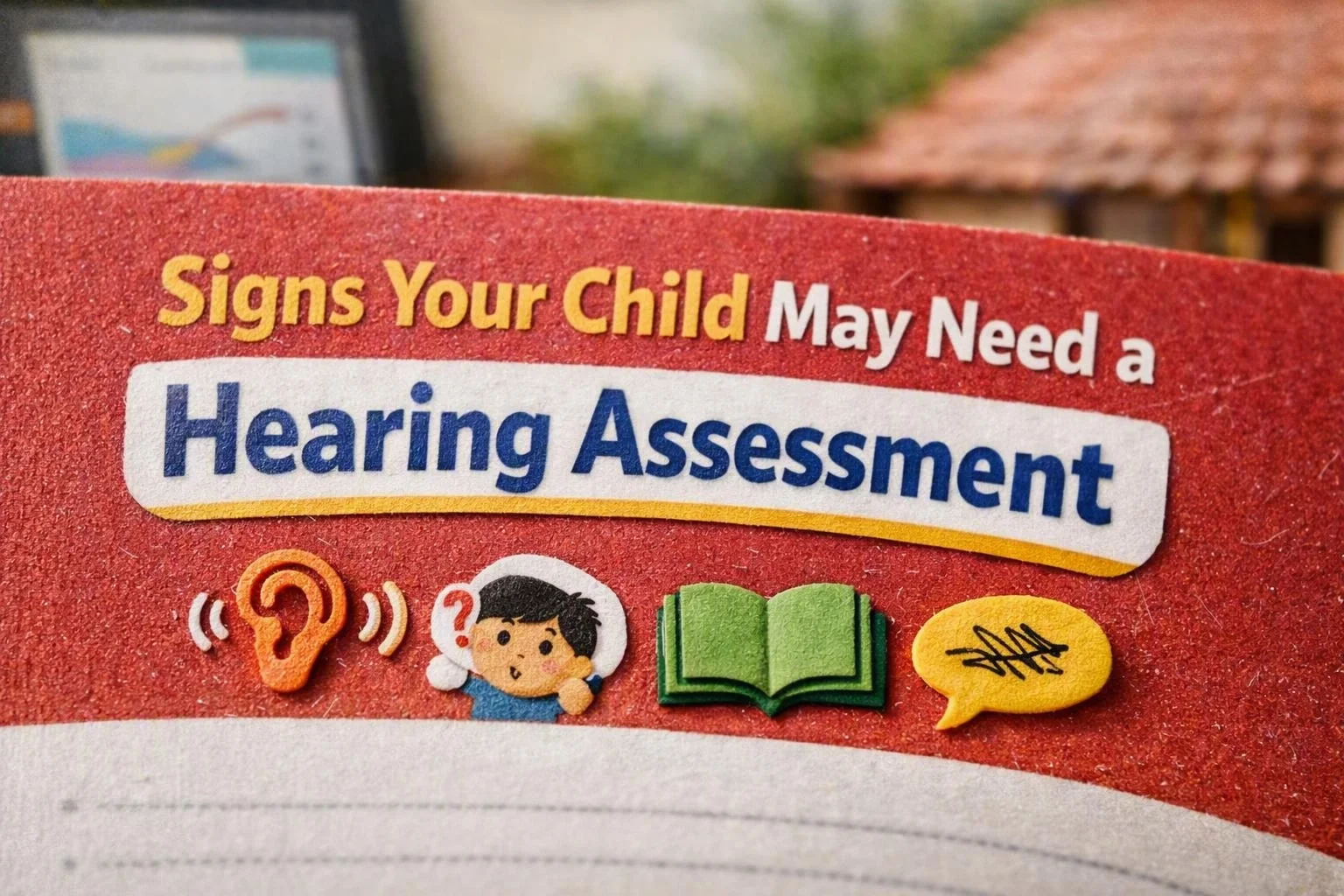
Hearing loss in children can be hard to spot. A child may hear some sounds but miss others.
Distance, background noise, tiredness and ear infections can change how a child responds. Families seeking Pediatric Hearing Assessment in Bhubaneswar can speak with a qualified hearing professional. Our team considers the child’s age, development and ability to follow instructions. We don’t rely on one quick observation.
What Are the Signs of Hearing Loss in a Child?
Childhood hearing loss may show as missed sounds, unclear speech or delayed language. A child may also ask for repetition, turn up the television or struggle with spoken instructions. These signs can change from one setting to another. A lasting pattern deserves a professional hearing assessment.
A child with hearing difficulty may still react to loud sounds or sounds from one side. That does not prove both ears hear normally. One-sided hearing loss and mild hearing loss can go unnoticed. Temporary middle-ear problems may also be missed in a quiet room.
These behaviours show listening patterns, not a diagnosis. Ear infections and middle-ear fluid can reduce sound for a while. Sensorineural hearing loss affects the inner ear or hearing pathway. A clinical assessment can help tell these causes apart. It can also review speech and language development.
Why Does My Child Not Respond to Their Name?
A child may miss their name because hearing loss reduces access to speech, especially in noise. Distraction, tiredness, attention differences or ear blockage can also play a part. A child who often misses their name in quiet and noisy places should see a healthcare professional. Age-appropriate hearing tests can help find the cause.
The response depends on distance, speech clarity and whether the speaker faces the child. Congestion, ear infections and middle-ear fluid can make voices sound muffled. Some children respond in a quiet room but miss their name in a busy classroom or playground.
Notice if your child reacts to sounds from both sides. Also note whether they follow a voice without seeing the speaker and respond when rested. Don’t test by shouting or making sudden loud noises. Tell the clinician when the pattern began and whether it affects safety, learning or conversation.
Can Hearing Loss Cause Speech Delay?
Speech delay can be linked to hearing loss. Children need steady access to speech sounds while learning words, pronunciation and sentences. Hearing loss isn’t the only possible cause of delayed communication. Hearing tests and a speech and language assessment can show what support the child needs.
A child may hear everyday sounds but miss quiet speech sounds or word endings. They may also struggle to tell similar words apart. This can affect speech clarity, vocabulary, grammar and confidence. Mild or one-sided hearing loss can make listening harder.
Tests should suit the child’s age and development. Babies may have objective tests that don’t need a spoken response. Toddlers may take part in play-based listening games. Older children can often respond to tones or speech through headphones.speech and language assessment checks communication separately.
Results may lead to monitoring, ear treatment, hearing support or speech therapy. The care plan depends on the child’s results, needs and progress.
Why Does My Child Turn the TV Volume Up High?
A child may turn up the television because speech and other sounds seem too quiet. This can happen with hearing loss in one or both ears. Loud settings and personal preference can have the same effect. Repeated loud-volume behaviour and missed speech should prompt a hearing assessment.
Television volume is only one clue. Ask if your child hears family members from another room and understands dialogue without watching the screen. Also notice whether softer sounds are missed. One-sided hearing loss can make sound seem uneven. Infection or congestion can cause temporary hearing loss.
Keep the volume comfortable for everyone. Don’t use loud sounds as a home test. Note when the behaviour happens and whether subtitles are needed. Record if listening becomes harder when several people speak. These details can help the clinician understand the pattern.
Can Poor Attention Be Caused by Hearing Loss?
Listening fatigue can make hearing loss look like poor attention. A child may miss spoken information, tire while listening or struggle in noisy places. Poor attention has many possible causes, so hearing should not be blamed without testing. A hearing assessment can check access to sound and guide the next referral.
Classroom listening can be hard when the teacher is far away or several children are talking. Background noise adds to the challenge. A child may daydream, copy others or complete only part of an instruction. These behaviours can relate to hearing, language, attention or several needs together.
Auditory processing concerns may be considered when basic hearing seems typical but listening remains hard. This needs specialist assessment and cannot be diagnosed with a home checklist. Ask teachers for examples from different settings. Share those examples during the assessment.
A clear hearing result helps prevent hearing problems from being missed. It also lets the family explore educational, developmental or communication support when needed.
DIY Checks or Professional Hearing Assessment: Which Is Better?
Professional hearing assessment is more reliable than home checks. Trained clinicians use calibrated equipment and tests suited to the child’s age. Parents can record useful observations at home. Informal checks cannot confirm normal hearing or identify one-sided loss.
At home, notice responses to ordinary speech, soft sounds and conversation from different positions. Don’t use phone tones, online videos or sudden loud noises instead of clinical testing. Attention, room noise and device settings can affect these checks. A child may also guess the expected response.
| Factor | DIY | Professional |
|---|---|---|
| Method | Informal observation in an uncontrolled setting | Calibrated equipment and structured procedures |
| Age and ability | May not suit babies or children unable to follow the task | Adapted to age, development and response ability |
| Ear health | Cannot reliably identify blockage or middle-ear fluid | Otoscopy can examine the ear canal and eardrum |
| Measurement | Cannot confirm hearing in each ear | Provides objective hearing measurement where suitable |
| Next step | Useful notes to share with a clinician | Can guide medical, communication or hearing support referrals |
Most routine appointments take about 30–60 minutes. The time varies with age, test type and cooperation. A paediatric audiology visit may include otoscopy, sound responses and speech testing. The clinician may repeat tests or use objective measures when results are incomplete.
When Should Your Child Have a Hearing Test?
A child should have a hearing test when signs continue, communication slows or ear infections return. Testing is also advised when teachers or caregivers notice listening difficulties. Sudden hearing change, severe ear pain, discharge or injury needs urgent medical advice. Results may lead to monitoring, medical care, speech support or speech therapy.
Arrange advice if your child often misses speech, turns towards one side or asks for repetition. Loud television volume and trouble following instructions also matter. A referral may be useful even when the child hears some sounds.
Babies and young children don’t need to press a button or describe what they hear. Clinicians may use observation, play-based responses, speech tasks or objective tests. Older children can often follow instructions for testing each ear. The clinician will still consider attention and tiredness.
Ear pain, discharge, sudden hearing change or injury needs prompt medical review. Repeated ear infections and middle-ear fluid may need treatment before repeat testing. If hearing access is reduced, care may include an ENT review, hearing support or speech therapy. A Hearing Aid Clinic may help when hearing technology is clinically suitable.
Our team can help families prepare questions and understand their results. We don’t promise a particular diagnosis or treatment. Bring teacher reports, infection details and examples of communication changes to the appointment.
Questions About Hearing Aid Clinic
What Are the Signs of Hearing Loss in a Child?
Signs may include missing their name, unclear speech, speech delay and frequent requests for repetition. Loud television volume and trouble following instructions can also occur. Ear infections and congestion can look similar, so lasting concerns need a professional hearing test.
Why Does My Child Not Respond to Their Name?
Hearing loss, background noise, distraction, tiredness, attention differences or ear blockage may reduce a child’s response. If this happens in quiet and noisy settings, arrange age-appropriate hearing tests and professional advice.
Can Hearing Loss Cause Speech Delay?
Yes. Reduced access to speech sounds can affect vocabulary, pronunciation and sentence development. Other developmental or communication factors are also possible. Hearing testing and a speech and language assessment can help.
Why Does My Child Turn the TV Volume Up High?
The television may sound too quiet because of hearing loss, including one-sided loss. Infection or congestion can also cause temporary blockage. Personal preference may be responsible. Repeated loud-volume behaviour should be discussed with a hearing professional.
Can Poor Attention Be Caused by Hearing Loss?
It can. Missing speech or tiring while listening may look like poor attention, especially in a noisy classroom. Attention has many causes, however. A hearing assessment can check sound access before further developmental or educational referrals.
Lasting communication concerns deserve careful assessment, not guesswork. To discuss the next step, contact our team.
Author: Dr. Sakti Prasad Mohanty
Related Resources
Pediatric Hearing Clinic for Children
Who It's ForNewborn Hearing Testing for Infants
newborn hearing testing clinic for infants
Who It's ForHearing Aid Clinic for Children with Speech Delay
hearing aid clinic for child with speech delay
Who It's ForHearing Aid Clinic for People with Tinnitus
hearing aid clinic for tinnitus