When Children Need Hearing Assessment and Speech Therapy
A child may need a hearing test before speech therapy. Hearing loss can affect speech and language development. An audiologist checks hearing, while a speech-language therapist checks communication skills. Children with unclear speech, delayed language, uneven responses, or repeated ear infections may need both assessments.
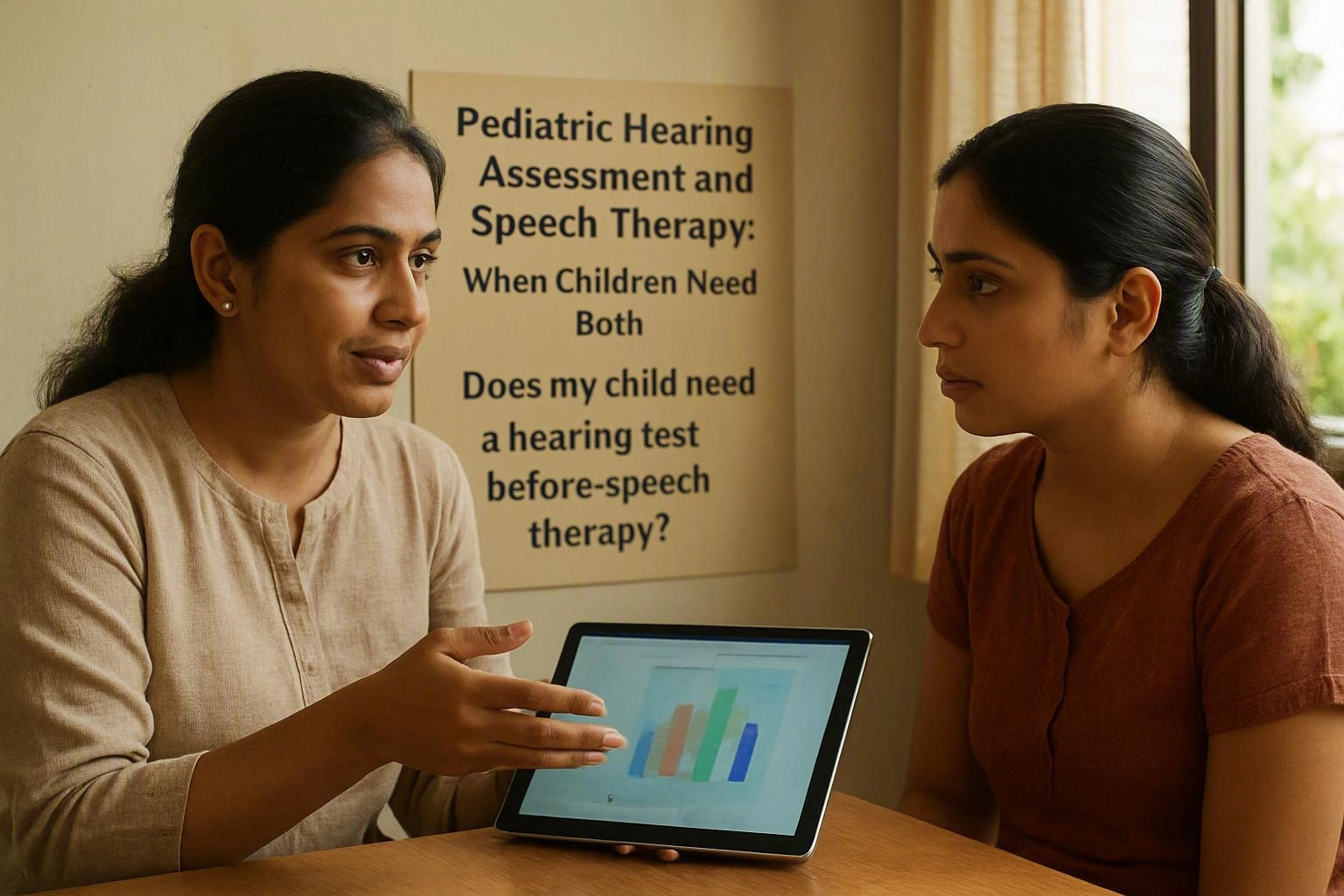
At Audium Hearing Aid Clinic, we help families understand how hearing affects communication. Dr. Sakti Prasad Mohanty authored this page. It offers general information and does not replace an individual clinical assessment.
Does My Child Need a Hearing Test Before Speech Therapy?
Pediatric Hearing Assessment is often advised before or alongside speech therapy. Hearing affects how children learn and use speech. The test checks for hearing loss, middle-ear problems, or normal hearing. A speech-language therapist then checks communication and plans support when needed.
A hearing test does not delay support. Audiology and communication assessments can often happen close together. Clear hearing results help the therapist understand unclear speech, limited vocabulary, or trouble answering questions. They also stop families from blaming every delay on behaviour or poor attention.
A paediatric audiologist considers the child’s age, development, medical history, and attention. The clinician also checks how reliably the child can respond. Infants may need objective tests. Older children may respond through play or by pressing a button.
The assessment can find permanent hearing loss, temporary conductive changes, or hearing within the expected range. If hearing is normal, the therapist can assess speech sounds, grammar, vocabulary, fluency, and social communication.
If reduced hearing is found, the plan may include medical review, monitoring, hearing technology, family support, and communication therapy.
Why Hearing Matters for Speech and Language Development?
Children need steady access to sound to notice speech differences and recognise words. They also need it to learn how sentences work. Even mild hearing changes can make conversation harder, especially in noisy rooms.
Hearing supports receptive language, which means understanding words and instructions. It also supports expressive language, which means using words, grammar, and sentences. A child who misses speech may not learn sound patterns, word endings, or new vocabulary.
This can affect pronunciation, understanding, confidence, and participation. Speech therapy can build these skills, but the plan should match the child’s hearing access.
Audiology results help the therapist choose useful goals. These may include listening skills, speech sounds, vocabulary, classroom support, or hearing devices.
Signs Your Child May Need Both Services
Speech delay and hearing concerns can happen together, but one does not prove the other. A child may need both services when communication is not progressing as expected. Professional assessment is safer than waiting for speech to improve on its own.
These signs can have other causes too. They may relate to language differences, attention, oral-motor concerns, or speech sound disorders. A complete child hearing assessment helps separate these possibilities.
Parents should tell clinicians whether concerns change in quiet or noisy places. Mention if the child watches faces closely or had a recent illness. These details help clinicians choose suitable tests and plan follow-up.
What Happens During a Child’s Hearing Assessment?
Audiologist-led assessment usually starts with health and development questions. It then checks the outer ear, middle ear, and hearing responses. The audiologist may use play audiometry, tympanometry, otoacoustic emissions, or auditory brainstem response testing.
Testing is adjusted for infants, toddlers, preschool children, and children with developmental differences. A child may wear headphones, sit with a parent, play a listening game, or sleep during testing.
Most appointments take about 30 to 90 minutes. The time depends on the child’s age, attention, and the tests needed.
Middle-ear fluid can cause temporary conductive hearing loss. This differs from permanent sensorineural hearing loss. It can still affect access to speech, so the clinician may suggest medical review or repeat testing.
Which Hearing Test Is Suitable for Different Ages?
The best method depends on development, not age alone. Clinicians often combine behaviour-based and objective tests for a clearer result.
| Developmental stage | Common approach | What it assesses |
|---|---|---|
| Newborns and young infants | Infant hearing screening, otoacoustic emissions, or auditory brainstem response | Objective responses without requiring spoken answers |
| Infants and toddlers | Visual reinforcement audiometry | Head-turning towards a sound, often supported by a visual reward |
| Preschool children | Conditioned play audiometry | A game-based response to tones through headphones or speakers |
| School-age children and teenagers | Conventional audiometry | Reliable responses to tones and speech across frequencies |
When a child cannot explain what they hear, the audiologist uses play, observation, parent input, and objective tests. Results are read together rather than relying on one test.
How Speech Therapy Complements Hearing Care?
Speech Therapy helps children understand and use communication. It can address speech sounds, vocabulary, grammar, fluency, and social language. Hearing results help the therapist adapt care to the child’s needs.
A speech-language pathologist may assess speech sounds, language, play, conversation, and everyday communication. The therapist looks at how the child communicates in daily life, not only during one structured task.
One child may need help with individual speech sounds. Another may need support with instructions, sentences, vocabulary, or turn-taking. Some children need several goals.
The plan should be clear, practical, and reviewed as the child develops. Early intervention helps because listening, language, and social skills grow quickly in young children.
Early support does not rush a diagnosis. It responds to current needs while clinicians learn more about the child.
When hearing aids or other hearing technology are used, therapy can practise listening in everyday situations. The therapist can also share observations with the audiologist.
Families may learn ways to reduce background noise, gain the child’s attention, and check understanding. Parents seeking Pediatric Hearing Assessment in Bhubaneswar may ask if the services can share information.
Coordinated care links hearing results with daily communication. It also helps prevent each concern from being treated separately.
When Should Hearing and Speech Services Be Coordinated?
Multidisciplinary care can help when hearing and communication affect each other. Shared reports help clinicians set consistent goals and track progress.
Families may benefit from both services when speech is unclear and hearing is reduced. They may also help when ear infections and delayed language occur together.
The same applies when a child uses hearing technology and still has pronunciation needs. It can also help when responses vary despite normal-looking ears.
Clinicians can share findings and choose clear communication goals. Progress may include clearer speech, longer instructions, new words, steadier responses, or better communication with others.
What Parents Should Do Before Booking an Assessment?
Developmental history and clear observations help clinicians choose suitable tests. Arrange a hearing assessment if speech or language seems delayed. It is also useful when listening varies or ear problems affect communication.
Do not wait until a child can explain hearing difficulty. Infants and toddlers may show concerns through limited babbling or delayed responses.
They may also rely on visual clues or make less eye contact during conversation. A clinician can advise on monitoring, therapy, medical care, hearing technology, or combined support.
Before the appointment, explain that the visit may include games and listening activities. A calm routine and familiar comfort item may make participation easier.
Questions About Hearing Aid Clinic
Should My Child Have a Hearing Test Before Speech Therapy?
Often, yes. A hearing test can find hearing loss, middle-ear problems, or normal hearing. It helps the speech-language therapist plan suitable support. Testing may happen before or alongside therapy.
Can Hearing Loss Cause Speech Delay in Children?
Yes. Reduced or uneven access to speech can affect sounds, vocabulary, grammar, and understanding. Temporary conductive hearing changes can also have an effect. Assessment is needed to find the cause.
What Happens During a Paediatric Hearing Test?
The audiologist reviews medical and developmental history and examines the ears. The clinician also checks middle-ear function and hearing responses. Tests may include tympanometry, play audiometry, otoacoustic emissions, or auditory brainstem response testing.
How Do I Know if My Child Needs Speech Therapy or a Hearing Test?
Unclear speech, delayed language, trouble following instructions, uneven sound responses, and repeated ear infections justify professional advice. Many children benefit from both assessments.
Can a Child Pass a Hearing Test and Still Need Speech Therapy?
Yes. A child may hear within the expected range and still need help with speech sounds, language, fluency, or social communication. Hearing and speech-language assessments answer different clinical questions.
If you are concerned about your child’s hearing or communication, speak with a qualified clinician. Bring any previous reports to the appointment.
Related Resources
Pediatric Hearing Clinic for Children
Who It's ForNewborn Hearing Testing for Infants
newborn hearing testing clinic for infants
Who It's ForHearing Aid Clinic for Children with Speech Delay
hearing aid clinic for child with speech delay
Everything About ItNewborn Hearing Testing and Otoacoustic Emissions: A Parent’s Complete Guide
newborn hearing test OAE