Online and Home Hearing Tests: What They Can and Cannot Tell You
Online hearing tests can screen hearing ability and show if further testing may help. However, they cannot fully diagnose hearing loss or find its cause. Home and remote tests can be affected by headphones, room noise, device settings, instructions and user responses. They cannot reliably check the ear canal, middle ear, speech understanding or medical warning signs. A professional hearing test with an audiologist should follow an abnormal, unclear or worrying result. It should also come before choosing or programming hearing aids. At Audium Hearing Aid Clinic, we help people understand screening results and arrange suitable professional hearing assessments.
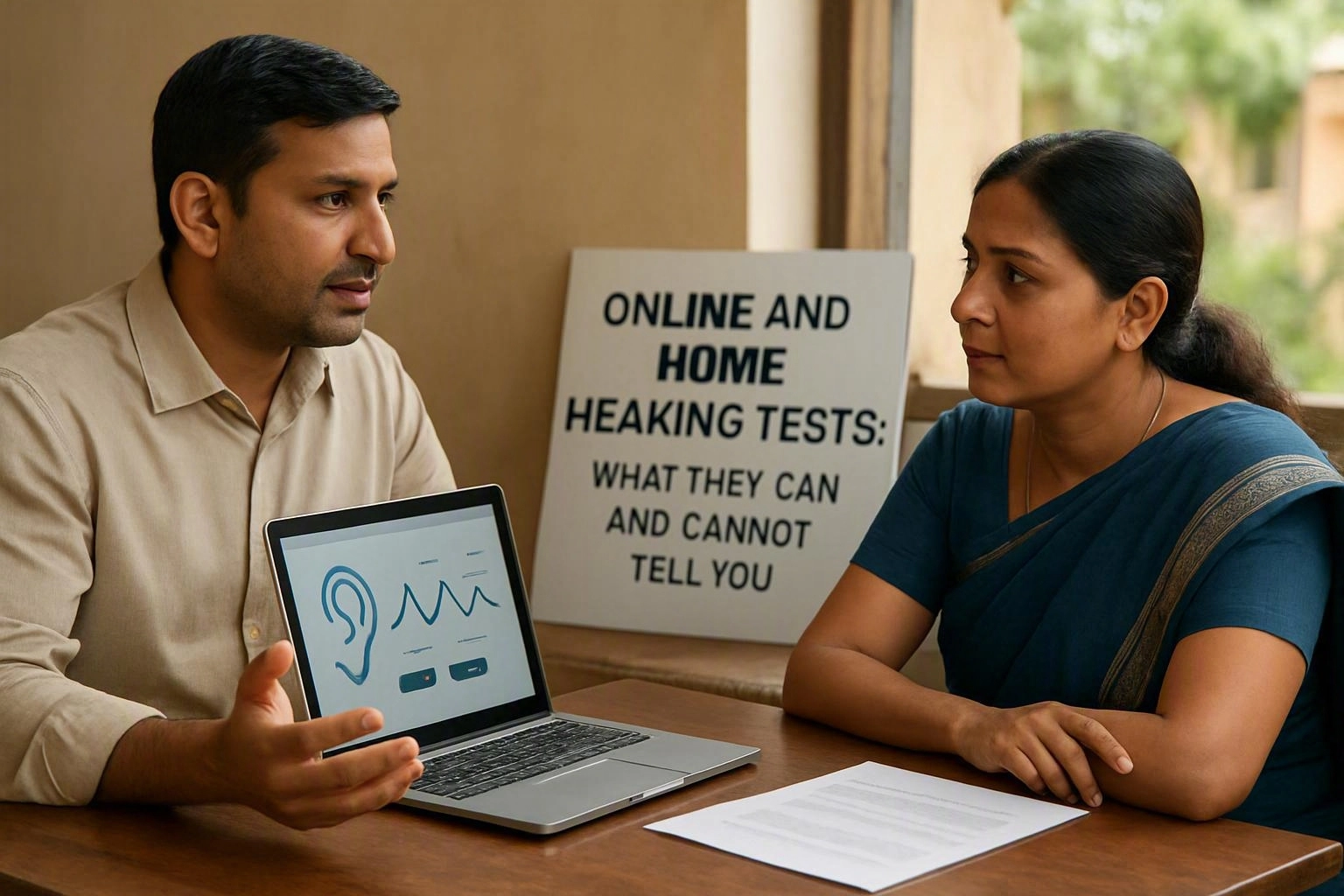
For older adults, family members and first-time users, a digital hearing test is only a starting point. It raises an enquiry about hearing, but it does not replace diagnostic audiometry or medical review.
Someone searching for an Online Hearing Test in Bhubaneswar may want a convenient first step. That convenience can help, if the result is considered alongside symptoms and daily listening problems.
Author: Dr. Sakti Prasad Mohanty
Are Online Hearing Tests Accurate Enough to Trust?
Online hearing tests can offer a useful hearing screening, but their accuracy depends on several factors. These include the device, headphones, room sound, calibration and instructions. They do not replace diagnostic audiometry. Treat the result as a sign of possible hearing difficulty, not a confirmed diagnosis.
An online hearing screening usually plays test tones or asks questions through a phone or computer. You respond when you hear a tone, or report how well you understand speech. This may show a pattern that needs attention. It can be useful when someone struggles with conversation or background noise.
Test reliability can vary. Headphone position, differences between the ears, language skills and accidental answers may change the result. A quiet room helps, but it cannot match the controlled setting used by an audiologist.
A first screen may take about 5–15 minutes. The timing depends on the platform and test type. That is enough for an early indication, but not enough to check every part of hearing. Older adults may need help reading the instructions. First-time users should avoid guessing when they are unsure.
Mistake 1: Treating a Screening Result as a Diagnosis
A screening test identifies people who may need more assessment. It does not confirm the presence, type or severity of hearing loss. A result may suggest reduced sensitivity, but it cannot explain the cause or show why one ear performs differently.
This mistake happens when a simple pass or fail label feels final. It can lead to delayed care, needless worry or unsuitable self-treatment. The safer step is to save the result, note your symptoms and arrange diagnostic audiometry when needed.
Mistake 2: Taking the Test in a Noisy Room
Background noise can hide quiet test tones and make speech tasks harder. Fans, traffic, television sounds, echoes and poor room acoustics can change the test conditions. This may lead to missed tones or a result that does not reflect your usual hearing.
People often choose a convenient room without noticing how much sound enters it. The result may then be less dependable, and a later clinic test may look different. Use the quietest room available, silence nearby devices and stop if noise affects your focus.
Mistake 3: Assuming Every Phone or Headphone Gives the Same Result
Different headphones and smartphones produce different sound levels and frequency responses. Headphones may not seal evenly or sit correctly over the ears. The left and right sides may also perform differently. Without proper calibration, the same person may receive different results on different devices.
Consumer devices are made for general listening, not calibrated pure-tone audiometry. The result may give an inaccurate estimate of hearing thresholds. Use suitable earphones, place them correctly and follow the platform’s instructions. Seek a professional test when the result matters.
Can a Home Hearing Test Diagnose Hearing Loss?
A home hearing test cannot fully diagnose hearing loss because diagnosis needs controlled testing. It may also need an ear examination and middle-ear checks. A home result may suggest reduced hearing sensitivity, but it cannot identify the cause or rule out a treatable problem.
A home hearing test is a consumer-led hearing screening outside a clinic. Some tests use pure tones, while others use speech or speech-in-noise tasks. These methods may show difficulty hearing certain sounds. They do not provide all the evidence needed for a clinical diagnosis.
Professional pure-tone audiometry measures responses across several frequencies. It creates an audiogram under controlled conditions. The clinician can compare both ears, repeat unclear measurements and check speech understanding. Further checks may be needed for earwax, fluid or other causes of conductive hearing loss.
Remote screening cannot perform otoscopy, which checks the ear canal and eardrum. It also cannot reliably measure middle-ear function. A normal home result should not override ongoing symptoms. An abnormal result should not be used to name the cause without an examination.
Mistake 4: Ignoring One-Sided, Sudden or Fluctuating Hearing Changes
Sudden, one-sided or fluctuating hearing changes need more than a routine digital screen. One ear may suddenly feel blocked, or hearing may change over hours or days. Sound clarity may also vary without an obvious reason.
This mistake happens when the result seems only mildly abnormal. Some people also blame changes on age. Delayed care can be risky when a condition needs prompt attention. Seek medical advice quickly for sudden or one-sided change, especially with dizziness, pain or discharge.
Mistake 5: Using an Online Test When Earwax or Ear Disease May Be Present
Earwax, infection, discharge, pain or pressure can affect hearing. These signs may need clinical care. An online screen cannot check for earwax, swelling, a damaged eardrum or other visible problems.
People may test after noticing muffled hearing and assume the score explains it. This can make someone treat a temporary symptom as permanent hearing loss. It may also delay care for ear disease. Arrange an examination instead, and do not put objects inside the ear.
What Are the Main Limitations of Remote Hearing Tests?
Remote hearing tests can improve access to an early hearing screen, but they have clear limits. They may not control sound levels precisely, inspect the ear or measure middle-ear pressure. They may also give limited information about speech understanding. Results are most useful when considered with symptoms and followed by in-person testing.
Tele-audiology can help when travel, mobility or distance makes clinic visits difficult. The type of remote assessment still matters. Some services are automated screens, while others involve an audiologist. Neither option should be treated as a full audiological evaluation.
| What may be limited | Why it matters | Safer corrective action |
|---|---|---|
| Sound delivery and calibration | Test tones may not have known levels across frequencies. | Repeat with controlled equipment through diagnostic audiometry. |
| Otoscopy | Earwax, infection and eardrum changes may be missed. | Arrange an ear examination when symptoms or visible concerns exist. |
| Tympanometry | Middle-ear pressure and movement may not be measured. | Use clinical middle-ear testing when indicated. |
| Speech audiometry | Understanding speech may differ from detecting tones. | Assess speech understanding in a controlled setting. |
| Bone conduction and auditory processing | The source and more complex features of difficulty may remain unknown. | Request a broader professional assessment where appropriate. |
The table shows why a convenient screen and a professional hearing test have different purposes. A remote result can guide the next step, but it should not rule out medical problems or plan long-term amplification.
Mistake 6: Believing Remote Testing Measures Every Part of Hearing
Speech audiometry checks how well a person recognises speech. Middle-ear testing checks how the eardrum and nearby structures work. Bone conduction can help separate inner-ear problems from conductive problems. Auditory processing looks at how the brain handles sound.
A remote test may cover only one part of this picture. A good tone response does not mean all communication will feel easy. Discuss listening problems with an audiologist and ask which tests fit your symptoms.
Mistake 7: Repeating the Test Until the Result Looks Better
Repeated testing can create a practice effect. The user becomes familiar with the tones, timing and expected answers. A person may also answer based on expectation instead of actual hearing. This can make an unclear result seem more reassuring than it should.
This often happens after someone feels worried about a failed screen. It can create a misleading record and delay proper care. Complete the test once under suitable conditions, save the result and arrange professional review when needed.
Is an Online Hearing Test Enough to Choose a Hearing Aid?
Hearing-aid selection is not safely based on an online hearing test alone. It depends on verified hearing thresholds, speech understanding, ear health and listening needs. Comfort also matters. A qualified hearing-care professional can use these results to match and adjust amplification more safely.
A hearing aid is an assistive device, not a universal volume booster. The right model depends on the type and degree of hearing loss. Communication settings, hand control, lifestyle and personal preferences also matter. A digital result may not show what each ear needs.
Programming from an unverified result may provide too little or too much amplification. A proper fitting includes advice, adjustments and time to discuss sound quality, speech clarity and comfort. Our team can explain why a screening result is only a starting point.
Mistake 8: Buying or Programming Hearing Aids from an Unverified Result
Hearing-aid programming needs an accurate audiogram and suitable amplification targets. It also needs a clear understanding of speech needs. An automated screen may not provide the thresholds needed for safe programming. It may miss differences between the ears or a medical issue.
Online buying can seem quick and private, so this mistake is easy to make. It may lead to poor speech clarity, discomfort or little benefit. Professional fitting, verification and follow-up are safer than treating a digital score as a prescription.
Mistake 9: Judging a Hearing Aid Only by Loudness
Louder sound is not always clearer sound. A useful device should support speech clarity and comfortable listening. It should also manage background noise without making normal sounds harsh. Excessive loudness can be tiring and may reduce regular use.
This mistake happens when the first noticeable change feels like proof of success. It can lead to poor satisfaction and less communication benefit. Discuss sound quality and comfort with the professional. Programming and expectations can then be adjusted gradually.
When Should You Follow an Online Hearing Test with Professional Testing?
Professional hearing testing should follow an online result when it suggests possible hearing difficulty. Testing is also needed when symptoms worsen, results differ between ears or the result conflicts with daily experience. Seek prompt medical advice for sudden or one-sided change, pain, discharge, dizziness or other worrying symptoms.
Use the following decision guide to choose between a convenient screen, routine audiometry and prompt referral:
Family members can help older adults by noting the screening date, test conditions and symptoms. This information helps the audiologist compare the result with everyday communication.
How to Use an Online Hearing Test Safely?
Safe use of an online hearing test starts with a quiet room, suitable headphones and careful attention to instructions. Complete the test once under steady conditions and record the result. Use an abnormal, unclear or unexpected result to arrange professional audiometry, not to confirm a diagnosis.
A digital hearing test can be a helpful first step when someone is unsure about seeking care. It should guide a sensible decision about assessment, not replace an audiological evaluation. Diagnostic audiometry remains the right way to confirm hearing thresholds and guide treatment.
Questions About Hearing Aid Clinic
Are Online Hearing Tests Accurate?
They can provide a useful preliminary hearing screening, but accuracy depends on headphones, device calibration, room noise, instructions and user responses. They do not confirm the type or severity of hearing loss. An abnormal, unclear or unexpected result should be followed by a professional hearing test.
Can a Home Hearing Test Diagnose Hearing Loss?
No. It may indicate reduced hearing sensitivity, but it cannot examine the ear canal or eardrum. It also cannot measure middle-ear function or reliably identify the cause. Diagnostic audiometry and, when needed, otoscopy or medical review are required for a fuller assessment.
Is an Online Hearing Test Enough to Choose a Hearing Aid?
No. Hearing-aid choice and programming require verified thresholds, speech understanding, ear-health information, listening goals and individual fitting. Professional follow-up helps confirm comfort, speech clarity and suitable amplification.
When Should I Follow an Online Hearing Test with Professional Testing?
Arrange professional testing after an abnormal, inconsistent or unclear result, or when hearing difficulty affects daily life. Seek prompt medical advice for sudden or one-sided hearing change, pain, discharge, dizziness or rapidly changing symptoms.
What Are the Limitations of Remote Hearing Tests?
Remote testing may not control sound levels precisely or assess speech understanding in a clinical setting. It cannot perform otoscopy, tympanometry or complete bone-conduction testing. Headphones, device calibration, room noise and language comprehension may also affect results.
If you are unsure what a screening result means, our team can help you choose the next step. This may be routine audiometry, an ear examination or prompt medical referral. Professional guidance matters before selecting or programming a hearing aid.
Arrange a professional hearing assessmentRelated Resources
Hearing Aid Clinic for People with Tinnitus
hearing aid clinic for tinnitus
Who It's ForHearing Aid Clinic for Cochlear Implant Candidates
hearing aid clinic for cochlear implant evaluation
Why It MattersBenefits of Early Hearing Loss Diagnosis and Hearing Testing
why is early diagnosis of hearing loss important
Types & CategoriesTypes of Hearing Tests: PTA, BERA, OAE, Tympanometry and ASSR
types of hearing tests