Dizziness, Vertigo and Balance Problems: Could Your Ears Be Involved?
A hearing balance assessment checks whether dizziness, vertigo or balance problems may involve the inner ear, hearing pathway or another cause. Clinicians review your symptoms and medical history first. They may then use hearing tests, audiometry, tympanometry, vestibular assessments and balance tests. Inner ear conditions such as benign paroxysmal positional vertigo, Ménière’s disease, vestibular neuritis and labyrinthitis can affect balance. Some also cause hearing loss or tinnitus. Testing is sensible when dizziness keeps returning, feels severe, affects hearing, or makes walking and daily tasks harder. Sudden hearing loss, severe headache, weakness or difficulty speaking needs urgent medical care.
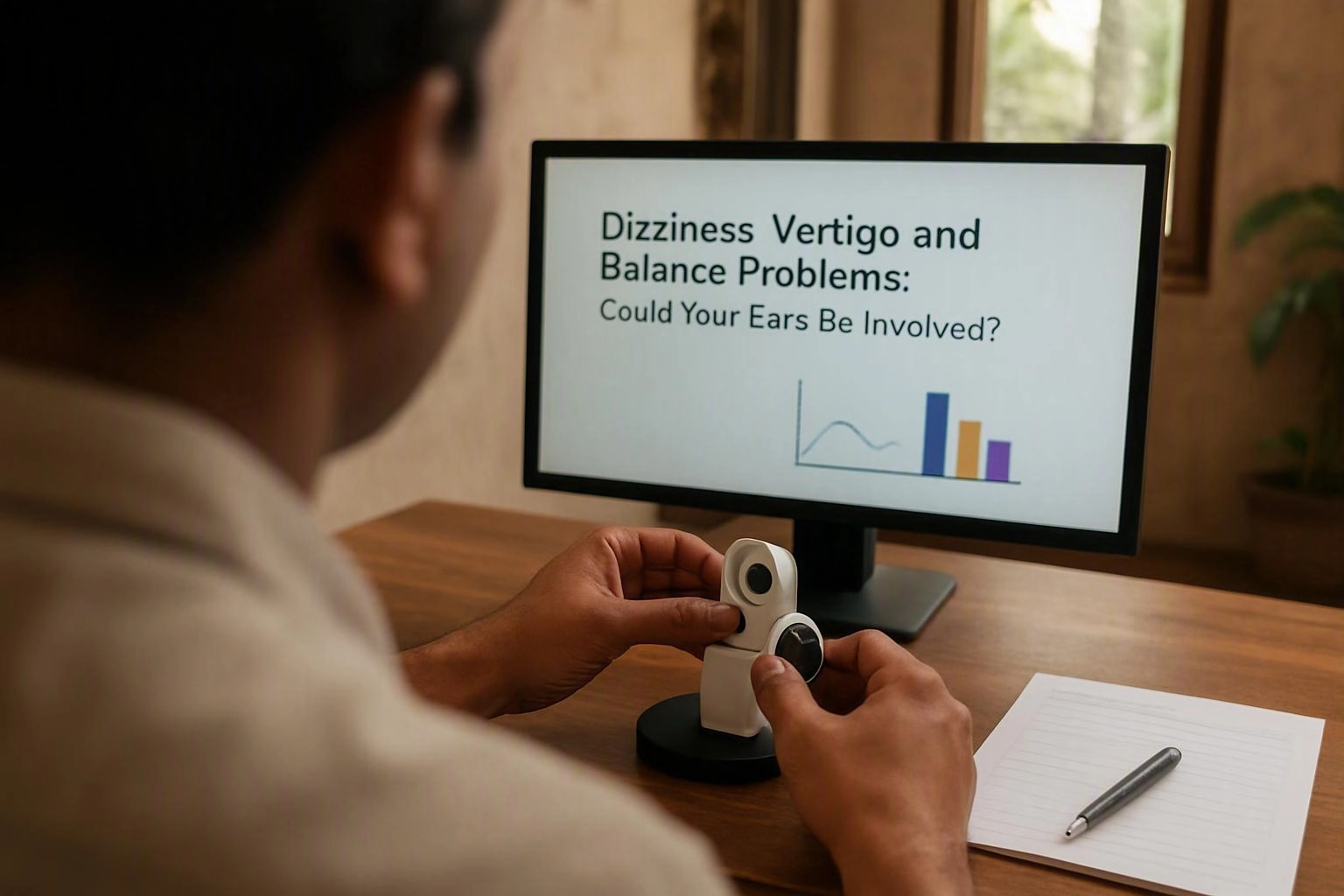
A Hearing Balance Assessment looks at links between dizziness, vertigo, hearing changes, tinnitus and inner-ear balance function. At Audium Hearing Aid Clinic, we review the full symptom pattern. We don't assume that every dizzy spell comes from an ear problem.
Dr. Sakti Prasad Mohanty offers educational guidance about these checks. A Hearing Balance Assessment in Bhubaneswar may help when symptoms affect confidence, movement, communication or daily safety.
Can Inner Ear Problems Cause Dizziness and Vertigo?
Inner ear problems can cause dizziness and vertigo because the vestibular system helps the brain read movement and body position. Benign paroxysmal positional vertigo, Ménière’s disease, vestibular neuritis and labyrinthitis may cause spinning, imbalance, nausea, hearing changes or tinnitus. Other medical conditions can cause similar symptoms.
The inner ear contains the cochlea for hearing and the vestibular apparatus for movement. Signals from both structures travel to the brain through connected pathways. If signals from one side do not match signals from the eyes, muscles or other ear, the brain may sense spinning. Inflammation, infection, injury or changed calcium crystals can cause this mismatch.
Benign paroxysmal positional vertigo often causes short attacks when someone turns in bed, looks up or bends down. Ménière’s disease may cause repeated attacks with changing hearing loss, tinnitus and ear pressure. Vestibular neuritis mainly affects balance. Labyrinthitis can affect balance and hearing because it involves more than the balance nerve.
These patterns offer clues, but they don't confirm a diagnosis. Migraine, blood-pressure changes, medicines, heart rhythm problems, anxiety, vision problems and neurological conditions can also cause dizziness. A clinician may suggest a hearing assessment, medical review or referral to an audiologist, ENT specialist, neurologist or another medical professional.
Signs and Symptoms That May Point to an Ear-Related Balance Problem
Ear-related balance problems may cause spinning, unsteadiness, nausea, hearing loss, tinnitus, ear pressure or symptoms after head movement. Some people have several symptoms, while others notice only one. The pattern can help separate inner-ear symptoms from hearing, neurological, heart or medicine-related causes.
Note when symptoms begin, how long they last and what brings them on. Also record ear pressure, tinnitus, hearing changes, headaches, recent illness or falls. This diary can help an audiologist choose suitable Hearing Tests and decide if more checks are needed.
When Do Dizziness and Hearing Loss Need Testing?
Dizziness and hearing loss need testing when symptoms return, worsen, affect one side, follow movement or disrupt walking and daily tasks. Sudden hearing loss with dizziness needs prompt medical attention. Testing also helps when tinnitus, ear pressure, imbalance or unexplained falls occur with hearing changes.
Arrange a hearing balance assessment when dizziness returns over days or weeks. You should also arrange one when attacks become stronger or you notice hearing loss in one ear. Testing makes sense if stairs feel unsafe, walking becomes difficult, driving feels unsafe, or symptoms disturb work, sleep or caring duties. Repeated falls or a new fear of falling should not be dismissed as ageing.
Sudden hearing loss, especially in one ear, needs urgent attention. Contact an urgent medical service instead of waiting for a routine appointment. Urgent care is also needed for a new severe headache, weakness, numbness, facial drooping, speech trouble, double vision, fainting, chest pain, severe vomiting or trouble walking. These signs may point to a serious condition outside routine hearing care.
Our team can discuss suitable hearing tests, but some findings need medical referral. An audiologist may work with an ENT specialist for ear concerns or a neurologist for neurological signs. Another medical professional may review blood pressure, medicines or heart concerns. The right route depends on your history and examination.
What Tests Are Used for Vertigo and Balance Problems?
Tests for vertigo and balance problems may include hearing tests, audiometry, tympanometry, positional testing, eye-movement checks, head impulse testing and posturography. The clinician chooses tests based on your symptoms and history. Results can show whether hearing, middle-ear function, inner-ear balance organs or another system needs closer review.
A vestibular assessment is not one single test. Some visits focus on hearing, while others check eye movements, head responses and standing control. Most routine appointments take about 45 to 90 minutes. The time varies with the tests needed, your symptoms and the breaks you require.
| Test | What it examines | Why it may help |
|---|---|---|
| Pure-tone audiometry | Hearing sensitivity across selected frequencies | Identifies hearing loss and differences between ears |
| Speech audiometry | Ability to hear and understand speech | Compares speech understanding with tone results |
| Tympanometry | Middle-ear movement and pressure | Checks for pressure, fluid or eardrum-related findings |
| Videonystagmography | Involuntary eye movements called nystagmus | Assesses responses linked with vestibular function |
| Head impulse testing | Eye response during controlled head movement | Looks for reduced balance-organ responses |
| Positional testing | Symptoms and eye movements after position changes | May support assessment of positional vertigo |
| Posturography | Standing balance under changing sensory conditions | Helps explore balance control and fall risk |
How Hearing Tests and Audiometry Support Balance Assessment?
Pure-tone audiometry measures the quietest sounds you can hear at different pitches. Air conduction uses headphones or inserts. Bone conduction uses a small vibrator behind the ear and sends sound through the skull. Comparing both pathways can show whether a finding involves the outer or middle ear, inner ear or hearing pathway.
Speech audiometry checks how well you hear and understand words at comfortable levels. Tympanometry gives information about eardrum movement and middle-ear pressure. Together, these Hearing Tests can guide referral, monitoring or treatment planning, even when dizziness is your main concern.
How Vestibular and Positional Tests Examine Balance Function?
The vestibular system works with vision and body sensation to keep your head and body steady. During testing, the clinician may watch for nystagmus, an involuntary rhythmic eye movement. A Dix-Hallpike test changes head and body position to check for a response linked with some forms of benign paroxysmal positional vertigo.
A head impulse test checks whether your eyes stay on a target during a quick, safe head movement. Other tests may examine walking, standing or responses to changed visual information. Results may not identify one cause alone, so the clinician considers your symptoms, medicines and medical history.
Why Is a Hearing Test Done for Balance Problems?
A hearing test is done for balance problems because the cochlea and vestibular organs share the inner-ear region. Some disorders affect hearing and balance together. Audiometry can show hearing loss, differences between ears or changes that guide referral and treatment, even when dizziness is the main complaint.
The cochlea changes sound into nerve signals. Nearby vestibular organs detect head movement and position. Hearing and balance are separate functions, but they are connected by location. An inner-ear disorder may therefore cause dizziness with tinnitus, ear pressure or changed hearing. In other cases, hearing stays normal and the cause lies elsewhere.
Comparing both ears matters. Unequal hearing loss, a sudden change or poor speech understanding may need medical referral, especially with lasting or one-sided symptoms. A normal result is useful too. It makes an isolated hearing cause less likely and helps the clinician consider neurological, heart, medicine-related or visual causes.
Our Hearing Balance Assessment brings these findings together in a clear picture. We explain results in plain language and show when routine hearing care may help. We also recommend referral when symptoms need medical review. A Hearing Aid Clinic can support hearing needs, but warning signs with dizziness need medical attention.
Can Tinnitus and Dizziness Be Related?
Tinnitus and dizziness can be related when one inner-ear condition affects hearing and balance. Ménière’s disease is one possible example, especially with changing hearing loss or ear pressure. Tinnitus can also have unrelated causes, so hearing checks and symptom history matter before reaching a conclusion.
Tinnitus may sound like ringing, buzzing, hissing or pulsing. When it occurs with spinning vertigo, changing hearing or a blocked feeling, an inner-ear cause needs consideration. Tinnitus can also follow loud noise, age-related hearing change, earwax, medicines, jaw problems or other conditions without causing balance symptoms.
A tinnitus assessment asks when the sound began, whether it affects one ear or both, whether it follows the heartbeat and whether hearing changed. New, severe or repeated dizziness needs review, especially after a fall. Findings may guide Hearing Tests, medical review or referral to an ENT specialist.
Common Causes and Practical Ways to Reduce Balance Risks
Common causes of dizziness include inner-ear disorders, positional vertigo, vestibular inflammation, migraine and medicine effects. Non-ear causes include blood-pressure changes. Helpful steps include reviewing medicines, moving carefully, drinking enough fluids, making your home safer and following clinical advice. Persistent symptoms still need assessment.
Dizziness can have several causes, and more than one factor may be involved. A careful history helps separate an inner-ear disorder from problems involving circulation, the nervous system, eyesight, muscles or medicines.
Simple steps can reduce hazards while the cause is being checked. They don't replace diagnosis or prescribed treatment.
When to Arrange a Hearing Balance Assessment?
Arrange a hearing balance assessment when dizziness, vertigo, hearing changes or tinnitus keep returning, have no clear cause or affect safe movement. A symptom diary can make the appointment more useful. It can also help the clinician decide whether hearing tests, vestibular testing, tinnitus assessment or medical referral should come first.
- Write down when each episode starts, how long it lasts and how often it happens.
- Record triggers such as rolling in bed, bending, standing, loud sound or visual movement.
- Note nausea, ear pressure, tinnitus, hearing changes, recent illness, injury, migraine or falls.
- Arrange assessment when symptoms return, worsen, affect walking, work or driving, or occur with hearing loss.
- Seek urgent care for sudden hearing loss, new neurological signs, severe headache, fainting, chest pain or trouble walking.
After the first review, results may support reassurance, monitoring, hearing care or referral. An audiologist, ENT specialist, neurologist or another medical professional may be involved. The findings will guide this decision. Don't drive yourself if an active episode makes travel unsafe.
Questions About Hearing Aid Clinic
Can Inner Ear Problems Cause Dizziness?
The vestibular system in the inner ear helps the brain read movement and position. Benign paroxysmal positional vertigo, Ménière’s disease, vestibular neuritis and labyrinthitis can cause dizziness, vertigo, imbalance, nausea, hearing changes or tinnitus. Similar symptoms can also have non-ear causes, so assessment matters.
When Do Dizziness and Hearing Loss Need Testing?
Testing is suitable when dizziness or hearing loss returns, worsens, affects one side, follows movement or disrupts walking, work, driving or daily tasks. Arrange prompt medical care for sudden hearing loss with dizziness. New weakness, speech trouble, severe headache, fainting or trouble walking also needs urgent care.
What Tests Are Used for Vertigo and Balance Problems?
Tests may include pure-tone audiometry, speech audiometry, tympanometry, videonystagmography, head impulse testing, positional testing such as the Dix-Hallpike test and posturography. The clinician chooses tests that examine hearing, middle-ear function, eye movements, vestibular function and balance control.
Can Tinnitus and Dizziness Be Related?
They can be related when one inner-ear condition affects hearing and balance. Ménière’s disease is one possible example, especially with tinnitus, changing hearing loss, vertigo or ear pressure. Tinnitus also has many unrelated causes, so a tinnitus assessment and symptom history are needed.
Why Is a Hearing Test Done for Balance Problems?
The cochlea and vestibular organs sit in the inner-ear region, and some conditions affect hearing and balance together. Audiometry can show hearing loss, differences between ears or changes that guide referral and treatment. A normal result may point the clinician towards non-auditory causes of dizziness.
If dizziness or hearing changes affect your safety or routine, our team can explain the next steps. We can also help you understand whether a hearing assessment or medical referral is suitable.
Contact our team about your symptoms
Get a Free EstimateRelated Resources
Hearing Aid Clinic for People with Tinnitus
hearing aid clinic for tinnitus
Who It's ForHearing Aid Clinic for Cochlear Implant Candidates
hearing aid clinic for cochlear implant evaluation
Why It MattersBenefits of Early Hearing Loss Diagnosis and Hearing Testing
why is early diagnosis of hearing loss important
Types & CategoriesTypes of Hearing Tests: PTA, BERA, OAE, Tympanometry and ASSR
types of hearing tests