What is Hearing Threshold?
Hearing Threshold is the quietest sound a person can detect at a specific frequency under defined test conditions. Audiologists record thresholds in decibels hearing level (dB HL) across several frequencies. The results form an audiogram and help identify the degree, type, and pattern of hearing loss in each ear.
Quick Facts About Hearing Threshold
Category
Audiological measurement
Measured by
Pure-tone audiometry
Unit
Decibels hearing level, dB HL
Used for
Detecting and classifying hearing loss
Common confusion
Threshold is not the same as loudness tolerance
Also called
Auditory threshold, Hearing sensitivity threshold
Key Takeaways About Hearing Threshold
- A lower threshold usually means better hearing sensitivity at that frequency.
- Audiologists measure thresholds in decibels hearing level across several test frequencies.
- Thresholds may differ between the right and left ears.
- An audiogram shows hearing thresholds as a pattern rather than one overall score.
- Reliable results require clear instructions, quiet conditions, and consistent responses.
Understanding Hearing Threshold
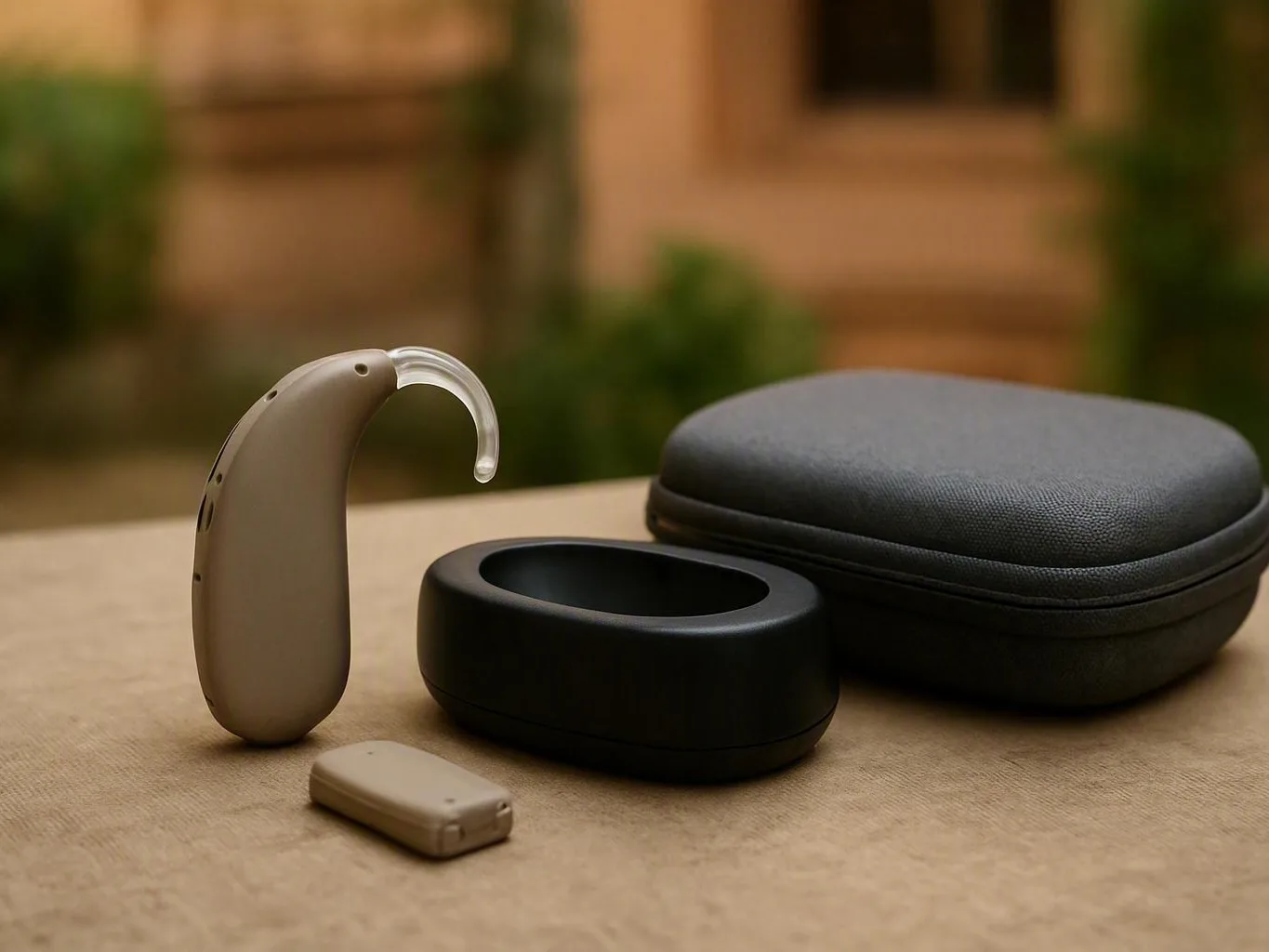
Hearing Threshold describes the softest sound that a person can detect at a particular frequency. The sound must be presented under controlled conditions, usually through headphones or insert earphones. The result is recorded separately for each ear. One ear may hear more softly than the other.
Related glossary terms: Audiogram, dB, Decibel.
Audiologists usually express thresholds in decibels hearing levelwritten as dB HL. A threshold near 0 dB HL generally indicates good sensitivity for that test frequency. A higher number means the sound needs greater intensity to be heard. Thresholds across frequencies are marked.audiogram. This helps show the shape and severity of a hearing problem.
How Hearing Threshold Works, Is Measured, or Is Used?
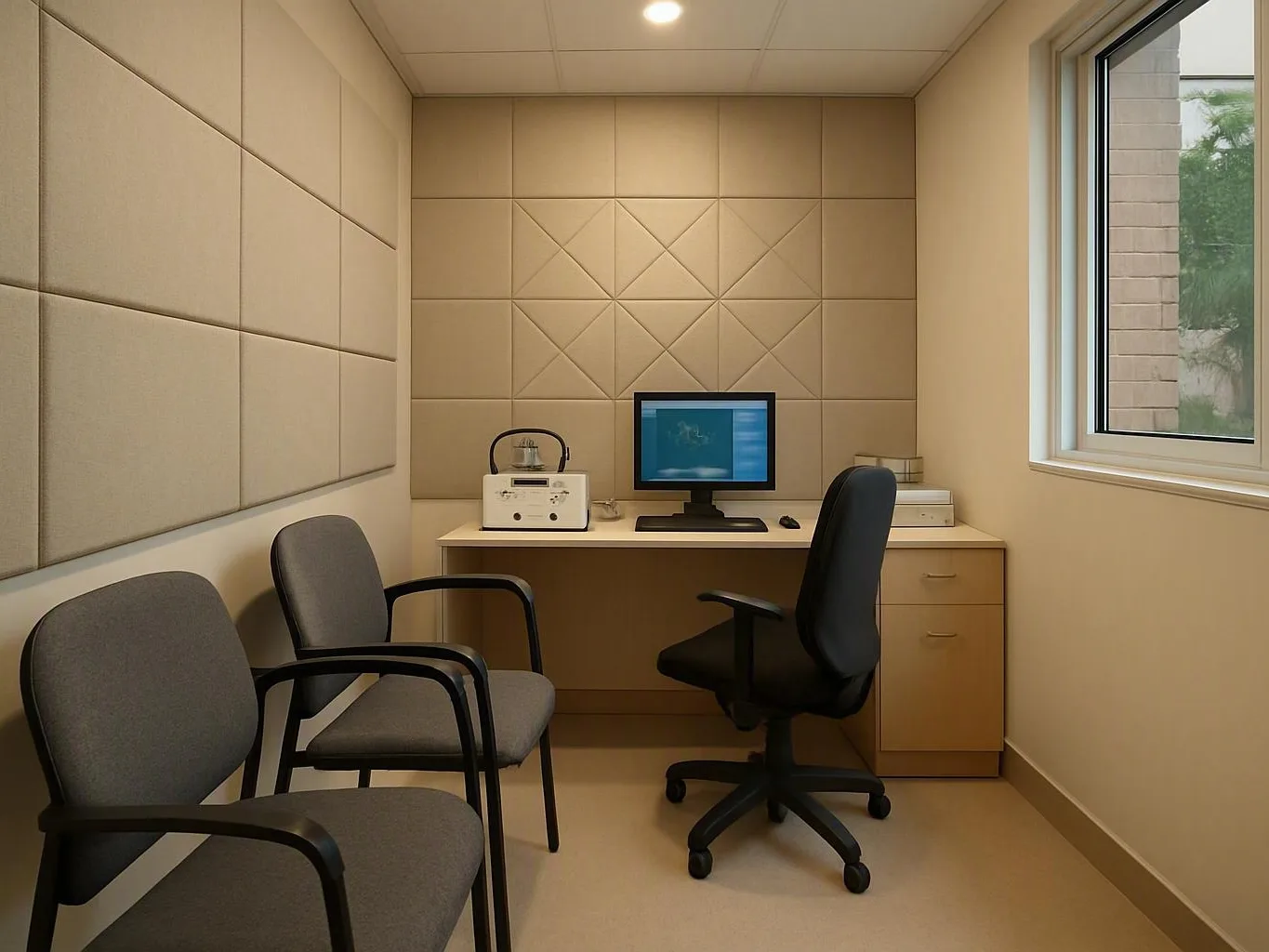
During pure-tone audiometry, the listener hears brief tones at selected pitches and signals whenever a tone is heard. The tester changes the volume and repeats the tone. This helps find the lowest level detected reliably. Testing commonly covers speech-related frequencies from the low to high range. However, the exact test pattern depends on age, symptoms, and clinical need.
The measured threshold isn't a single permanent number. It can change with earwax, middle-ear fluid, background noise, fatigue, or poor understanding of the instructions. Temporary exposure to loud sound can also affect it. The clinician checks the test pattern and compares air-conduction and bone-conduction results when needed. They also review findings.speech perception and other clinical information. A consistent response pattern is essential before making decisions about treatment or amplification.
Why Hearing Threshold Matters?
Thresholds show which pitches are difficult to hear and how much sound must be added before detection occurs. This information supports the identification.conductive hearing loss, sensorineural hearing loss, and mixed hearing loss. It also helps distinguish a broad reduction in sensitivity from a problem limited to certain frequencies.
The results guide practical decisions about communication support, hearing aid settings, and the need for further medical assessment. A threshold alone doesn't predict how well a person will understand speech in a busy room. Speech testing, listening history, ear examination, and everyday communication needs add necessary context.
When Hearing Threshold Matters Most?
Threshold measurement becomes especially useful when you notice difficulty following conversations, increasing television volume, or missing high-pitched sounds. It also matters after repeated noise exposure, an ear infection, head injury, sudden hearing change, or a noticeable difference between the ears. Prompt assessment is important after sudden hearing loss. The cause may require urgent medical attention.
Clinicians also compare thresholds over time to monitor change and check whether test results are dependable.hearing aid fitting, accurate thresholds help determine suitable amplification across frequencies. During follow-up, new measurements may explain a change in listening ability. Programming decisions should also consider comfort, speech understanding, and real-world use.
How to Evaluate Hearing Threshold?
- Check whether the report lists thresholds for both ears across several frequencies.
- Confirm that the unit is dB HL rather than a sound pressure level used for a different purpose.
- Look for consistent responses and a clear description of air-conduction and bone-conduction findings when relevant.
- Compare the audiogram with speech understanding and reported communication difficulty.
- Ask whether earwax, infection, noise exposure, fatigue, or room noise could have affected the result.
Related Concepts Compared
Hearing Threshold vs. Audiogram
A hearing threshold is one measured response at one frequency and intensity. An audiogram is the chart that displays many thresholds for both ears.
Hearing Threshold vs. Decibel
A decibel is a unit for describing sound level or intensity. A hearing threshold is a measured hearing response that may be reported in dB HL.
Hearing Threshold vs. Loudness Discomfort Level
A hearing threshold identifies the softest detectable sound. A loudness discomfort level identifies the point at which a sound becomes uncomfortably loud.
Hearing Threshold vs. Speech Perception
Speech perception measures how well a person recognises or understands speech. Hearing threshold measures detection of tones and does not fully predict speech understanding.
Expert Note
A threshold is a behavioural test result, not a complete description of hearing. Poor attention, unclear instructions, tinnitus, or temporary middle-ear problems can affect responses, so the audiogram should be interpreted alongside ear examination and speech findings.
Common Mistakes or Myths About Hearing Threshold
- Treating one threshold value as a complete diagnosis.
- Assuming 0 dB means silence rather than a reference level for normal hearing sensitivity.
- Comparing dB HL directly with everyday sound measurements in dB SPL.
- Ignoring differences between the two ears.
- Assuming better tone detection always means better speech understanding.
Hearing Threshold in Practice: A Real-World Example
A person detects a 1,000 Hz tone at 20 dB HL in the right ear and 45 dB HL in the left ear. The left ear has poorer sensitivity at that frequency, but the full audiogram is needed to determine the overall pattern and clinical significance.
Sources & Further Reading on Hearing Threshold
- American Speech-Language-Hearing Association, Pure-Tone Testing
- World Health Organisation, Deafness and Hearing Loss
Related Services
Related Terms
Audiogram
Audiogram is a graph that records a person’s hearing thresholds across different pitches and loudness levels…
dB
dB is the abbreviation for decibel, a logarithmic unit used to express the ratio between two…
Decibel
Decibel is a logarithmic unit used to express the ratio between two levels of sound intensity…
Speech Perception
Speech Perception is the brain’s ability to detect, recognise, and understand spoken language from sound signals…
Audium Hearing Aid Clinic
Have Questions About Hearing Threshold?
Contact Audium Hearing Aid Clinic for practical guidance on Hearing Threshold and related hearing aid clinic work in Bhubaneswar.