What is Speech Perception?
Speech Perception is the brain’s ability to detect, recognise, and understand spoken language from sound signals. The process combines hearing with attention, memory, language knowledge, and context. Speech perception may be tested in quiet or background noise to assess how well a person understands words and sentences.
Quick Facts About Speech Perception
Category
Auditory and language processing
Measured by
Word and sentence recognition tests
Used for
Assessing speech understanding
Common confusion
Speech perception is not the same as speech production
Also called
Speech understanding, Speech recognition ability
Often discussed with
Audiometry, Hearing Aid Programming
Key Takeaways About Speech Perception
- Speech perception involves hearing, recognising, and understanding spoken words.
- Background noise, distance, hearing loss, and attention can reduce speech understanding.
- Speech testing may use words, sentences, quiet conditions, or competing noise.
- Speech perception results support hearing loss assessment and hearing aid programming.
- Good hearing thresholds do not always guarantee clear speech understanding.
Understanding Speech Perception
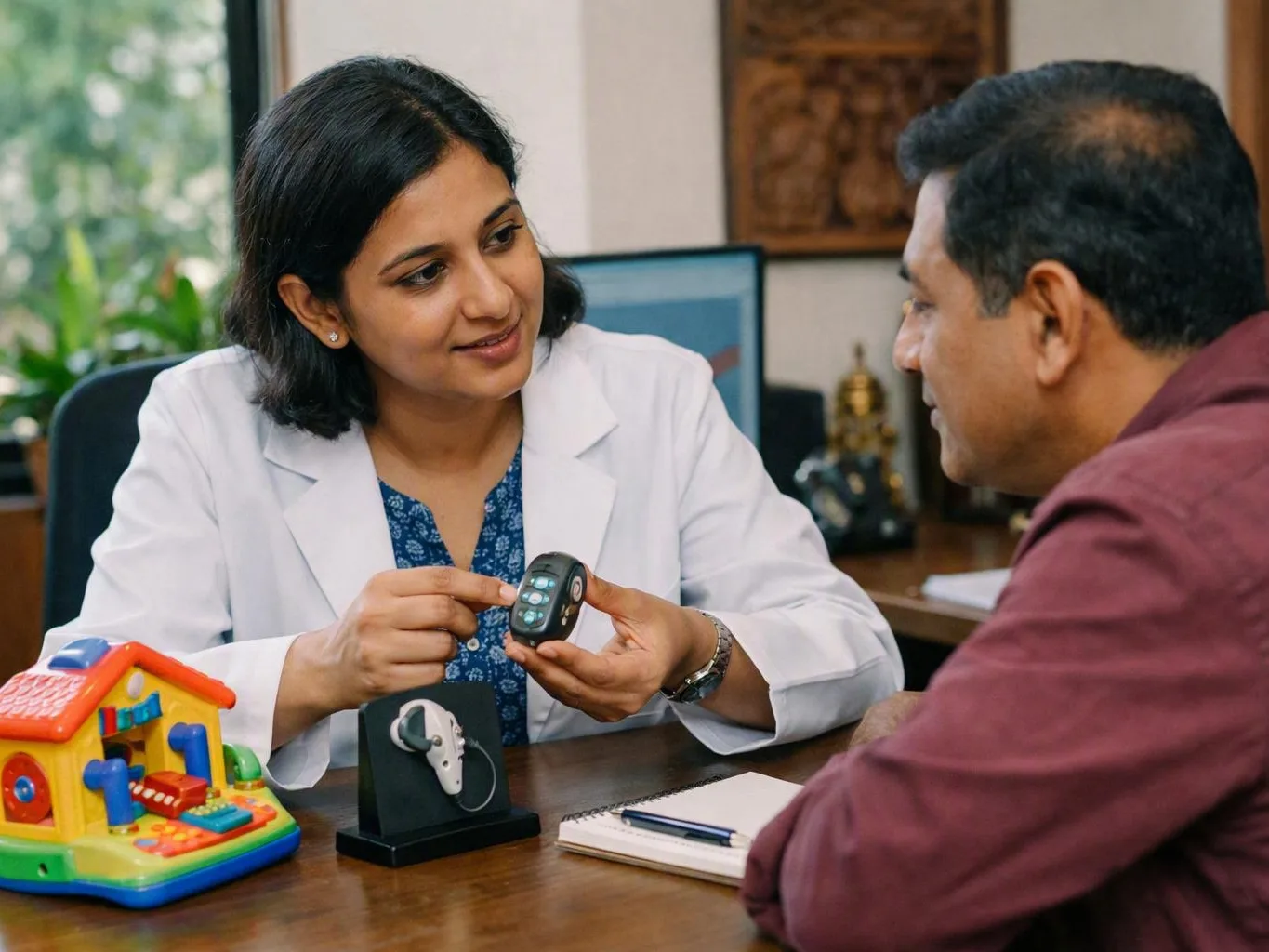
Speech Perception is the process through which the hearing system and brain detect speech sounds. They also attach meaning to these sounds. The ears collect changes in air pressure, and the cochlea converts these changes into nerve signals. The brain identifies patterns that represent words and sentences. Understanding speech therefore depends on more than hearing sound alone.
Related glossary terms: Audiogram, Audiologist, Hearing Threshold.
Auditory attention, memory, language knowledge, and context all influence speech perception. A familiar sentence may be easier to understand than an unfamiliar word, even at the same loudness. Noise, distance from the speaker, fast speaking, soft voices, and unclear pronunciation can make the task harder.
How Speech Perception Works, Is Measured, or Is Used?
During a clinical assessment, an audiologist may present recorded or live speech through headphones or speakers. The listener may repeat single words, choose a pictured item, or identify sentences. Tests can take place in quiet and background noise. Many people hear speech reasonably well in quiet but struggle in busy places.
Common results include a speech awareness threshold, a speech reception threshold, and a word recognition score. A speech reception threshold is the lowest level at which a person correctly repeats familiar two-syllable words. The person must repeat a set proportion of these words correctly. A word recognition score is the percentage of words repeated correctly at a selected listening level. The audiologist compares these results with the pure tone audiogram and reported listening difficulties.
Hearing aids can be adjusted using speech perception findings. This is especially helpful when a listener needs clearer sound in noise. The assessment may also guide communication training, device counselling, or referral for further investigation. Results should be interpreted with the test material, presentation level, language, and listening environment in mind.
Why Speech Perception Matters?
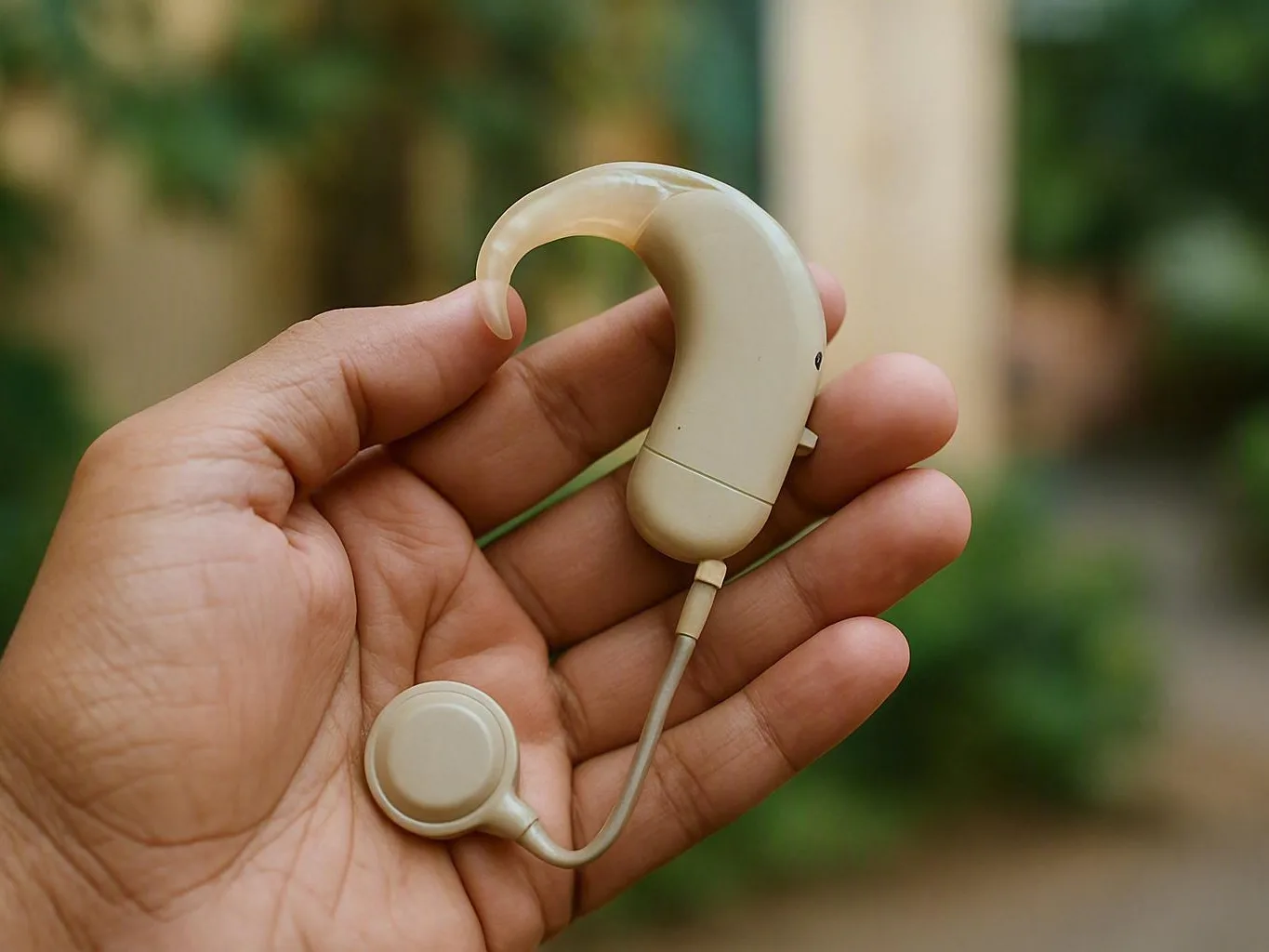
Speech perception gives a practical view of hearing ability that an audiogram can't provide alone. An audiogram measures the softest tones a person can detect at different frequencies. Speech testing examines how well meaningful language is understood. This difference explains why two people with similar hearing thresholds may report different communication difficulties.
Reduced speech perception may affect conversations, classroom learning, telephone use, work discussions, and safety instructions. Poor performance in noise can also reveal difficulty separating a speaker’s voice from competing sounds. These findings help an audiologist choose suitable test conditions and set realistic goals for hearing rehabilitation.
When Speech Perception Matters Most?
Speech perception becomes especially relevant when a person says that speech sounds loud but unclear. It also matters when communication breaks down in restaurants, family gatherings, classrooms, workplaces, or telephone calls. Testing can help distinguish poor sound audibility from a wider difficulty processing speech.
Results should be considered alongside ear health, hearing history, language background, cognitive factors, and daily listening needs. A low score doesn't automatically show that hearing aids will be ineffective. However, it may signal the need for careful programming, realistic expectations, assistive listening support, or auditory rehabilitation. In Bhubaneswar, Odisha, local assessment may also need to consider languages used at home, school, and work.
How to Evaluate Speech Perception?
- Check whether word or sentence recognition was tested in both quiet and background noise.
- Record the word recognition percentage and the presentation level used during testing.
- Compare speech results with the pure tone audiogram and the person’s real-world complaints.
- Ask whether the test material matched the listener’s strongest language and communication needs.
- Look for changes in speech understanding after hearing aid programming or rehabilitation.
Related Concepts Compared
Speech Perception vs. Speech Recognition
Speech recognition usually refers to identifying or repeating spoken words correctly. Speech perception is broader because it includes detecting speech sounds and understanding their meaning in context.
Speech Perception vs. Speech Reception Threshold
A speech reception threshold is a specific test result showing the softest level at which a person recognises familiar speech. Speech perception refers to the wider ability being assessed.
Speech Perception vs. Speech Production
Speech production is the physical process of creating spoken language through the voice and speech muscles. Speech perception concerns receiving and understanding another person’s speech.
Speech Perception vs. Auditory Processing
Auditory processing covers the brain’s wider handling of sound, including locating, separating, and ordering sounds. Speech perception is the part focused on understanding spoken language.
Expert Note
A speech score must never be read in isolation. Test level, word familiarity, language, room acoustics, hearing aid settings, and attention can change performance. A person may obtain a good quiet score yet need communication strategies or assistive technology in noise.
Common Mistakes or Myths About Speech Perception
- Assuming a normal pure tone threshold proves that speech will always be understood clearly.
- Treating a word recognition score as a fixed ability without considering test level and listening conditions.
- Comparing scores from different tests without checking the language, materials, and background noise.
- Expecting hearing aids to remove every speech understanding problem in severe noise.
- Ignoring the effect of fatigue, attention, distance, and room acoustics on test performance.
Speech Perception in Practice: A Real-World Example
A 62-year-old listener hears a family member clearly in a quiet room but misses words during a busy dinner. Word recognition testing is acceptable in quiet but falls in competing noise. The result supports hearing aid programming aimed at speech clarity and counselling about seating, lighting, and noise control.
Sources & Further Reading on Speech Perception
- American Speech-Language-Hearing Association, Speech Audiometry
- American Speech-Language-Hearing Association, Central Auditory Processing Disorder
- National Institute on Deafness and Other Communication Disorders, Hearing and Balance
Related Services
Related Terms
Audiogram
Audiogram is a graph that records a person’s hearing thresholds across different pitches and loudness levels…
Audiologist
Audiologist is a healthcare professional who assesses hearing and balance, identifies hearing disorders, and supports communication…
Hearing Threshold
Hearing Threshold is the quietest sound a person can detect at a specific frequency under defined…
Sensorineural Hearing Loss
Sensorineural Hearing Loss is reduced hearing caused by damage to the cochlea, inner-ear hair cells, or…
Audium Hearing Aid Clinic
Have Questions About Speech Perception?
Contact Audium Hearing Aid Clinic for practical guidance on Speech Perception and related hearing aid clinic work in Bhubaneswar.