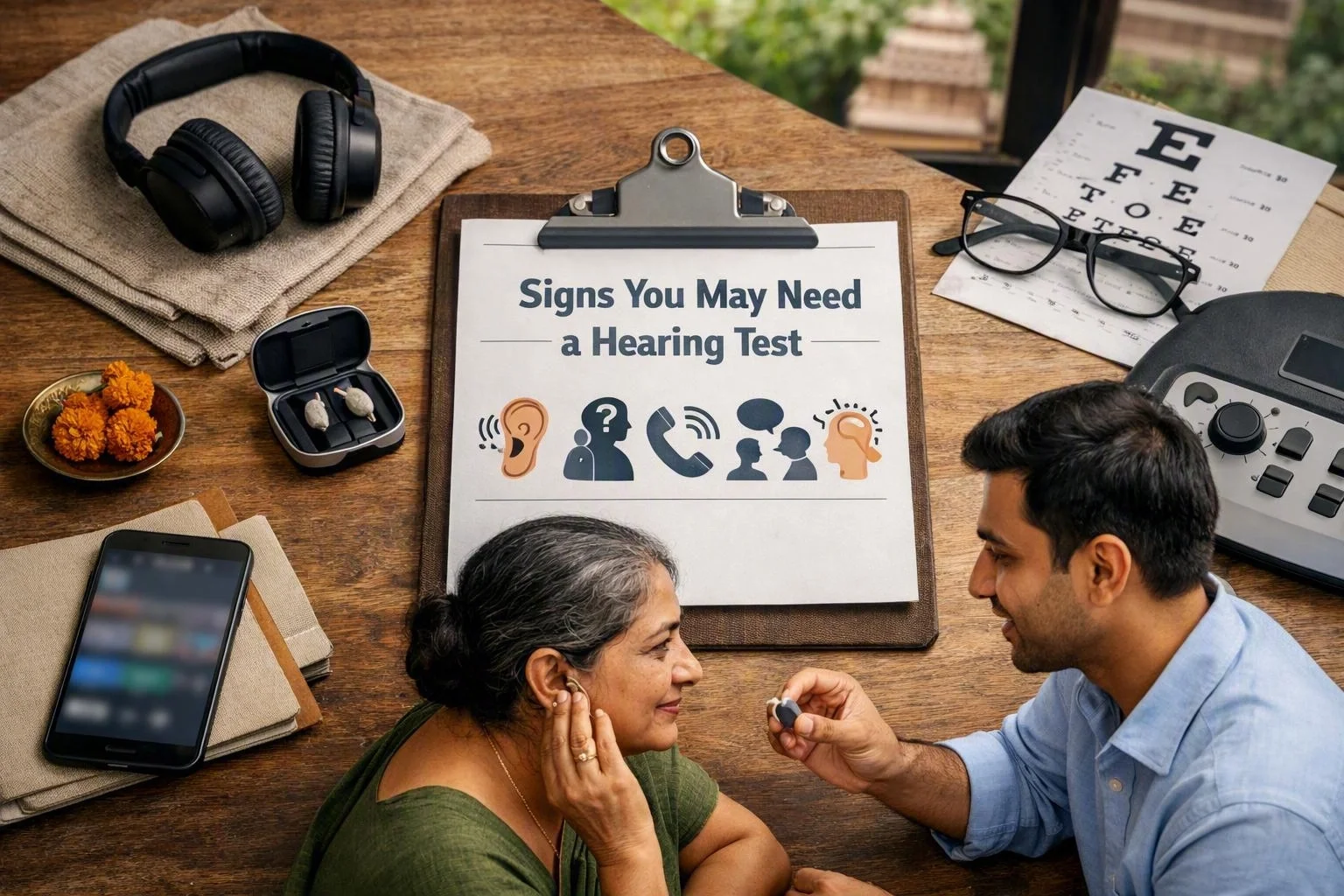
How to Tell If You May Need a Hearing Test
You may need a hearing test if you often ask people to repeat themselves or struggle in noisy places. Turning up the television, missing sounds, or hearing muffled speech can also be signs. A hearing test can find hearing loss, ear problems, or differences between your ears. Arrange a professional assessment if these signs continue or affect work and relationships. You should also seek advice after loud-noise exposure or sudden hearing changes. Audiometry, including pure tone audiometry, measures how well you hear different pitches and volumes. A qualified hearing professional can then suggest suitable next steps.
At Audium Hearing Aid Clinic, we look at your communication needs and language preferences. We also consider hearing-aid use and how hearing difficulty affects daily life. Author: Dr. Sakti Prasad Mohanty.
What Are the Signs That You Need a Hearing Test?
Hearing difficulty can show that you need a hearing test. Common signs include asking people to repeat themselves, misunderstanding speech, and raising the television volume. Missing everyday sounds or finding noisy conversations tiring can also point to a problem. Persistent symptoms, one-sided hearing changes, tinnitus, ear pressure, or sudden hearing loss need timely medical advice.
Hearing changes often happen slowly, so people may not notice them at first. Family members might spot the signs earlier. A hearing assessment can help adults, older people, children, and anyone exposed to regular loud noise.
These signs do not prove that you have hearing loss. An ear examination and hearing assessment can help find the cause. It may be earwax, a middle-ear problem, an inner-ear change, attention difficulty, or another issue.
Why Do I Keep Asking People to Repeat Themselves?
Asking people to repeat themselves often may point to reduced speech recognition. This can happen when speech is soft, fast, or unclear. Hearing loss may make consonants hard to hear, even when voices seem loud enough. A hearing assessment can separate hearing difficulty from attention, language, or surroundings.
Speech understanding depends on more than volume. High-pitched consonants may sound less clear, while other sounds can cover parts of a sentence. You may follow one-to-one conversations but lose track during group discussions.
This can cause listening fatigue. You may concentrate harder, watch lips, guess missing words, or avoid conversations. These changes can affect work, study, and relationships. Tell the audiologist which situations feel hardest and which language you prefer. Also mention whether you use hearing aids. Testing may include speech audiometry when appropriate.
Why Is It Difficult to Understand Speech in Noisy Places?
Speech-in-noise difficulty can happen when hearing loss makes voices harder to separate from background sounds. Restaurants, meetings, and family gatherings may reveal the problem first. Professional testing can check hearing sensitivity and show whether more care or hearing support may help.
Normal listening requires the brain to focus on one voice among many sounds. Hearing changes in both ears, unequal hearing, or auditory processing difficulties can make this harder. Fatigue, distance, poor lighting, and several people speaking at once may add to the challenge.
During an assessment, describe the places where communication breaks down. Based on your results, the clinician may discuss speech-in-noise testing, communication tips, hearing aids, or further assessment. Facing the speaker and reducing background noise can help while you seek advice.
Why Is the TV Volume Too Loud for Other People?
A television volume that feels comfortable to you but loud to others may signal reduced hearing sensitivity. It may also show that speech sounds unclear. High-frequency hearing loss can make dialogue hard to follow. This sign does not confirm hearing loss, but lasting volume changes support getting a hearing test.
Some people hear music and loud effects but struggle with spoken words. Others raise the volume because speech sounds muffled, distant, or mixed with background music. Family communication can suffer when relatives keep lowering the volume.
Check whether the same issue happens with other devices and in quiet rooms. Earwax, ear blockage, device settings, or a television speaker may also be responsible. A clinical assessment can compare both ears and measure hearing thresholds. It can also show whether hearing support or medical review may help.
When Should You Get a Hearing Test?
You should get a hearing test when hearing changes continue or conversations become difficult. You should also arrange one if noise exposure affects listening or family members notice missed sounds. Seek prompt medical care for sudden hearing loss, severe ear pain, discharge, dizziness, or neurological symptoms. Routine testing can create a useful hearing baseline.
A hearing screening may suit you as an initial check when there are no urgent symptoms. A full assessment.audiologist is better when concerns continue or hearing differs between ears. Adults and older people may benefit from a baseline assessment. Children need age-appropriate testing if speech, learning, behaviour, or responses to sound raise concern.
Tell the clinician about workplace noise, headphones, concerts, machinery, firearms, infections, medicines, and family history. Also mention age-related hearing loss. People who use hearing aids should bring them and explain what works or causes difficulty.Bhubaneswar, you can ask about Hearing Tests in Bhubaneswar when arranging an assessment. Your language and communication preferences can also guide the appointment.
Sudden or rapidly worsening hearing, especially in one ear, should not wait for routine screening. Tinnitus with a new hearing change, severe imbalance, facial weakness, or other neurological symptoms needs prompt medical advice. Most routine appointments take about 30–60 minutes. The time depends on the person and tests required.
DIY Hearing Checks vs Professional Hearing Testing
Professional hearing testing is more reliable than DIY checks. Audiometry uses controlled conditions, calibrated equipment, and clinical review. Online or informal checks may suggest a problem, but they cannot find its cause or measure each ear accurately. They may also miss medical conditions that need referral.
Use a home check only as an indication, not as a diagnosis. A professional assessment considers your history, ear examination, symptoms, hearing responses, and daily needs. The comparison below shows the main differences.
| Factor | DIY | Professional |
|---|---|---|
| Setting | May use an untreated room and variable devices. | Uses controlled conditions and calibrated equipment. |
| Measurement | May give a general indication. | Measures each ear across selected frequencies and intensities. |
| Interpretation | Usually offers limited explanation. | Links findings with symptoms and daily communication. |
| Medical causes | Cannot reliably identify ear disease or blockage. | Can recommend medical referral when findings require it. |
| Result | Not a hearing loss diagnosis. | Provides clinical interpretation and an audiogram. |
Pure tone audiometry is one specific part of audiometry. It measures responses to different frequencies and intensities. A full evaluation may also include speech testing and other procedures.
What Happens During a Hearing Test?
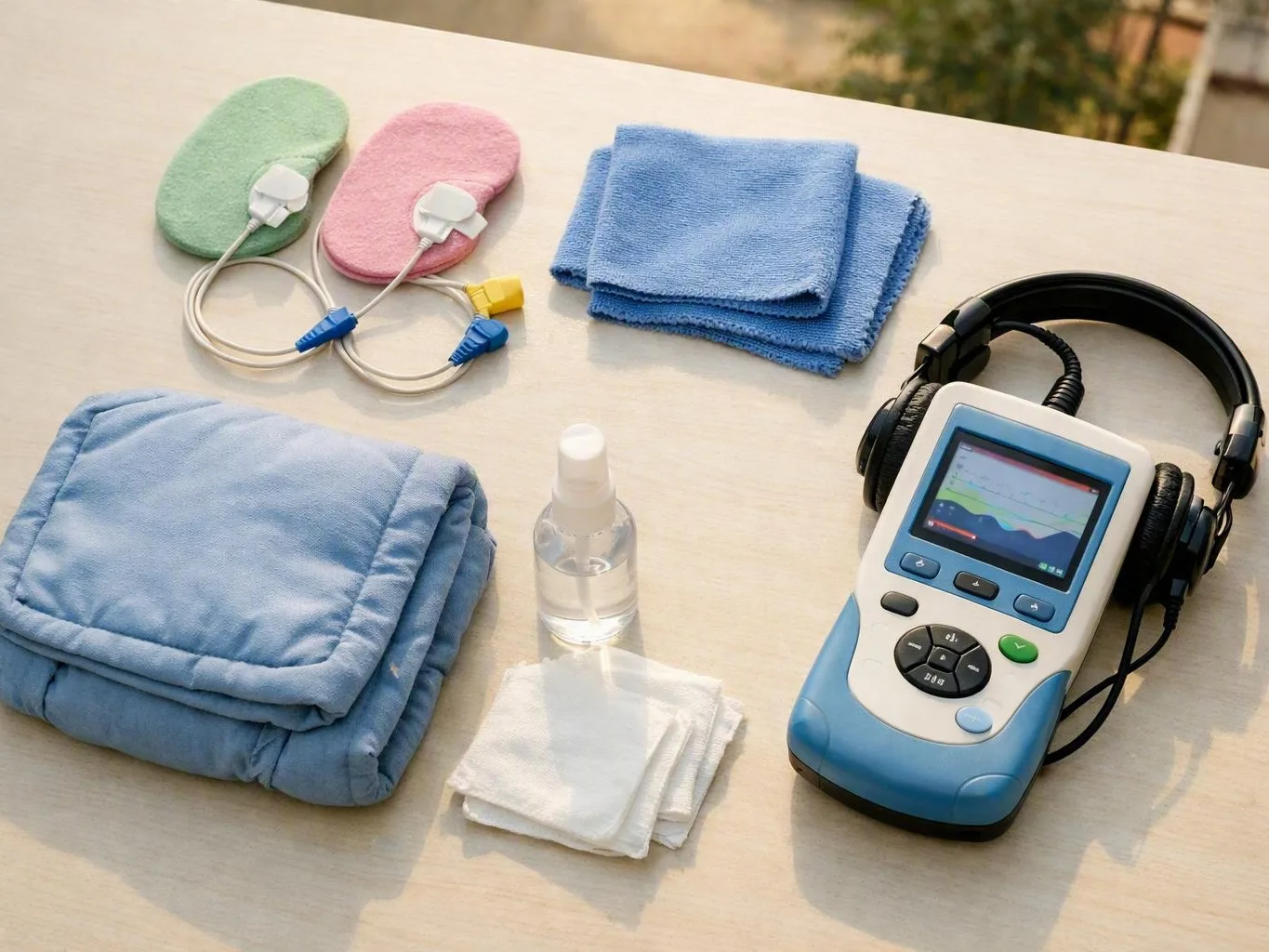
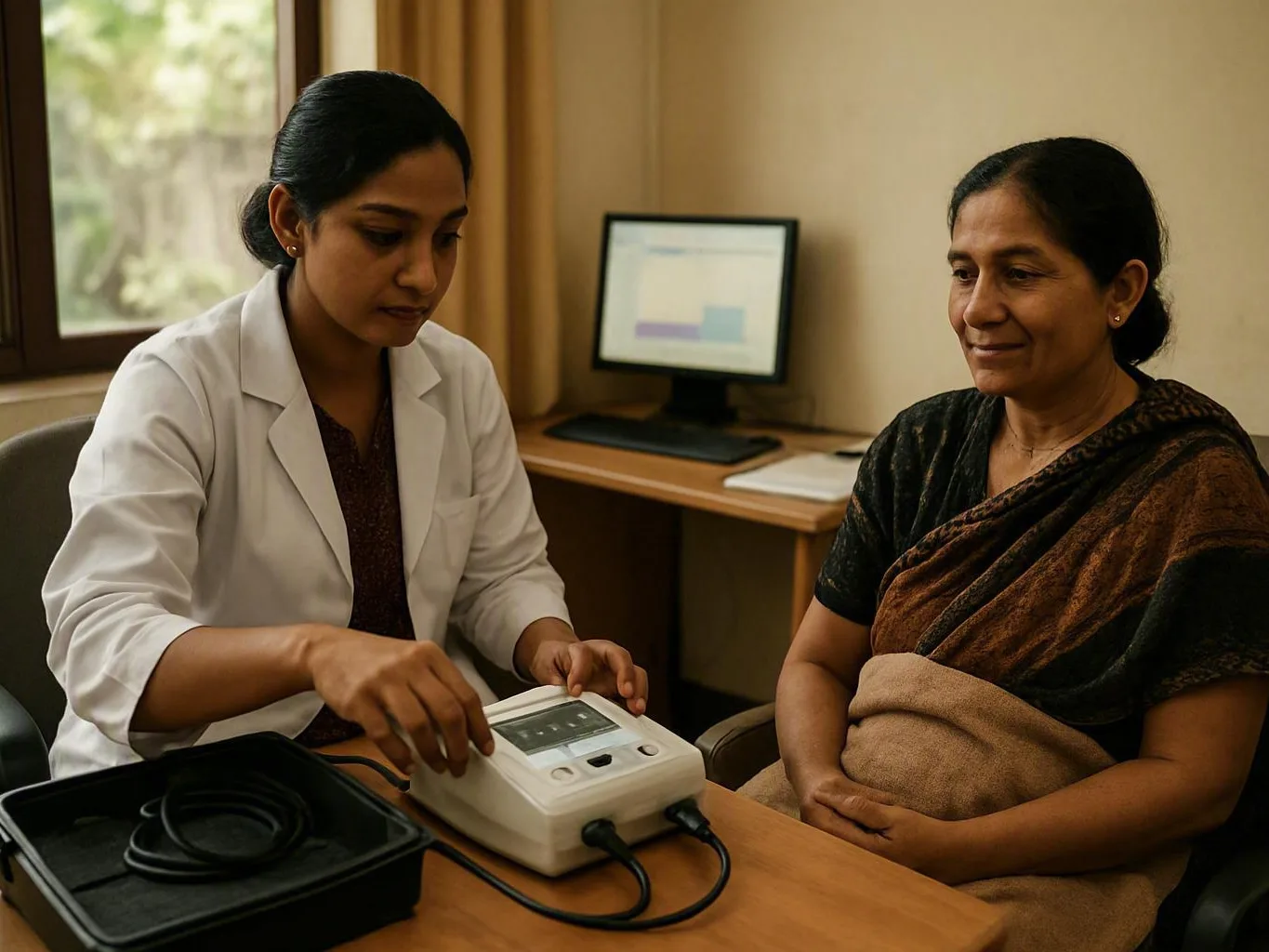
A hearing test usually starts with your hearing history and an ear examination. Pure tone audiometry follows, and you respond to soft sounds at different pitches. The results appear on an audiogram. The clinician may compare air.bone conduction or suggest more testing.
The clinician may ask about tinnitus, muffled hearing, ear blockage, noise exposure, infections, and medicines. You may also discuss situations where speech recognition is difficult. Otoscopy checks the ear canal and eardrum before testing.
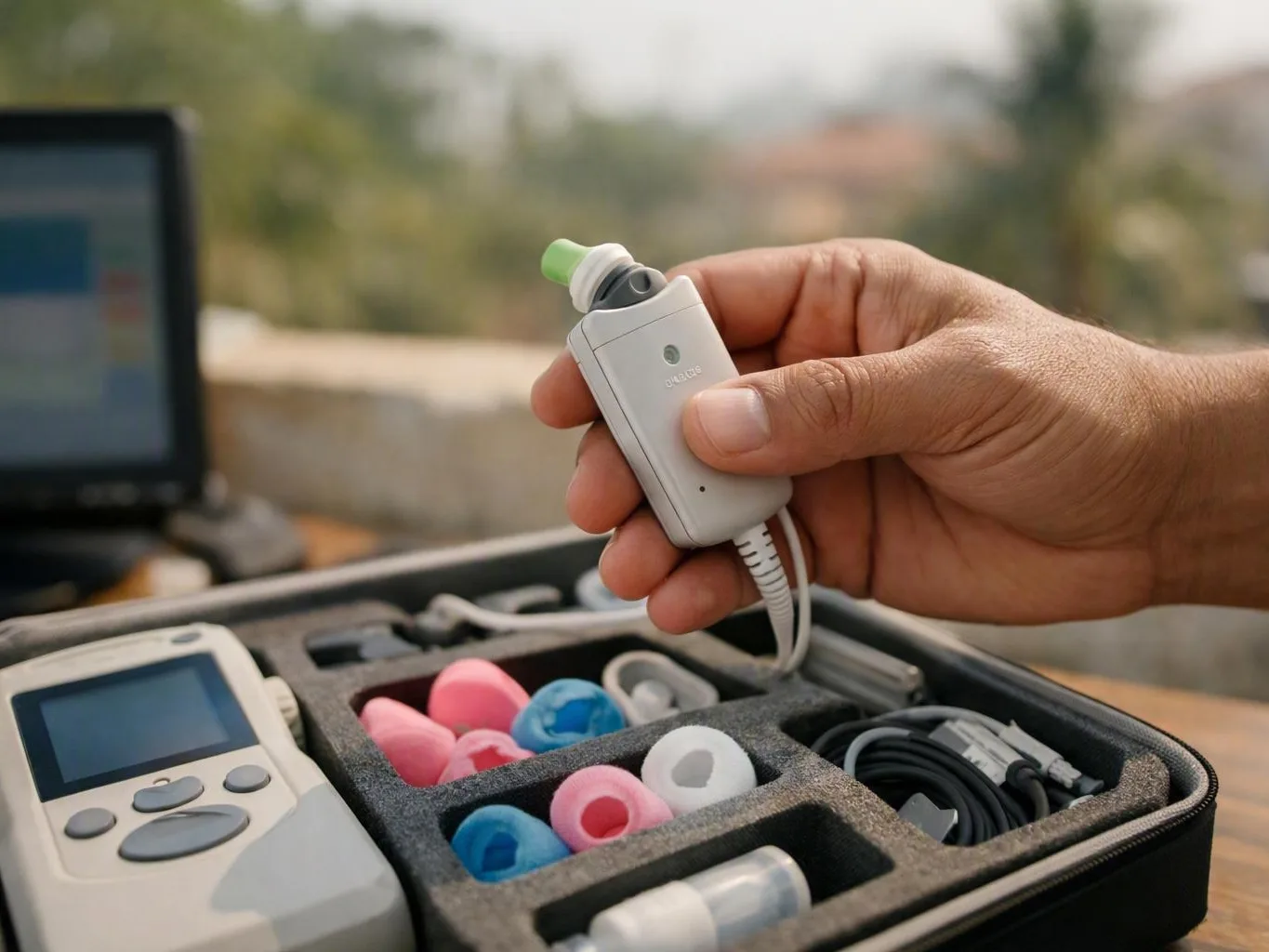
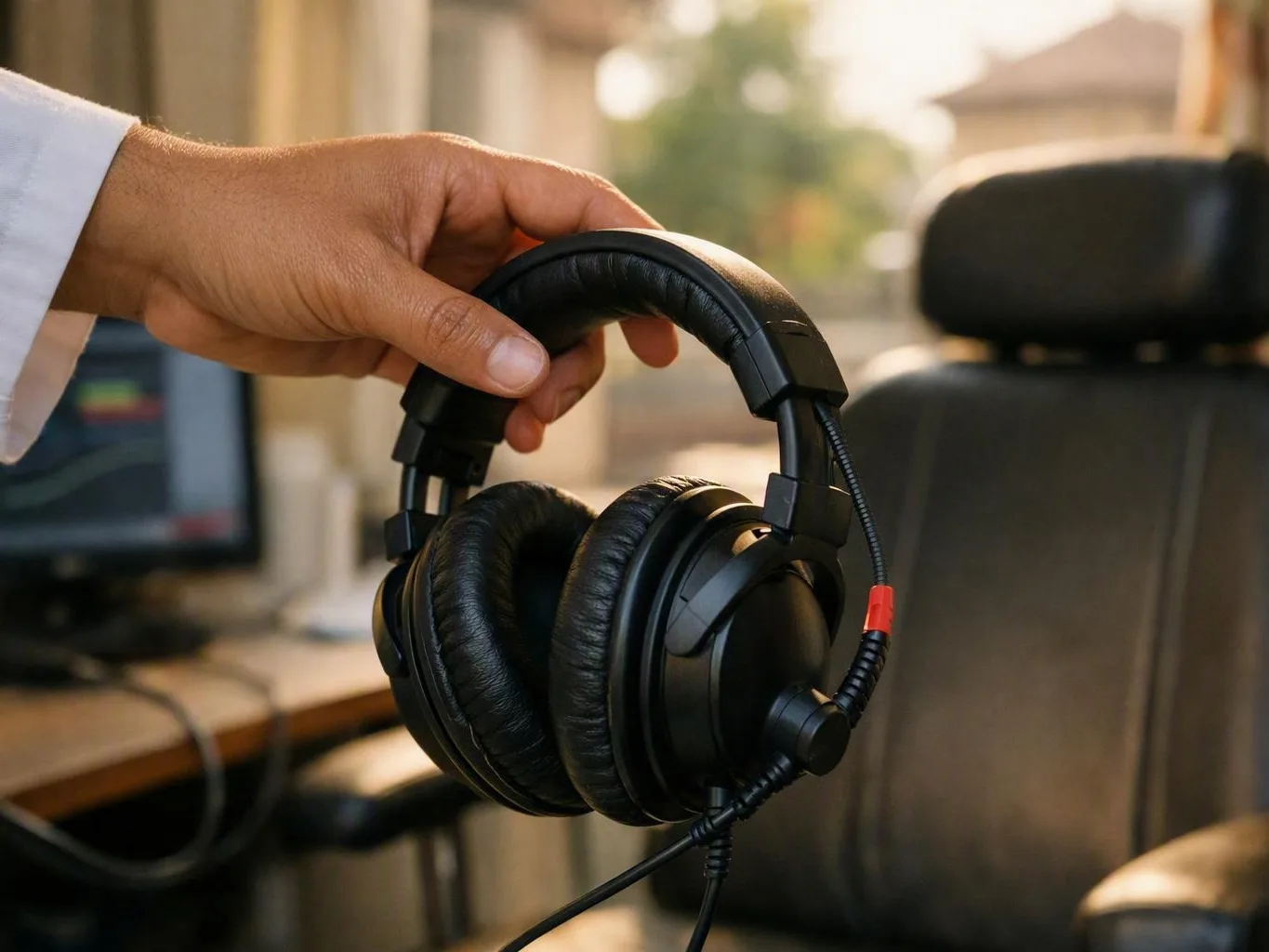
During air conduction testing, headphones or inserts send sounds to each ear. During bone conduction, a small vibrator checks how sound travels through the inner ear. The audiogram shows your hearing thresholds. It may help show whether the issue involves the outer, middle, or inner ear, including the cochlea. Results guide counselling, hearing aid discussions, monitoring, or medical referral.
Questions About Hearing Aid Clinic
When Should You Get a Hearing Test?
Arrange one when hearing changes persist, conversations become difficult, or you miss everyday sounds. You should also get tested when noise exposure affects listening. Seek prompt medical care for sudden or one-sided hearing loss, severe pain, discharge, dizziness, or neurological symptoms.
What Are the Signs That You Need a Hearing Test?
Common signs include asking for repetition, misunderstanding speech, and struggling with background noise. Raising the television volume, missing alarms or voices, and hearing muffled speech are also signs. Tinnitus, ear pressure, or a difference between ears may need assessment.
Why Do I Keep Asking People to Repeat Themselves?
Reduced speech recognition can make soft or high-frequency speech unclear, even when voices seem loud enough. Hearing loss, background noise, attention, language, and listening fatigue can all contribute. Professional testing can help clarify the cause.
Why Is It Difficult to Understand Speech in Noisy Places?
Hearing changes can reduce your ability to separate a speaker’s voice from background noise. Unequal hearing between ears, auditory processing difficulties, distance, and fatigue may add to the problem. An assessment can guide further testing and support.
Why Is the TV Volume Too Loud for Other People?
A louder television may make up for reduced hearing sensitivity or unclear dialogue. This is common with high-frequency hearing loss. Device settings or ear blockage may also play a part. If the change continues, arrange a professional assessment.
If communication has become harder, our team can discuss your symptoms and preferred language. We can also talk about hearing-aid use and suitable next steps. An assessment can provide clarity without assuming the cause.
Arrange an assessmentRelated Resources
Hearing Aid Clinic for Seniors
Who It's ForHearing Aid Clinic for People with Tinnitus
hearing aid clinic for tinnitus
Who It's ForHearing Aid Clinic for Cochlear Implant Candidates
hearing aid clinic for cochlear implant evaluation
Everything About ItBERA vs ASSR Test: Differences, Accuracy, Preparation, Cost Factors and Who Needs Each
BERA vs ASSR test