What are Presbycusis?
Presbycusis is gradual, age-related sensorineural hearing loss caused mainly by changes in the inner ear and auditory nerve. It often reduces the ability to hear high-pitched sounds and understand speech in background noise. The condition usually affects both ears, develops over time, and may occur with tinnitus or reduced speech clarity.
Quick Facts About Presbycusis
Category
Age-related sensorineural hearing loss
Measured by
Pure tone audiometry and speech testing
Common confusion
Not the same as hearing loss caused by earwax or infection
Also called
Age-related hearing loss, Age-related sensorineural hearing loss
Often discussed with
Hearing Loss Diagnosis, Pure Tone Audiometry
Key Takeaways About Presbycusis
- Presbycusis usually develops gradually and affects both ears in a similar pattern.
- High-frequency sounds, including speech sounds such as s, f, and th, may become harder to hear.
- Background noise can make conversations difficult even when ordinary sounds remain audible.
- A hearing test helps separate presbycusis from earwax, middle-ear disease, or sudden hearing loss.
- Hearing aids, communication strategies, and auditory rehabilitation may improve everyday listening.
Understanding Presbycusis
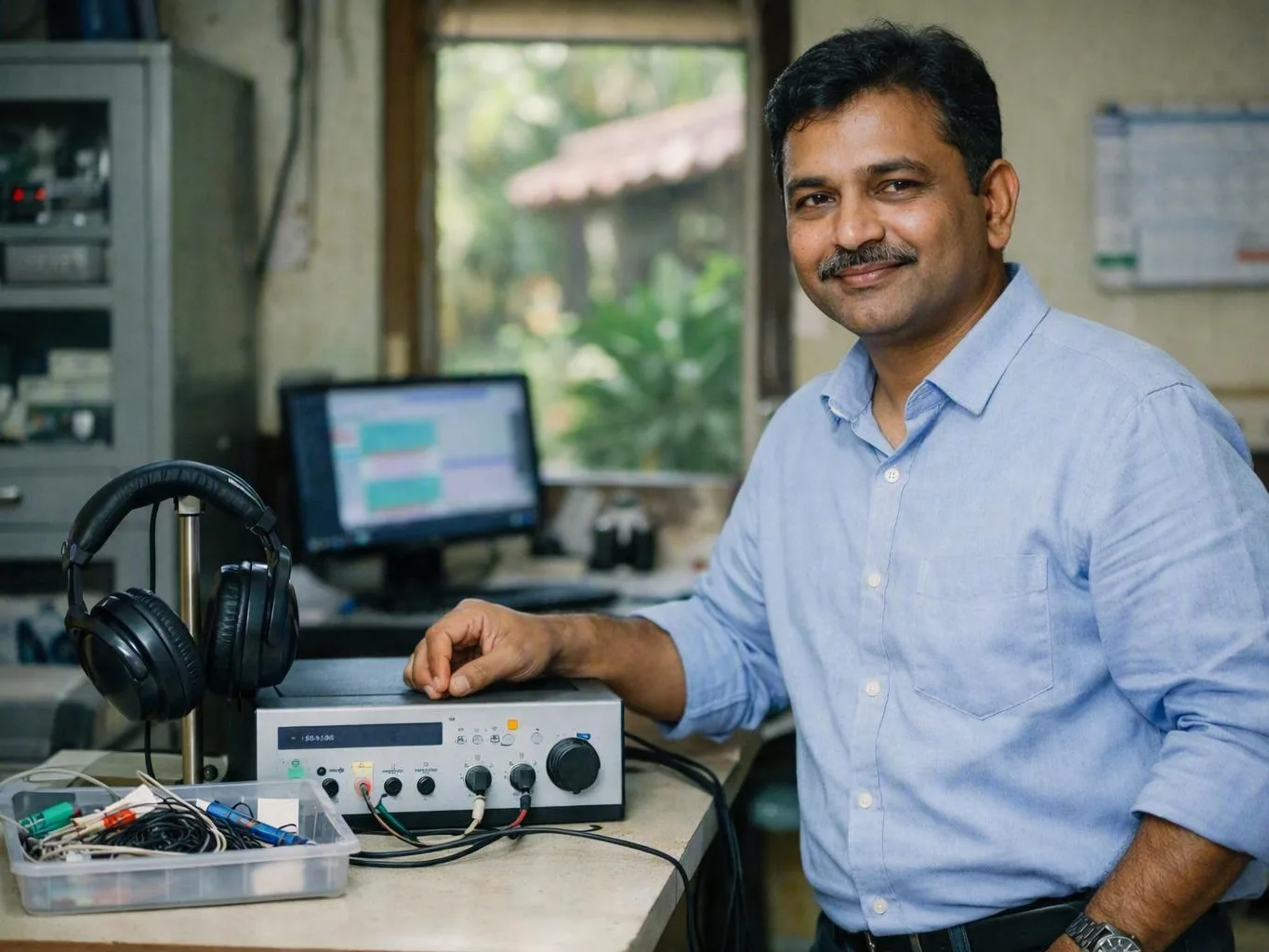
Presbycusisis a gradual reduction in hearing linked to ageing. It mainly involves.cochleathe inner-ear organ that changes sound vibrations into nerve signals. It also involves.auditory nerve, which carries those signals towards the brain. The condition usually affects both ears, although the degree of loss may differ between them.
Related glossary terms: Sensorineural Hearing Loss, Audiogram, Hearing Threshold.
Many people first notice difficulty hearing high-pitched sounds. Speech may seem audible. Yet words become unclear, especially in a busy room. Age-related changes can affect delicate sensory cells, nerve pathways, and the brain's processing of sound. Long-term exposure to loud noise, smoking, some medicines, and certain health conditions may also cause hearing damage. So, age is not the only factor.
How Presbycusis Works, Is Measured, or Is Used?
Presbycusis is assessed through a hearing evaluation rather than by age alone. An audiologist may inspect the ear and review medical history. They may also perform pure tone audiometryto find the quietest sounds a person can hear at different pitches. The results are plotted.audiogram, which commonly shows greater loss at high frequencies.
Speech testing adds information that tone testing can't provide on its own. Speech perception testing examines how clearly a person recognises spoken words at a comfortable level, sometimes with background noise. Tympanometry may help check middle-ear function when the hearing pattern suggests a problem outside the inner ear. A sudden change, one-sided loss, pain, discharge, or severe dizziness needs prompt medical assessment. These signs may not fit typical presbycusis.
Why Presbycusis Matters?
Presbycusis can affect conversations, safety, work, and social participation. Missed speech may lead to repeated questions or incorrect responses. Warning sounds, traffic noise, alarms, and announcements may also be harder to detect. Persistent listening effort can cause tiredness and frustration, particularly during group conversations.
A clear diagnosis helps guide practical decisions. Depending on the hearing pattern and communication needs, options may include hearing aids, better seating, reduced background noise, visual cues, and auditory rehabilitation. Hearing aids don't restore normal inner-ear function. However, suitable programming can make speech more accessible and support communication.
When Presbycusis Matters Most?
Presbycusis becomes especially relevant when you struggle with family conversations, television dialogue, telephone calls, or speech in restaurants. Difficulty hearing high-frequency consonants can make similar words sound alike. Asking others to repeat themselves often may signal that a formal test is worthwhile. This applies even when everyday sounds still seem loud enough.
Evaluation also matters when hearing changes are unequal or progress quickly. Noise-induced hearing loss, conductive hearing loss, earwax, medicine effects, and medical conditions can produce different patterns. They can also occur alongside age-related loss. A person should not assume that every hearing change is normal ageing, particularly after sudden loss, head injury, new balance symptoms, or one-sided tinnitus.
How to Evaluate Presbycusis?
- Check whether hearing difficulty affects both ears and whether it developed gradually rather than suddenly.
- Review the audiogram for a high-frequency sensorineural pattern and compare results between ears.
- Ask whether speech understanding falls in background noise, not only in a quiet room.
- Rule out earwax, middle-ear disease, medicine effects, and noise exposure before attributing loss to ageing.
- Seek prompt medical assessment for sudden loss, marked asymmetry, pain, discharge, or new severe dizziness.
Related Concepts Compared
Presbycusis vs. Sensorineural Hearing Loss
Sensorineural hearing loss describes hearing loss caused by the inner ear or auditory nerve. Presbycusis is one common age-related cause of sensorineural hearing loss.
Presbycusis vs. Noise-Induced Hearing Loss
Noise-induced hearing loss follows damaging exposure to loud sound or repeated high noise levels. It can resemble presbycusis and may occur alongside it.
Presbycusis vs. Conductive Hearing Loss
Conductive hearing loss results from a problem in the outer or middle ear, such as earwax or fluid. Presbycusis involves the inner ear and nerve pathways.
Presbycusis vs. Tinnitus
Tinnitus is the perception of sound without an external source. It may accompany presbycusis, but tinnitus and hearing loss are separate conditions.
Expert Note
A high-frequency hearing pattern supports presbycusis, but it does not prove that ageing is the only cause. A careful history, ear examination, and comparison between ears help identify treatable problems or warning signs that need medical referral.
Common Mistakes or Myths About Presbycusis
- Assuming every hearing change is normal ageing without checking for earwax or middle-ear disease.
- Judging hearing only by loudness while overlooking difficulty understanding speech.
- Ignoring unequal, sudden, or rapidly worsening hearing loss.
- Believing that hearing aids restore normal hearing or remove every listening difficulty.
- Waiting until communication breaks down before arranging a hearing evaluation.
Presbycusis in Practice: A Real-World Example
A 68-year-old person hears the television but misses parts of family conversations during meals. Pure tone audiometry shows greater hearing loss at high frequencies in both ears, while speech testing confirms reduced understanding in noise. This pattern is consistent with presbycusis after other ear problems are excluded.
Sources & Further Reading on Presbycusis
- National Institute on Deafness and Other Communication Disorders, Age-Related Hearing Loss
- Merck Manual Professional Edition, Presbycusis
- World Health Organisation, Deafness and Hearing Loss
Related Terms
Sensorineural Hearing Loss
Sensorineural Hearing Loss is reduced hearing caused by damage to the cochlea, inner-ear hair cells, or…
Audiogram
Audiogram is a graph that records a person’s hearing thresholds across different pitches and loudness levels…
Hearing Threshold
Hearing Threshold is the quietest sound a person can detect at a specific frequency under defined…
Speech Perception
Speech Perception is the brain’s ability to detect, recognise, and understand spoken language from sound signals…
Audium Hearing Aid Clinic
Have Questions About Presbycusis?
Contact Audium Hearing Aid Clinic for practical guidance on Presbycusis and related hearing aid clinic work in Bhubaneswar.