
What is Noise-Induced Hearing Loss?
Noise-Induced Hearing Loss is permanent or temporary damage to hearing caused by loud sound or repeated exposure to unsafe noise. It develops when delicate hair cells in the inner ear become injured. Common sources include industrial machinery, loud music, firearms, traffic, and personal audio devices played at high volume.
Quick Facts About Noise-Induced Hearing Loss
Category
Acquired sensorineural hearing loss
Measured by
Pure tone audiometry and speech testing
Main risk
Permanent inner-ear damage
Common confusion
Temporary muffled hearing is not always harmless
Also called
NIHL, Noise-related hearing loss
Often discussed with
Hearing Tests, Pure Tone Audiometry
Key Takeaways About Noise-Induced Hearing Loss
- Loud sound can damage inner-ear hair cells, and the damage may become permanent.
- Hearing difficulty may affect high-pitched sounds before ordinary conversation becomes difficult.
- Earplugs, earmuffs, quieter settings, and regular breaks reduce exposure risk.
- A hearing test can identify changes that a person may not notice immediately.
- Ringing after loud sound is a warning sign that exposure may have been excessive.
Understanding Noise-Induced Hearing Loss
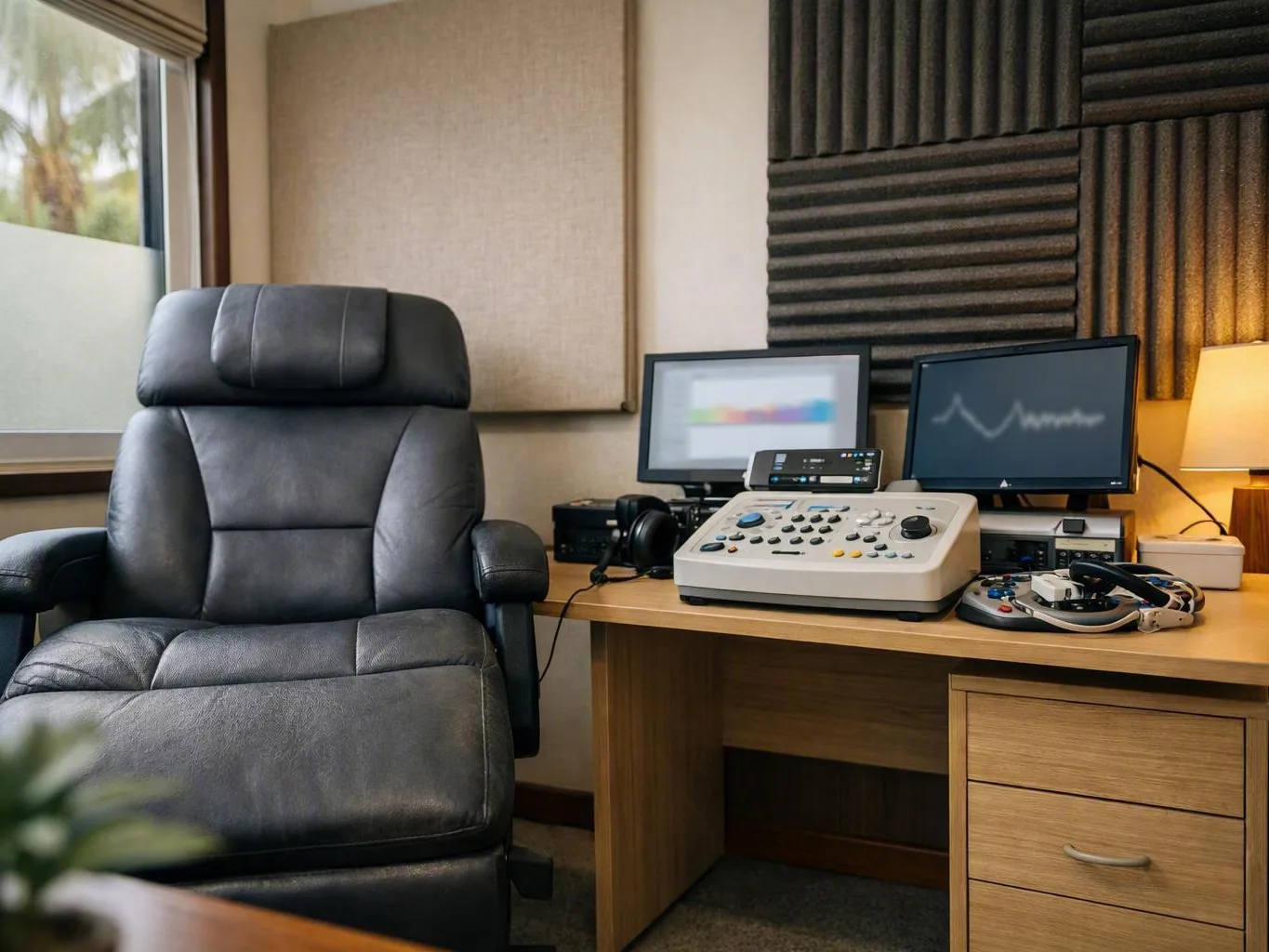
Noise-Induced Hearing Loss is hearing damage linked to loud sound. A single intense event, such as an explosion, can cause injury. Repeated exposure to machinery, music, traffic, or workplace noise can gradually reduce hearing. The condition often affects both ears, although one-sided exposure can affect one ear more severely.
Related glossary terms: Audiogram, Audiologist, dB.
Sound enters through the ear canal and moves the ossicles in the middle ear. These movements reach the cochlea, where tiny sensory hair cells change sound vibrations into nerve signals. Excessive sound can bend, injure, or destroy these cells. Human hair cells don't normally grow back, so long-term damage may remain permanent.
How Noise-Induced Hearing Loss Works, Is Measured, or Is Used?
The risk depends on sound intensity, exposure time, distance from the source, and how often exposure occurs. A louder sound reaches a harmful level sooner than a quieter sound. For example, standing close to a loudspeaker or operating machinery without protection increases the sound reaching the ear. Short breaks in a quiet area lower the total exposure but do not cancel earlier damage.
An audiogram records hearing thresholds across different pitches, usually in decibels. Pure Tone Audiometry may show a characteristic reduction at higher frequencies, although test results differ between people. A clinician may also assess speech perception and examine the ear. They may ask about work, recreation, medicines, sudden noise events, and tinnitus. These findings help distinguish noise-related damage from conductive or age-related hearing loss.
Why Noise-Induced Hearing Loss Matters?

Noise-Induced Hearing Loss can make speech harder to understand, especially in restaurants, classrooms, factories, and busy roads. A person may hear that someone is speaking but miss consonants or important details. This can affect safety, learning, work performance, social participation, and communication at home.
The condition may also occur alongside tinnitus, which causes ringing, buzzing, or other sounds without an external source. Hearing loss after a loud event may be temporary at first, but repeated exposure can turn short-term changes into lasting damage. Early testing gives a clearer baseline and helps guide protection, monitoring, communication support, or hearing rehabilitation.
When Noise-Induced Hearing Loss Matters Most?
Assessment becomes especially relevant after an explosion, concert, shooting activity, factory shift, or regular use of loud personal audio. Warning signs include muffled hearing, ringing, ear pain, difficulty following speech in noise, or a need to increase television volume. Sudden hearing loss, severe pain, drainage, or dizziness needs prompt medical assessment.
Prevention works best when protection matches the setting. Hearing protection may include properly fitted earplugs or earmuffs. Safer behaviour includes moving away from speakers, reducing device volume, and taking quiet breaks. People working around noise should follow workplace controls and attend scheduled hearing checks. In Bhubaneswar, Odisha, exposure may occur in industrial settings, construction areas, transport environments, entertainment venues, and household activities.
How to Evaluate Noise-Induced Hearing Loss?
- Check whether hearing difficulty began after loud work, music, machinery, firearms, or another high-noise event.
- Review an audiogram for changes across low, middle, and high frequencies in each ear.
- Ask whether ringing, muffled hearing, or speech difficulty continues after leaving a noisy setting.
- Measure whether hearing protection fits correctly and is worn during every noisy exposure.
- Seek urgent medical assessment for sudden hearing loss, severe dizziness, pain, or ear discharge.
Related Concepts Compared
Noise-Induced Hearing Loss vs. Presbycusis
Presbycusis is age-related hearing loss. Noise exposure can occur at the same time and may add to the hearing changes, but the causes are not identical.
Noise-Induced Hearing Loss vs. Conductive Hearing Loss
Conductive Hearing Loss results from a problem in the outer or middle ear, such as blockage or eardrum damage. Noise-Induced Hearing Loss usually involves the inner ear and is sensorineural.
Noise-Induced Hearing Loss vs. Tinnitus
Tinnitus describes hearing ringing or other internal sounds. Noise-Induced Hearing Loss describes damage or reduced hearing, although both conditions may follow loud-noise exposure.
Expert Note
A normal conversation-level hearing impression does not rule out early noise damage. High-frequency changes may appear first, and speech understanding in background noise may worsen before everyday hearing seems noticeably reduced.
Common Mistakes or Myths About Noise-Induced Hearing Loss
- Assuming temporary muffled hearing after loud sound is always harmless.
- Wearing earplugs only sometimes during regular noisy work.
- Turning up earphones to overcome background noise.
- Treating tinnitus as unrelated to loud-noise exposure.
- Waiting for obvious communication problems before arranging a hearing test.
Noise-Induced Hearing Loss in Practice: A Real-World Example
A metalworker notices ringing and muffled hearing after several years near cutting equipment. An audiogram shows reduced high-frequency hearing in both ears. Consistent hearing protection, quieter work controls, and scheduled monitoring can help prevent further loss.
Sources & Further Reading on Noise-Induced Hearing Loss
- National Institute on Deafness and Other Communication Disorders, Noise-Induced Hearing Loss
- Occupational Safety and Health Administration, Occupational Noise Exposure
- World Health Organisation, Deafness and Hearing Loss
Related Services
Related Terms
Audiogram
Audiogram is a graph that records a person’s hearing thresholds across different pitches and loudness levels…
Audiologist
Audiologist is a healthcare professional who assesses hearing and balance, identifies hearing disorders, and supports communication…
dB
dB is the abbreviation for decibel, a logarithmic unit used to express the ratio between two…
Sensorineural Hearing Loss
Sensorineural Hearing Loss is reduced hearing caused by damage to the cochlea, inner-ear hair cells, or…
Audium Hearing Aid Clinic
Have Questions About Noise-Induced Hearing Loss?
Contact Audium Hearing Aid Clinic for practical guidance on Noise-Induced Hearing Loss and related hearing aid clinic work in Bhubaneswar.