
What is BTE?
BTE is a behind-the-ear hearing aid that houses its microphone, processor, and amplifier in a case worn behind the outer ear. Sound travels to the ear through tubing, an ear mould, or a thin receiver wire. BTE devices suit many degrees of hearing loss and can serve children and adults.
Quick Facts About BTE
Category
Behind-the-ear hearing aid style
Used for
A wide range of hearing losses
Common confusion
BTE is a style, not a hearing loss diagnosis
Also called
Behind-the-ear hearing aid, Behind-the-ear device
Often discussed with
Hearing Aid Fitting, Hearing Aid Programming
Key Takeaways About BTE
- BTE hearing aids place the main electronic case behind the outer ear.
- They can support mild, moderate, severe, or profound hearing loss, depending on the model.
- Sound reaches the ear through tubing, an ear mould, or a receiver wire.
- A correct fit affects comfort, speech clarity, feedback control, and daily use.
- BTE devices are available with disposable or rechargeable power options.
Understanding BTE
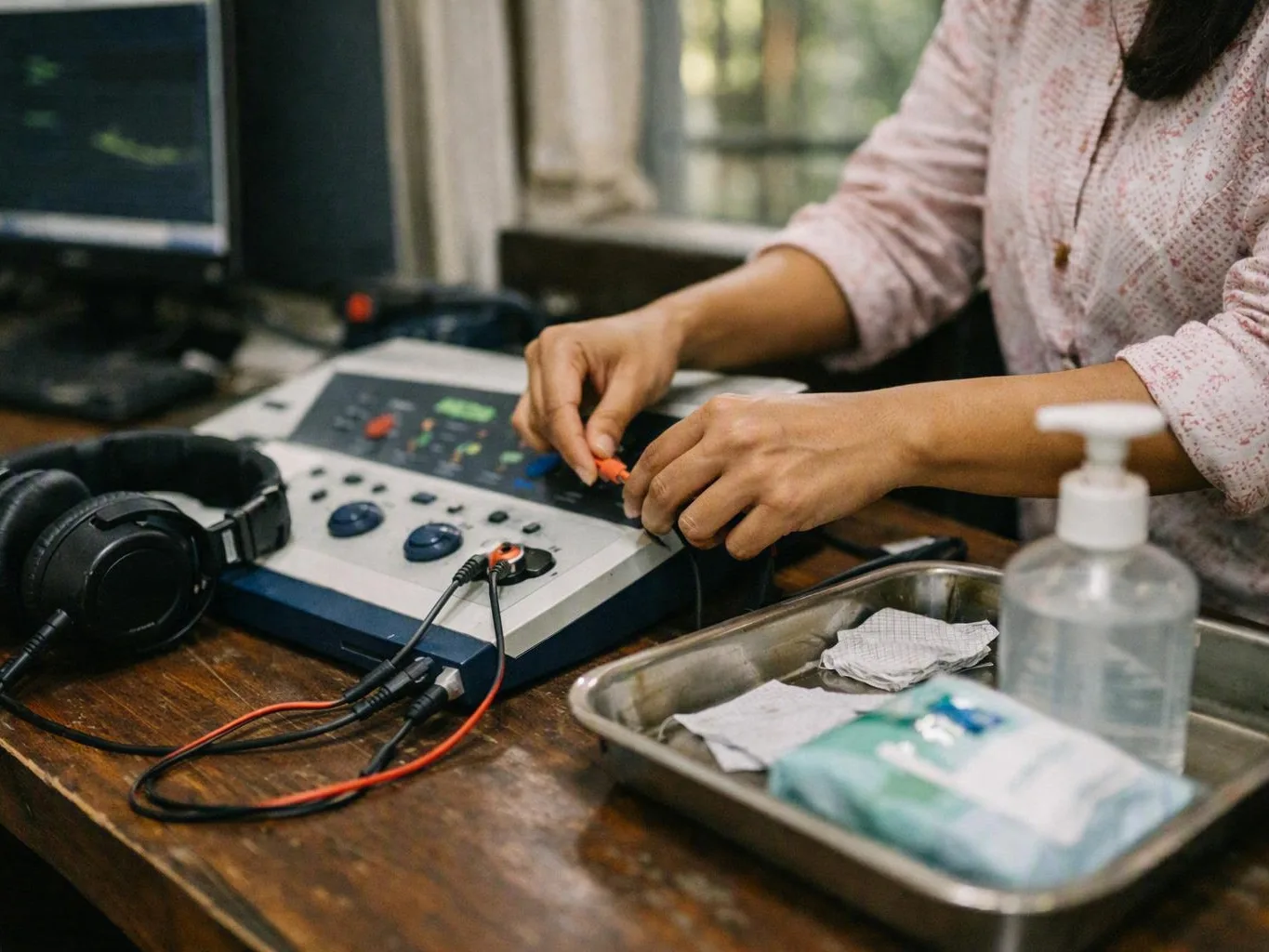
BTEmeans behind-the-ear hearing aid. Its main case sits behind the outer ear and contains.microphone, digital signal processor, and amplifier. A coupling part carries processed sound into the ear. Depending on the design, this part may be a tube, an ear mould, or a thin receiver wire.
Related glossary terms: Behind-the-Ear Hearing Aid, Hearing Aid Styles, Hearing Aid Receiver.
A BTE device is different from an in-the-ear hearing aid because the electronic case is outside the ear canal. The style can accommodate larger batteries, stronger amplification, wireless connections, and physical controls. These features make BTE devices suitable for many children and adults, although the correct choice depends on the audiogram, ear anatomy, listening needs, and handling ability.
How BTE Works, Is Measured, or Is Used?
BTE devices collect sound through the microphone, convert it into an electrical signal, and process it through a digital signal processor. The amplifier then increases selected sound frequencies before the signal reaches the ear. Modern programming can shape amplification for speech, environmental sound, feedback control, and different listening environments.
During fitting, an audiologist uses the hearing test results to set the device for the person’s hearing thresholds. The audiologist also checks physical comfort, acoustic feedback, sound quality, and speech audibility. Verification may include probe microphone measurements, which compare the device’s output near the eardrum with the prescribed target. The user then receives instruction on insertion, cleaning, battery care, and volume or programme controls.
Why BTE Matters?
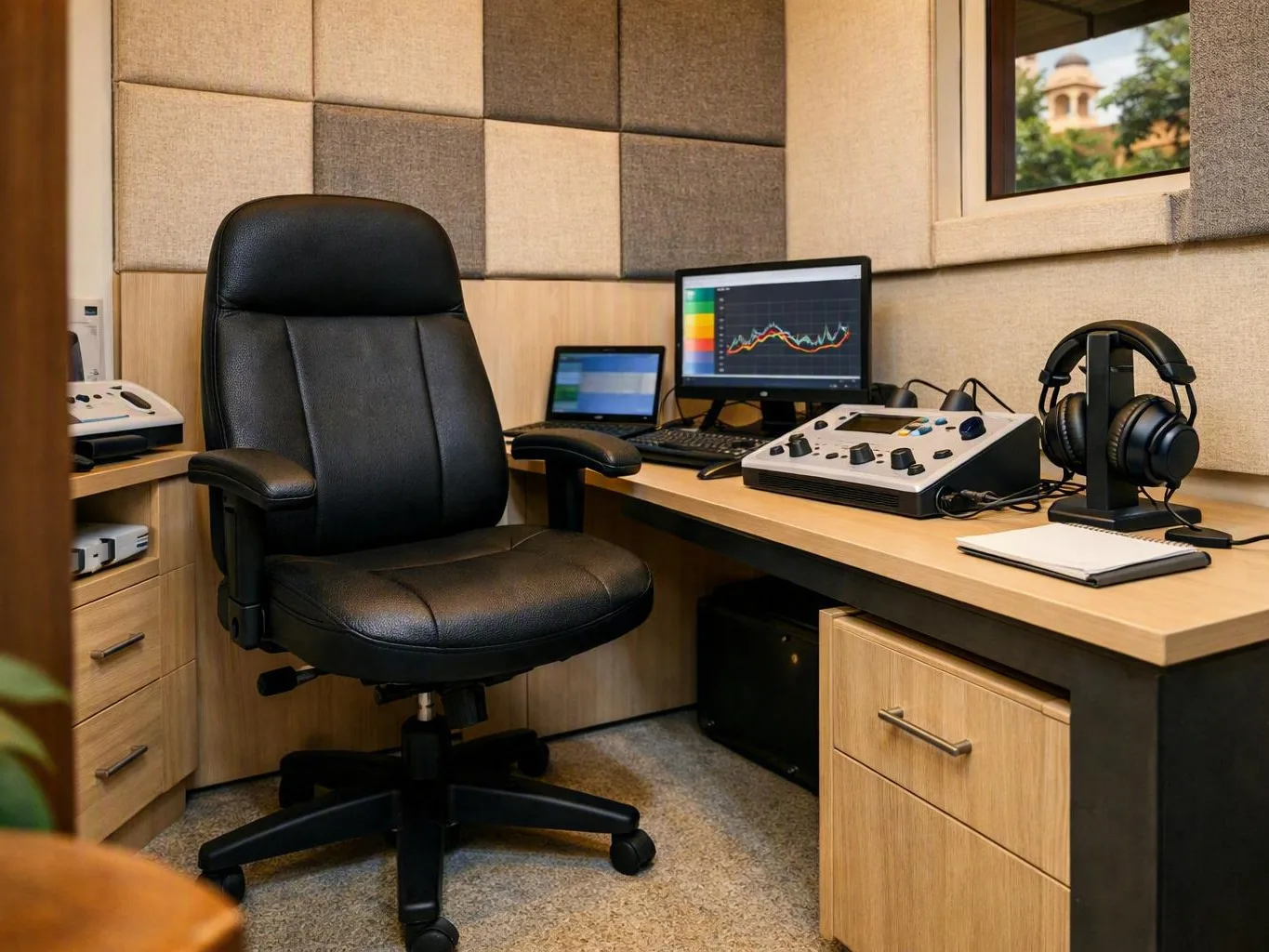
BTE design gives the fitting professional room to provide useful amplification across a broad frequency range. A larger case may also support stronger output, longer battery life, telecoil access, Bluetooth connectivity, or rechargeable power. The external case can be replaced or repaired without placing electronic parts deep inside the ear.
The coupling system affects the result as much as the case itself. A poorly fitting ear mould may cause discomfort or feedback, while an unsuitable open fitting may provide too little low-frequency support. Regular cleaning and scheduled adjustments help protect sound quality, especially when moisture, earwax, or changing hearing thresholds affect performance.
When BTE Matters Most?
BTE becomes especially relevant when hearing loss is severe, changes over time, or affects both ears. Children may benefit because an ear mould can be remade as the ear grows, while the main device remains in use. People who need manual controls or a larger battery may also find the format easier to handle.
Before selecting a BTE, review the audiogram, speech perception, ear health, and daily listening environments. Ask whether the fitting includes physical verification, an ear mould or receiver assessment, and a follow-up adjustment plan. In humid conditions, careful drying and maintenance matter because moisture can affect microphones, receivers, battery contacts, and internal circuits.
How to Evaluate BTE?
- Check whether the device’s fitting range matches the hearing thresholds shown on the audiogram.
- Ask whether output has been verified with probe microphone measurements or another recognised fitting method.
- Assess comfort, retention, feedback, speech clarity, and ease of inserting the ear mould or receiver.
- Confirm battery life, charging needs, moisture protection, warranty terms, and repair arrangements.
- Test hearing in quiet and noisy settings before deciding whether programming meets daily communication needs.
Related Concepts Compared
BTE vs. In-the-Ear Hearing Aid
An in-the-ear hearing aid places most or all electronic components inside the outer ear or ear canal. A BTE keeps its main electronic case behind the ear and sends sound inward through a coupling system.
BTE vs. Receiver-in-Canal Hearing Aid
A receiver-in-canal device is a smaller BTE-style design with the receiver positioned in the ear canal or at the canal entrance. In a traditional BTE, the receiver usually remains in the behind-the-ear case and sound travels through tubing.
BTE vs. Ear Mould
An ear mould is the custom-made part that fits the ear and carries sound from a BTE into the ear canal. It is a component of some BTE fittings, not another hearing aid style.
BTE vs. Hearing Loss
Hearing loss describes reduced hearing ability and is identified through assessment. BTE describes the physical style of a device used to provide amplification for that loss.
Expert Note
A BTE fitting should be judged by verified output and real communication benefit, not by appearance or maximum volume. An ear mould that seals too tightly may cause discomfort, while one that leaks sound may create feedback and reduce useful amplification.
Common Mistakes or Myths About BTE
- Assuming BTE means a particular degree or type of hearing loss.
- Confusing a traditional BTE with a receiver-in-canal device.
- Choosing a coupling part without considering comfort, feedback, and the audiogram.
- Ignoring moisture, earwax, blocked tubing, or damaged ear moulds when sound quality changes.
- Expecting one programming session to suit every listening environment.
BTE in Practice: A Real-World Example
An adult with moderate hearing loss in both ears may receive two BTE devices with custom ear moulds. The audiologist programmes each device from the audiogram, verifies output, and adjusts speech settings after the person reports difficulty hearing conversations in a busy room.
Sources & Further Reading on BTE
- National Institute on Deafness and Other Communication Disorders, Hearing Aids
- American Speech-Language-Hearing Association, Hearing Aids
- U.S. Food and Drug Administration, Hearing Aids
Related Services
Related Terms
Behind-the-Ear Hearing Aid
Behind-the-Ear Hearing Aid is an electronic hearing device worn behind the outer ear that captures sound…
Hearing Aid Styles
Hearing Aid Styles is the range of physical designs used to place hearing aid components on…
Hearing Aid Receiver
Hearing Aid Receiver is the small speaker that converts processed electrical signals into sound inside or…
Audiogram
Audiogram is a graph that records a person’s hearing thresholds across different pitches and loudness levels…
Audium Hearing Aid Clinic
Have Questions About BTE?
Contact Audium Hearing Aid Clinic for practical guidance on BTE and related hearing aid clinic work in Bhubaneswar.