
What is Behind-the-Ear Hearing Aid?
Behind-the-Ear Hearing Aid is an electronic hearing device worn behind the outer ear that captures sound through a microphone, processes it digitally, and sends amplified sound into the ear through a tube, earmould, or receiver. This style suits many degrees of hearing loss and can include rechargeable power, wireless connectivity, and adjustable listening programmes.
Quick Facts About Behind-the-Ear Hearing Aid
Category
Hearing aid style
Used for
Many degrees of hearing loss
Measured by
Audiogram and real-ear verification
Common confusion
BTE is a style, not a diagnosis
Also called
BTE Hearing Aid, BTE
Often discussed with
Hearing Aid Fitting, Hearing Aid Programming
Key Takeaways About Behind-the-Ear Hearing Aid
- The main device rests behind the ear, while an earmould, tube, or receiver delivers sound.
- BTE hearing aids can support mild to profound hearing loss, depending on their power and fitting.
- An audiogram helps determine the required amplification range and programming targets.
- Proper fitting improves comfort, speech audibility, feedback control, and daily listening performance.
- Regular cleaning and maintenance help protect the device from moisture, wax, and physical damage.
Understanding Behind-the-Ear Hearing Aid
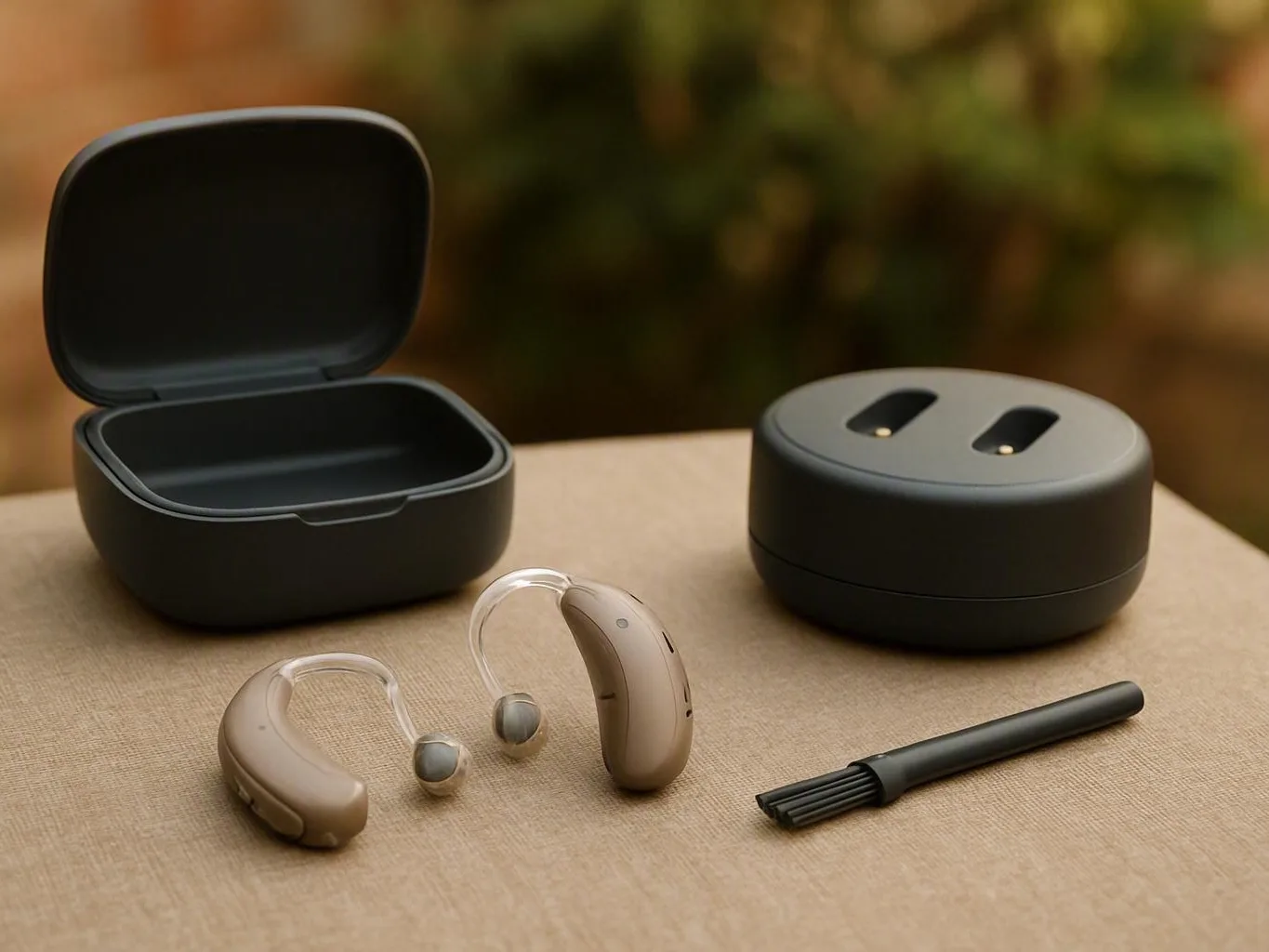
Behind-the-Ear Hearing Aidis a hearing device with its main shell positioned behind the outer ear. The shell contains.microphone, processor, amplifier, battery or rechargeable cell, and controls. Sound travels from the device into the ear through a thin tube and earmould. It can also travel through a wire connected to a receiver near the ear canal.
Related glossary terms: BTE, Hearing Aid Styles, Hearing Aid Receiver.
A BTE device is different from an In-the-Ear Hearing Aid because its electronic housing doesn't sit inside the ear. Its larger housing can provide space for stronger amplification, larger controls, and added features. Depending on the design, the device may suit mild, moderate, severe, or profound hearing loss. The correct choice depends on the audiogram, ear anatomy, listening needs, and handling ability.
How Behind-the-Ear Hearing Aid Works, Is Measured, or Is Used?
A BTE hearing aid first receives sound through one or more microphones.digital signal processor separates and adjusts sound according to the programmed prescription. The amplifier then sends the processed signal to a receiver or sound outlet. Sound then reaches the ear. Modern devices may adjust gain by frequency, reduce unwanted noise, manage feedback, and connect with selected phones or accessories.
Selection and programming start with a hearing assessment. This commonly includes pure tone testing and speech testing. The audiogram records hearing thresholds in decibels across different frequencies. The clinician uses these results to set amplification, then checks comfort and speech audibility. Real-ear measurement can compare the sound level in the ear canal with the intended fitting target. This helps identify under-amplification or excessive output.
Daily use requires a consistent routine. You place the device securely behind the ear, check that the tube or receiver is clear, and confirm the earmould or dome fits correctly. Keep the aid away from water, high heat, hairspray, and impact. Remove earwax from the sound outlet only with the recommended tool. Sharp objects can damage the receiver or earmould.
Why Behind-the-Ear Hearing Aid Matters?
The BTE design affects comfort, reliability, power, and repair needs. Its position behind the ear can keep delicate electronics away from earwax. A replaceable tube or receiver can simplify some repairs. A well-fitted earmould can improve retention and acoustic control. This is especially helpful when a user needs higher output or has an active routine.
Physical design alone doesn't determine hearing benefit. The outcome also depends on accurate programming, suitable coupling to the ear, realistic expectations, and regular use. Poor fit may cause whistling, blocked sound, discomfort, or weak speech understanding. These problems often need adjustment rather than a stronger volume setting.
When Behind-the-Ear Hearing Aid Matters Most?
A BTE becomes especially relevant when hearing loss needs substantial amplification. It can also help when the ear requires a custom earmould or easier-to-handle controls. It may also be considered for children because the earmould can be remade as the ear grows. The final choice should account for dexterity, vision, skin sensitivity, lifestyle, and the condition of the ear canal.
Ask for a fitting review if speech remains unclear after an adjustment period, feedback occurs often, the aid causes soreness, or sound changes suddenly. A blocked tube, damaged receiver, moisture, earwax, or a change in hearing can produce similar symptoms. Regular hearing aid maintenance and periodic hearing checks help separate equipment problems from changes in hearing ability.
How to Evaluate Behind-the-Ear Hearing Aid?
- Check whether the device provides enough programmed output across the frequencies shown on the audiogram.
- Ask whether real-ear measurement was completed or whether another documented verification method was used.
- Assess speech understanding in quiet and noise after the fitting, not just perceived loudness.
- Inspect earmould or receiver comfort, retention, feedback, and sound quality during normal daily activities.
- Confirm the battery or rechargeable system, warranty, cleaning routine, and repair process before selection.
Related Concepts Compared
Behind-the-Ear Hearing Aid vs. In-the-Ear Hearing Aid
An In-the-Ear Hearing Aid places most or all electronic parts inside the outer ear or ear canal. A BTE device keeps its main housing behind the ear and sends sound through a coupling system.
Behind-the-Ear Hearing Aid vs. Receiver-in-Canal Hearing Aid
A receiver-in-canal device is a BTE variation with the receiver positioned in or near the ear canal. Traditional BTE designs usually keep the receiver in the behind-ear housing and send sound through tubing.
Behind-the-Ear Hearing Aid vs. Hearing Aid
Hearing aid is the broad term for an electronic device that makes sound more accessible. Behind-the-Ear Hearing Aid describes one physical style within that wider category.
Expert Note
The coupling system deserves as much attention as the device shell. An earmould, dome, or receiver changes sound delivery, feedback control, comfort, and usable power. A technically suitable BTE can still perform poorly if the coupling is loose, blocked, incorrectly sized, or poorly matched to the ear.
Common Mistakes or Myths About Behind-the-Ear Hearing Aid
- Assuming every BTE hearing aid has the same power, features, or suitability.
- Treating loudness as proof that speech is clear.
- Cleaning tubing or receivers with pins, needles, or other sharp objects.
- Ignoring repeated feedback, soreness, sudden sound changes, or poor speech understanding.
- Choosing a device without considering dexterity, vision, ear anatomy, and daily listening environments.
Behind-the-Ear Hearing Aid in Practice: A Real-World Example
A person with severe high-frequency hearing loss may receive a BTE hearing aid with a custom earmould and strong receiver. The audiologist programmes frequency-specific gain from the audiogram and checks the output with real-ear measurement. If whistling occurs, the clinician may inspect the mould fit, tubing, and feedback settings before increasing volume.
Sources & Further Reading on Behind-the-Ear Hearing Aid
- National Institute on Deafness and Other Communication Disorders, Hearing Aids
- U.S. Food and Drug Administration, Hearing Aids
- American Speech-Language-Hearing Association, Hearing Aids
Related Services
Related Terms
BTE
BTE is a behind-the-ear hearing aid that houses its microphone, processor, and amplifier in a case…
Hearing Aid Styles
Hearing Aid Styles is the range of physical designs used to place hearing aid components on…
Hearing Aid Receiver
Hearing Aid Receiver is the small speaker that converts processed electrical signals into sound inside or…
Audiogram
Audiogram is a graph that records a person’s hearing thresholds across different pitches and loudness levels…
Audium Hearing Aid Clinic
Have Questions About Behind-the-Ear Hearing Aid?
Contact Audium Hearing Aid Clinic for practical guidance on Behind-the-Ear Hearing Aid and related hearing aid clinic work in Bhubaneswar.