
What is Bilateral Hearing Loss?
Bilateral Hearing Loss is reduced hearing in both ears. The loss may affect one ear more than the other and may involve conductive, sensorineural, or mixed causes. It can develop gradually or suddenly.
Quick Facts About Bilateral Hearing Loss
Category
Hearing disorder
Measured by
Pure tone audiometry and speech testing
Used for
Diagnosis, treatment planning, and communication support
Common confusion
Bilateral does not mean equal hearing loss in both ears
Also called
Hearing loss in both ears, Bilateral deafness
Often discussed with
Hearing Loss Diagnosis, Pure Tone Audiometry
Key Takeaways About Bilateral Hearing Loss
- Bilateral hearing loss affects both ears, although the degree may differ between ears.
- Causes include ageing, loud noise, ear disease, medicines, injury, and inherited conditions.
- A hearing assessment measures each ear separately and also checks speech understanding.
- Two hearing aids may improve access to speech, direction, and balanced sound.
- Sudden hearing changes require prompt medical assessment, especially when one ear worsens quickly.
Understanding Bilateral Hearing Loss
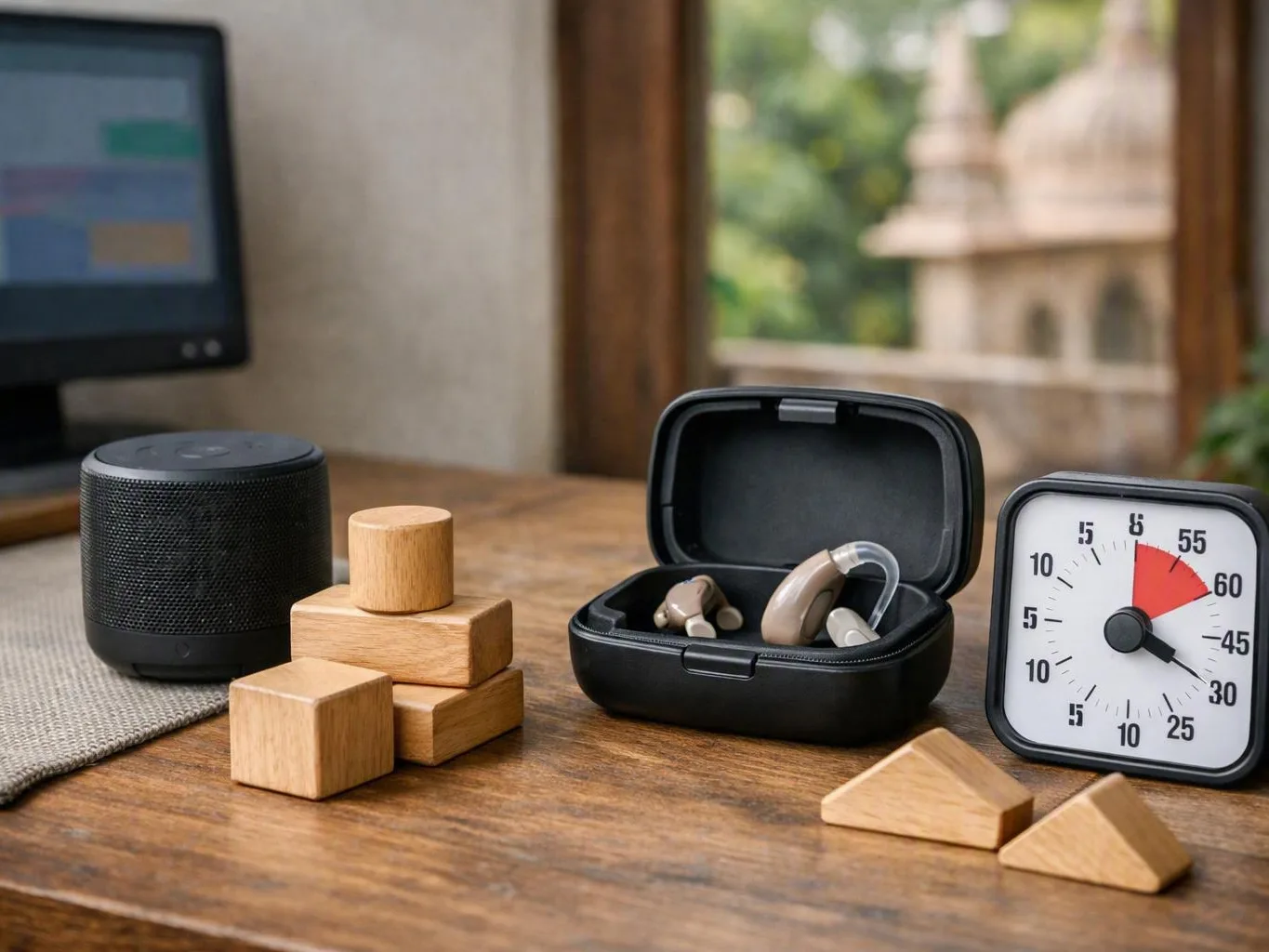
Bilateral Hearing Loss means that hearing is reduced in both ears. The two ears may have the same degree of loss, or one ear may hear better than the other. The condition may affect low, middle, or high pitches, and it may reduce the ability to hear speech, environmental sounds, or both.
Related glossary terms: Audiogram, Audiologist, Hearing Threshold.
The cause can arise in the ear canal, middle ear, or inner ear. Conductive loss affects sound movement through the outer or middle ear. Sensorineural loss affects the cochlea or hearing nerve. Mixed loss contains features of both types. Hearing loss may develop slowly, follow repeated noise exposure, occur with ageing, or appear after illness, injury, or certain medicines.
How Bilateral Hearing Loss Works, Is Measured, or Is Used?
An audiologist tests each ear separately during pure tone audiometry. You listen for tones through headphones or insert earphones and respond whenever a sound is heard. The results are plotted.audiogramwhich shows the quietest sounds detected at different pitches. Hearing thresholds are usually expressed.decibels, written as dB.
Testing often includes speech measures, because hearing tones doesn't show the full effect on conversation. Speech reception testing checks the level at which spoken words can be recognised, while speech discrimination or word recognition testing examines how clearly words are understood. Tympanometry may assess eardrum movement and middle-ear function when a conductive problem is possible. The results for both ears guide diagnosis, monitoring, hearing aid selection, and referral for medical care when needed.
Why Bilateral Hearing Loss Matters?

Hearing with two ears supports speech understanding in noise, sound direction, and awareness of nearby events. Bilateral loss can make group conversations, classroom listening, telephone use, and traffic awareness more difficult. You may ask people to repeat themselves, increase television volume, or rely on lip reading without realising that hearing has changed.
The practical effect depends on the degree, pattern, cause, and duration of loss. When both ears need support, two appropriately programmed hearing aids may provide more balanced access to sound than one device. Hearing aids don't restore normal hearing, and their benefit also depends on fitting accuracy, daily use, speech practice, and realistic listening conditions.
When Bilateral Hearing Loss Matters Most?
Assessment becomes especially important when hearing changes affect work, education, relationships, or safety. A sudden loss, rapid worsening, severe ear pain, discharge, marked dizziness, or one-sided change needs prompt clinical assessment. Earwax and middle-ear fluid may be treatable causes, while sensorineural loss may need a different plan.
Useful review points include the following.
- Compare the hearing thresholds and speech scores for the right and left ears.
- Check whether the pattern suggests conductive, sensorineural, or mixed loss.
- Record listening problems in quiet places, noisy places, on the telephone, and in groups.
- Review device comfort, sound quality, battery or charging needs, and follow-up programming.
In Bhubaneswar, Odisha, hearing care may also need to fit local communication habits, family involvement, language preferences, and access to follow-up visits. Audium Hearing Aid Clinic can document both ears separately during hearing tests and use the results to support suitable clinical decisions.
How to Evaluate Bilateral Hearing Loss?
- Are hearing thresholds recorded separately for the right and left ears on a recent audiogram.
- Do speech recognition scores match the level of difficulty reported during everyday conversations.
- Does testing identify a conductive, sensorineural, or mixed pattern.
- Have sudden changes, pain, discharge, dizziness, or rapid worsening been medically reviewed.
- If hearing aids are used, are both devices comfortable, balanced, and programmed from current test results.
Related Concepts Compared
Bilateral Hearing Loss vs. Unilateral Hearing Loss
Unilateral hearing loss affects one ear, while bilateral hearing loss affects both ears. Bilateral loss may still be uneven between the two ears.
Bilateral Hearing Loss vs. Sensorineural Hearing Loss
Sensorineural hearing loss describes the site or type of damage in the inner ear or hearing nerve. Bilateral describes the number of ears affected, so bilateral loss may be sensorineural, conductive, or mixed.
Bilateral Hearing Loss vs. Mixed Hearing Loss
Mixed hearing loss combines conductive and sensorineural components. It can affect one or both ears, so mixed hearing loss and bilateral hearing loss are not interchangeable terms.
Bilateral Hearing Loss vs. Presbycusis
Presbycusis is age-related hearing loss, which commonly affects both ears. Bilateral hearing loss is a broader term that includes causes at any age.
Expert Note
The same average hearing level can affect people differently. Speech understanding in noise, hearing asymmetry, tinnitus, work demands, and listening goals should be reviewed alongside the audiogram before selecting support.
Common Mistakes or Myths About Bilateral Hearing Loss
- Assuming both ears have the same degree or type of hearing loss.
- Treating louder sound as a substitute for clearer speech.
- Waiting months after a sudden hearing change before seeking assessment.
- Using one hearing aid automatically when testing shows that both ears need support.
- Ignoring earwax, pain, discharge, or dizziness during hearing loss assessment.
Bilateral Hearing Loss in Practice: A Real-World Example
A 62-year-old person notices difficulty following family conversations in restaurants and keeps increasing the television volume. Testing shows mild-to-moderate sensorineural loss in both ears, with poorer speech understanding in the left ear. The results support bilateral hearing aid evaluation and structured follow-up.
Sources & Further Reading on Bilateral Hearing Loss
- World Health Organisation, Deafness and Hearing Loss
- American Speech-Language-Hearing Association, Hearing Loss in Adults
Related Services
Related Terms
Audiogram
Audiogram is a graph that records a person’s hearing thresholds across different pitches and loudness levels…
Audiologist
Audiologist is a healthcare professional who assesses hearing and balance, identifies hearing disorders, and supports communication…
Hearing Threshold
Hearing Threshold is the quietest sound a person can detect at a specific frequency under defined…
Sensorineural Hearing Loss
Sensorineural Hearing Loss is reduced hearing caused by damage to the cochlea, inner-ear hair cells, or…
Audium Hearing Aid Clinic
Have Questions About Bilateral Hearing Loss?
Contact Audium Hearing Aid Clinic for practical guidance on Bilateral Hearing Loss and related hearing aid clinic work in Bhubaneswar.