
What is FM System?
FM System is an assistive listening device that sends a speaker’s voice from a microphone to a listener’s hearing aid, cochlear implant, or receiver. The system uses frequency modulation radio signals to reduce the effects of distance, background noise, and room reverberation. FM systems are often used in classrooms, meetings, and guided activities.
Quick Facts About FM System
Category
Assistive listening technology
Used for
Improving speech access over distance and noise
Typical tool
Speaker microphone and listener receiver
Common confusion
An FM System is not the same as Bluetooth streaming
Also called
Frequency Modulation System, FM listening system
Often discussed with
Hearing Aid Consultation, Hearing Aid Programming
Key Takeaways About FM System
- An FM System transmits a speaker’s voice from a microphone to a compatible hearing device.
- The system helps reduce the effects of distance, background noise, and room reverberation.
- Common settings include classrooms, meetings, lectures, places of worship, and guided tours.
- A hearing aid or cochlear implant may need a compatible receiver or wireless interface.
- Good microphone placement and correct programming strongly affect speech clarity.
Understanding FM System
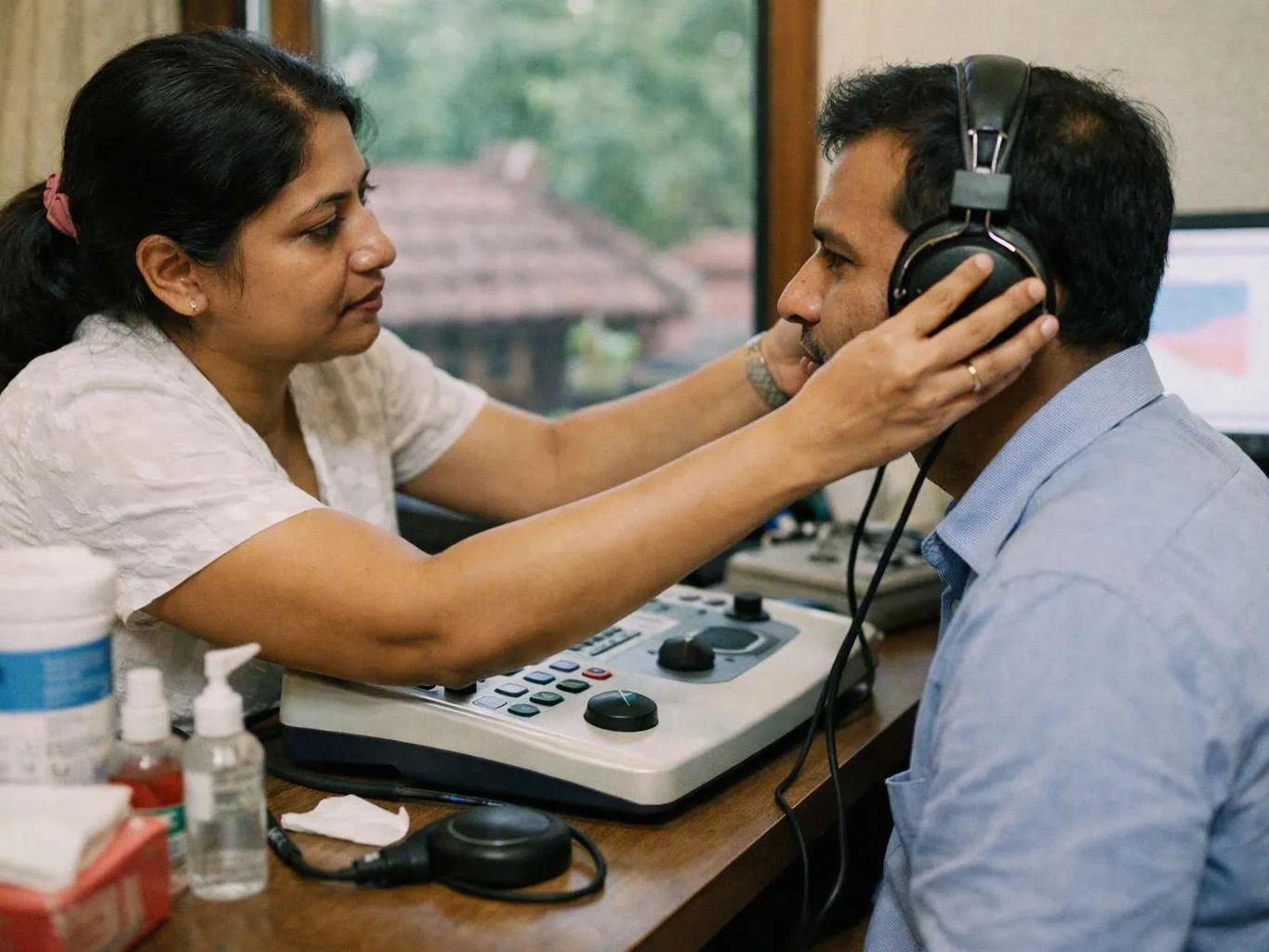
FM System is a wireless assistive listening system that carries a speaker’s voice to a listener’s hearing device. A speaker wears or holds a microphone. The listener receives the signal through a compatible receiver, hearing aid interface, or cochlear implant accessory. The direct signal gives the listener better access to speech than sound travelling across a room.
Related glossary terms: Speech Perception, Hearing Aid Receiver.
Frequency modulation means that the voice signal changes the frequency of a radio carrier signal. The receiver separates the voice from the carrier and sends it to the listener’s device. An FM System doesn't restore normal hearing, and it does not remove every sound in the environment. Its main purpose is to improve the speech-to-noise ratio. This describes how clearly speech stands above competing sound.
How FM System Works, Is Measured, or Is Used?
A typical setup includes a transmitter microphone, an FM radio signal, and a receiver. The speaker’s voice enters the microphone and travels wirelessly to the receiver. The receiver then sends the signal to a hearing aid, cochlear implant, or ear-level listening device. It uses a direct audio input, telecoil, or compatible wireless accessory.
Use depends on the setting and the listener’s hearing needs. In a classroom, the teacher usually wears the microphone and passes it to another speaker when needed. In a meeting, a small microphone may be placed near the main speaker. A remote microphone may help when several people talk. Evaluation should include speech understanding with and without the system. It should also assess microphone distance, background noise, battery performance, and compatibility with the listener’s hearing device.
Many modern products use digital radio or adaptive wireless technology. However, people may still use the term FM System for the broader category. Frequency range, transmission distance, channel selection, and interference control vary between models. A properly fitted system should be checked in the actual listening environment. It shouldn't be judged only in a quiet clinic room.
Why FM System Matters?
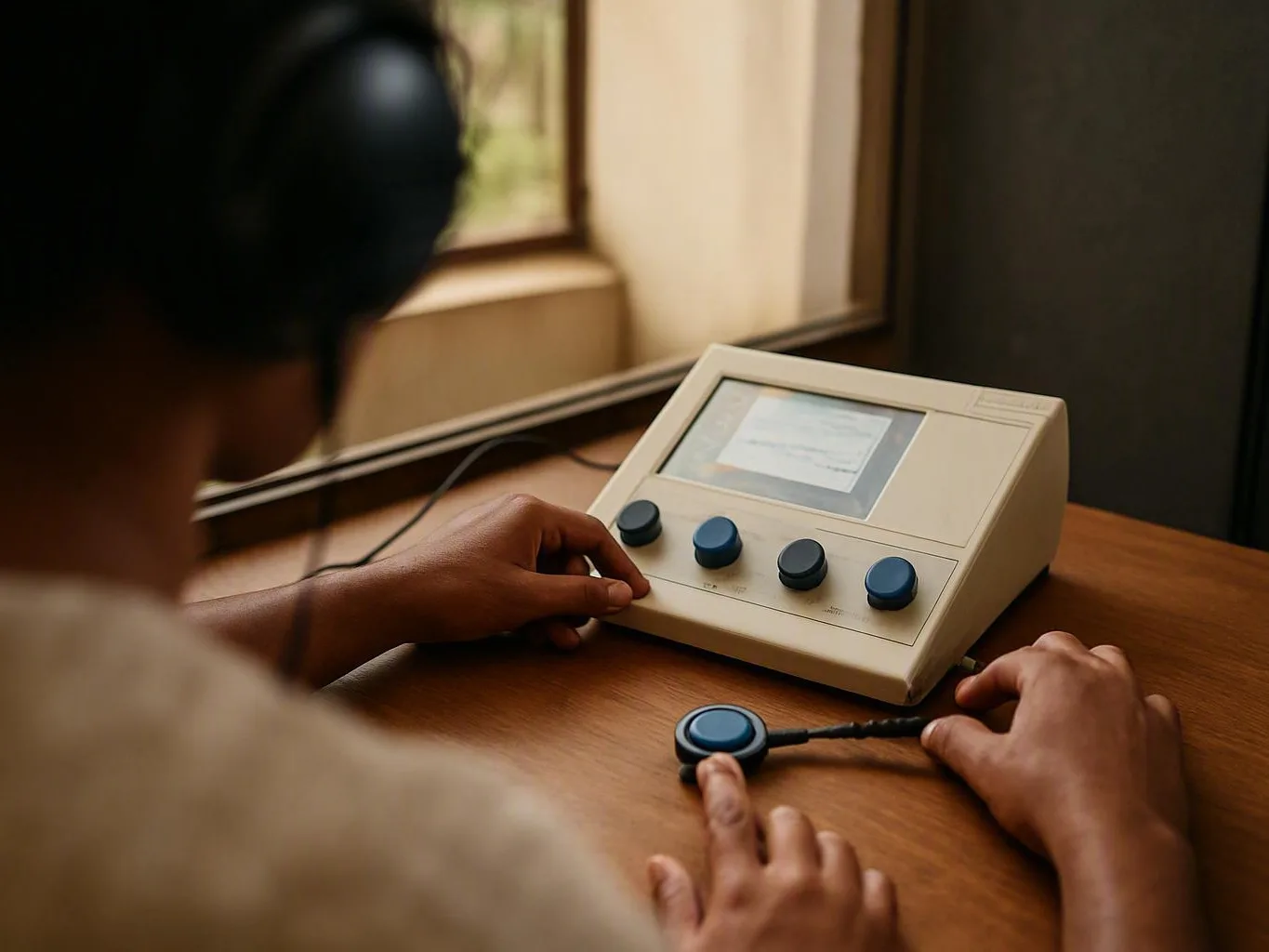
Speech perception often becomes harder when the talker is distant or background noise is present. The system places the microphone close to the talker, so the voice reaches the listener with less effect from room distance and reverberation. This benefit can support classroom learning, workplace communication, and participation in group activities.
An FM System also helps identify whether listening difficulty comes from hearing loss, poor room acoustics, weak microphone technique, or an unsuitable device setting. The system is not a substitute for hearing assessment or hearing aid programming. Its value depends on correct fitting, reliable daily use, and realistic expectations. These include expectations about multiple talkers and competing noise.
When FM System Matters Most?
FM technology becomes especially useful when you must listen to one important speaker across a large or noisy space. Examples include school lessons, university lectures, training rooms, public meetings, religious services, factory briefings, and guided tours. It may also help people who hear well in quiet but struggle when distance or reverberation reduces speech clarity.
Before choosing a system, check the listener’s hearing device, the number of expected speakers, the room size, and local radio conditions. Also check charging or battery arrangements. A trial should test real speech understanding rather than loudness alone. In Bhubaneswar, an assessment may also need to consider multilingual classrooms and variable room acoustics. It should also consider the practical availability of technical support for daily use.
How to Evaluate FM System?
- Compare speech understanding with and without the system in the intended room.
- Check whether the transmitter and receiver are compatible with the hearing aid or cochlear implant.
- Assess microphone placement, transmission range, battery life, and resistance to radio interference.
- Test performance with background noise and more than one talker.
- Confirm that the listener can operate, charge, clean, and transport the equipment safely.
Related Concepts Compared
FM System vs. Remote Microphone System
A remote microphone system sends speech through a proprietary digital wireless link rather than traditional frequency modulation radio. Both systems place the microphone near the talker to improve the speech-to-noise ratio.
FM System vs. Bluetooth Streaming
Bluetooth usually streams audio from a phone, tablet, or computer to a hearing device. An FM System is designed mainly to transmit a nearby speaker’s voice across a room or other listening space.
FM System vs. Loop System
A loop system sends an audio signal through a magnetic field created by a wire loop around a room. A listener normally uses a telecoil, while an FM System uses a radio transmitter and receiver.
Expert Note
A microphone improves access to the person speaking, not to every person in a group. For discussions, the system may need a pass-around microphone, multiple microphones, or a room audio feed. Test the complete arrangement with the listener’s own hearing device and normal seating position.
Common Mistakes or Myths About FM System
- Assuming an FM System will make every speaker in a group equally clear.
- Placing the microphone far from the main speaker’s mouth.
- Buying a receiver without checking compatibility with the hearing aid or cochlear implant.
- Judging performance in a quiet room instead of the real classroom, meeting room, or workplace.
- Ignoring charging, battery, cleaning, and equipment storage needs.
FM System in Practice: A Real-World Example
A student with hearing loss understands one-to-one conversation but misses the teacher’s words from the back of a noisy classroom. The teacher wears the FM microphone, and the student receives the signal through a compatible hearing aid receiver. The audiologist checks speech understanding during a lesson and adjusts the fitting if the signal sounds too loud or unclear.
Sources & Further Reading on FM System
- American Speech-Language-Hearing Association, Frequency Modulation Systems
- National Institute on Deafness and Other Communication Disorders, Assistive Devices for People with Hearing, Voice, Speech, or Language Disorders
Related Services
Related Terms
Speech Perception
Speech Perception is the brain’s ability to detect, recognise, and understand spoken language from sound signals…
Hearing Aid Receiver
Hearing Aid Receiver is the small speaker that converts processed electrical signals into sound inside or…
Audium Hearing Aid Clinic
Have Questions About FM System?
Contact Audium Hearing Aid Clinic for practical guidance on FM System and related hearing aid clinic work in Bhubaneswar.