
What are Ossicles?
Ossicles are three tiny bones in the middle ear, called the malleus, incus, and stapes. These bones form a chain between the eardrum and the inner ear. Ossicles transmit and strengthen vibrations from sound waves, helping the cochlea convert mechanical movement into nerve signals that the brain recognises as sound.
Quick Facts About Ossicles
Category
Middle-ear anatomy
Used for
Transmitting sound vibrations
Common confusion
Ossicles are bones, not earwax or nerves
Also called
Auditory ossicles, Middle-ear bones
Often discussed with
Tympanometry, Hearing Loss Diagnosis
Key Takeaways About Ossicles
- The ossicles are the malleus, incus, and stapes.
- They connect the eardrum with the cochlea through the middle ear.
- Ossicle damage may cause conductive hearing loss.
- The stapes transfers movement to the inner-ear fluid.
- Ear infections, injury, or abnormal bone growth can affect ossicle movement.
Understanding Ossicles
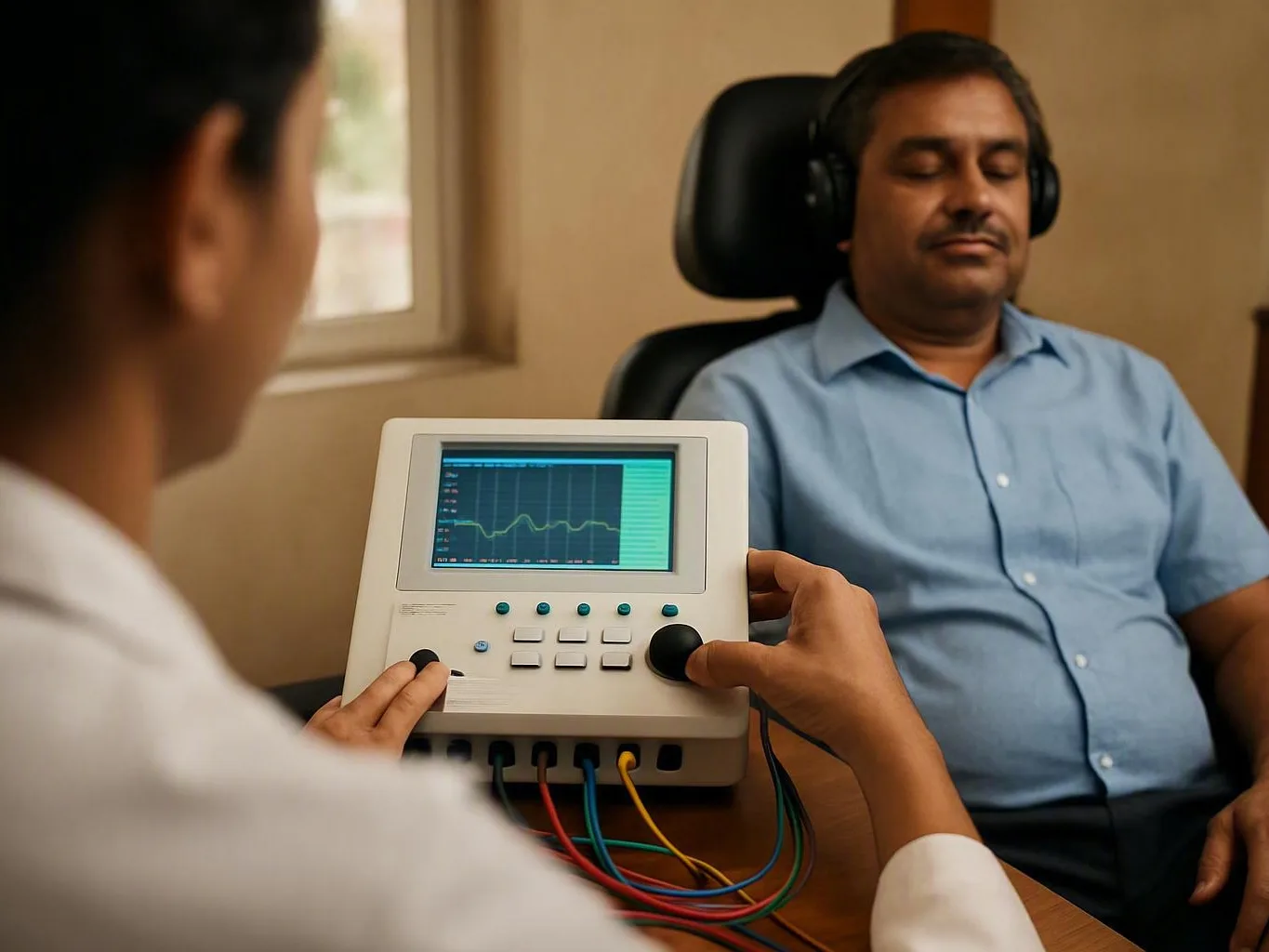
Ossiclesare the three smallest bones in the human body. They sit inside.middle ear. Their names are the malleus, incus, and stapes. The malleus attaches to the inner surface of the eardrum. The incus lies between the other two bones, and the stapes connects with the oval window of the inner ear.
Related glossary terms: Cochlea, Conductive Hearing Loss, Bone Conduction.
Sound waves first make the eardrum vibrate. The malleus receives that movement and passes it to the incus, which moves the stapes. The stapes then pushes against the oval window, creating pressure changes in the fluid of the cochlea. This chain allows sound energy to move from air into the fluid-filled inner ear.
How Ossicles Works, Is Measured, or Is Used?
Ossicles work as a linked mechanical system rather than as separate hearing organs. The joints between the malleus, incus, and stapes allow small movements to pass along the chain. The shape and lever action of the bones also increase pressure at the oval window. This helps overcome the difference between air and inner-ear fluid.
Clinicians don't usually measure each ossicle directly during a routine appointment. They assess middle-ear function.tympanometry, inspect the eardrum with otoscopy, and compare the results with pure-tone hearing thresholds. Tympanometry can show reduced eardrum movement, negative middle-ear pressure, or a stiff system. These findings may suggest a problem involving the ossicles, the eardrum, or the space behind it.
A hearing assessment may also compare air-conduction and bone-conduction results. A noticeable gap between these thresholds, called an air-bone gap, can support a diagnosis of conductive hearing loss. The gap doesn't identify the exact cause by itself, so the clinician considers ear history, examination findings, and other test results.
Why Ossicles Matters?
Ossicles matter because restricted movement can reduce the amount of sound reaching the inner ear. Conditions such.middle-ear infection, a perforated eardrum, scar tissue, trauma, or otosclerosis may interrupt the chain. The result is often softer hearing, although speech may remain clear in quiet settings when the loss is mild.
Identifying an ossicle-related problem helps separate conductive loss from sensorineural hearing loss, which involves the cochlea or auditory nerve. This distinction affects the next step. Some conductive problems may improve after medical treatment or surgery, while a hearing device may help when the loss remains or when other treatment is unsuitable.
When Ossicles Matters Most?
Ossicles become especially relevant when hearing changes after an ear infection, head injury, ear surgery, or long-term discharge. They also matter when an audiogram shows an air-bone gap or when hearing seems blocked despite a clear ear canal. A persistent one-sided conductive loss needs careful assessment because several conditions can produce similar test patterns.
Warning signs include sudden hearing change, severe ear pain, fluid or blood from the ear, dizziness, or new facial weakness. These symptoms need prompt medical attention rather than self-treatment. Do not place objects or unprescribed drops into an ear when a perforated eardrum or middle-ear problem is possible.
How to Evaluate Ossicles?
- Check whether air-conduction and bone-conduction thresholds show a consistent air-bone gap.
- Review tympanometry results for reduced mobility, abnormal pressure, or an unusually stiff middle-ear system.
- Ask whether hearing loss followed infection, injury, surgery, or repeated ear discharge.
- Compare the two ears and investigate persistent one-sided conductive hearing loss.
- Seek prompt medical assessment for sudden hearing loss, severe pain, discharge, dizziness, or facial weakness.
Related Concepts Compared
Ossicles vs. Cochlea
The cochlea is a fluid-filled inner-ear organ that changes vibration into nerve signals. Ossicles are middle-ear bones that deliver vibration to the cochlea.
Ossicles vs. Conductive Hearing Loss
Conductive hearing loss describes reduced sound transmission through the outer or middle ear. Ossicle problems are one possible physical cause of that type of hearing loss.
Ossicles vs. Eardrum
The eardrum is a thin membrane that vibrates when sound reaches it. Ossicles are the small bones attached to its inner surface that carry the vibration onwards.
Ossicles vs. Bone Conduction
Bone conduction sends vibration through the skull to the inner ear, partly bypassing the eardrum and ossicles. Ossicles are part of the normal air-conduction route.
Expert Note
An air-bone gap suggests a conductive component, but it does not prove isolated ossicle damage. Ear-canal blockage, eardrum changes, middle-ear fluid, and test conditions can produce similar findings, so interpretation should combine audiometry, tympanometry, and otoscopic examination.
Common Mistakes or Myths About Ossicles
- Calling the ossicles a single bone instead of three connected bones.
- Assuming every conductive hearing loss comes from ossicle damage.
- Confusing ossicles with the cochlea or auditory nerve.
- Using cotton buds or drops when a perforated eardrum may be present.
Ossicles in Practice: A Real-World Example
A person develops muffled hearing after repeated middle-ear infections. An audiogram shows an air-bone gap, while tympanometry shows limited middle-ear movement. The findings may indicate impaired sound transmission through the eardrum or ossicles, so further medical assessment is needed.
Sources & Further Reading on Ossicles
Related Services
Related Terms
Cochlea
Cochlea is a spiral-shaped, fluid-filled organ in the inner ear that changes sound vibrations into electrical…
Conductive Hearing Loss
Conductive Hearing Loss is reduced hearing caused by a problem in the outer or middle ear…
Bone Conduction
Bone Conduction is the transmission of sound vibrations through the bones of the skull to the…
Inner Ear
Inner Ear is the deepest part of the ear, located within the temporal bone of the…
Audium Hearing Aid Clinic
Have Questions About Ossicles?
Contact Audium Hearing Aid Clinic for practical guidance on Ossicles and related hearing aid clinic work in Bhubaneswar.